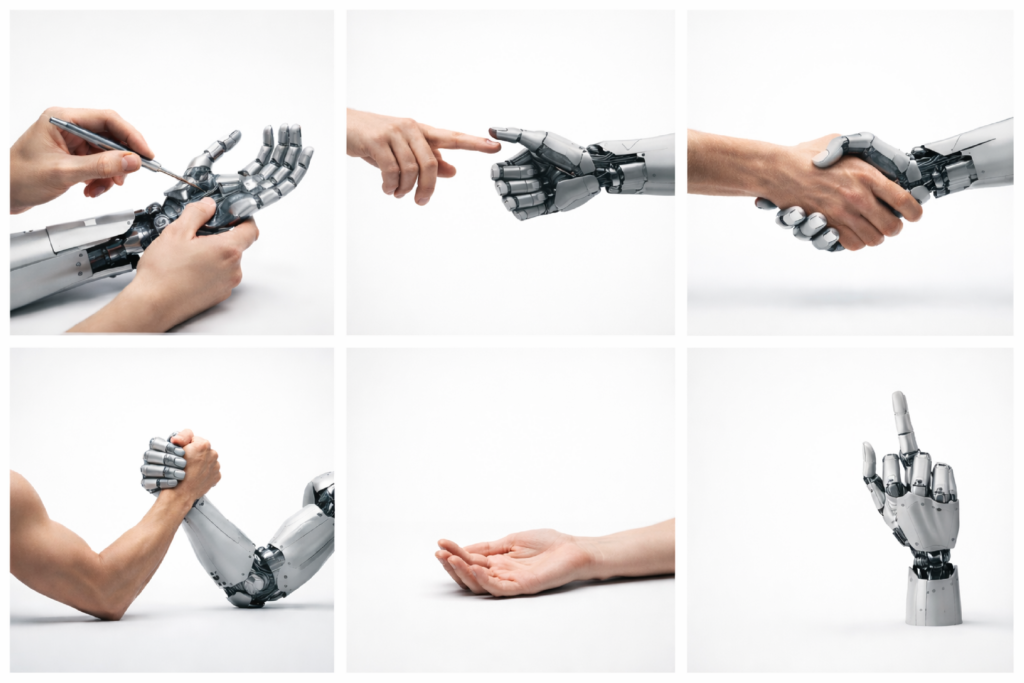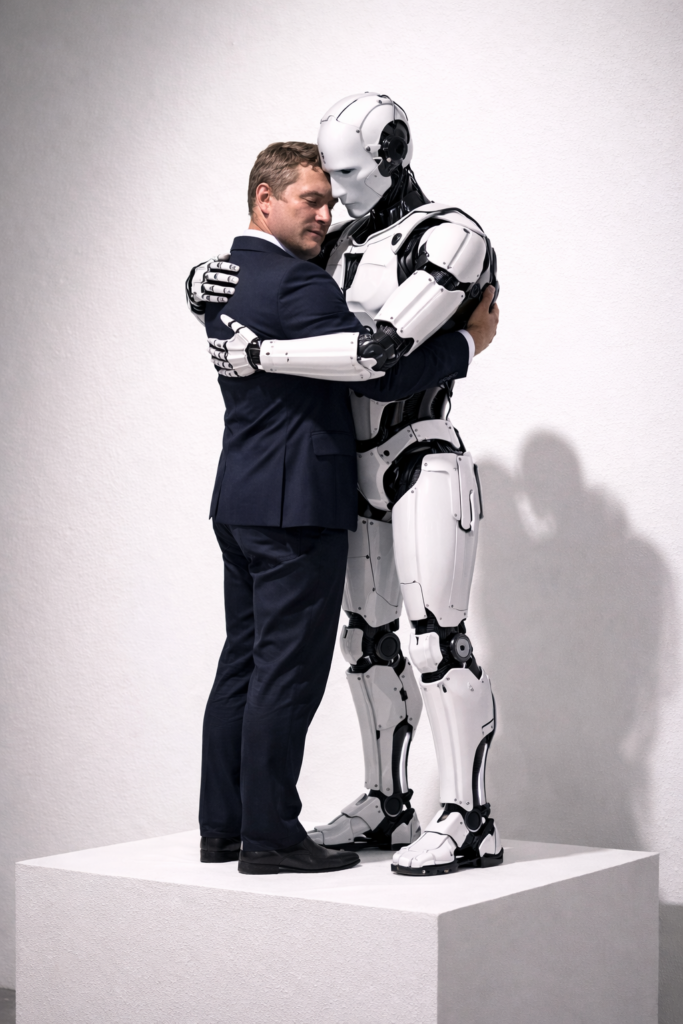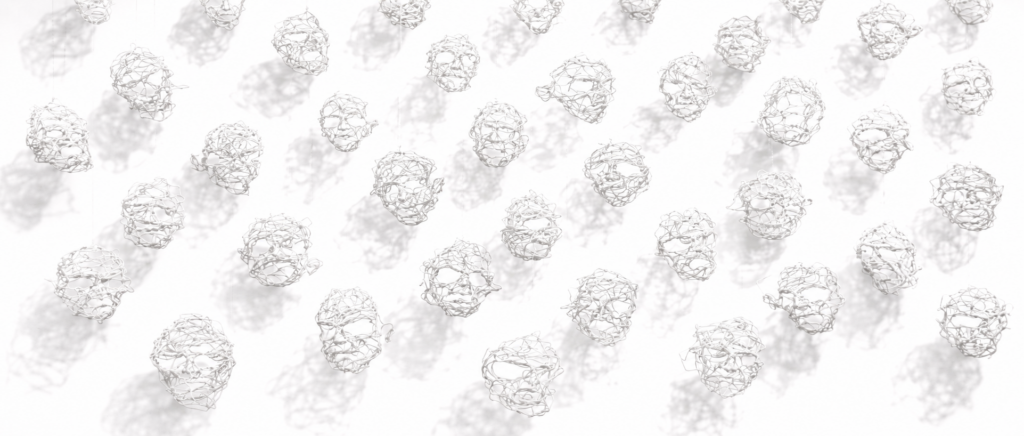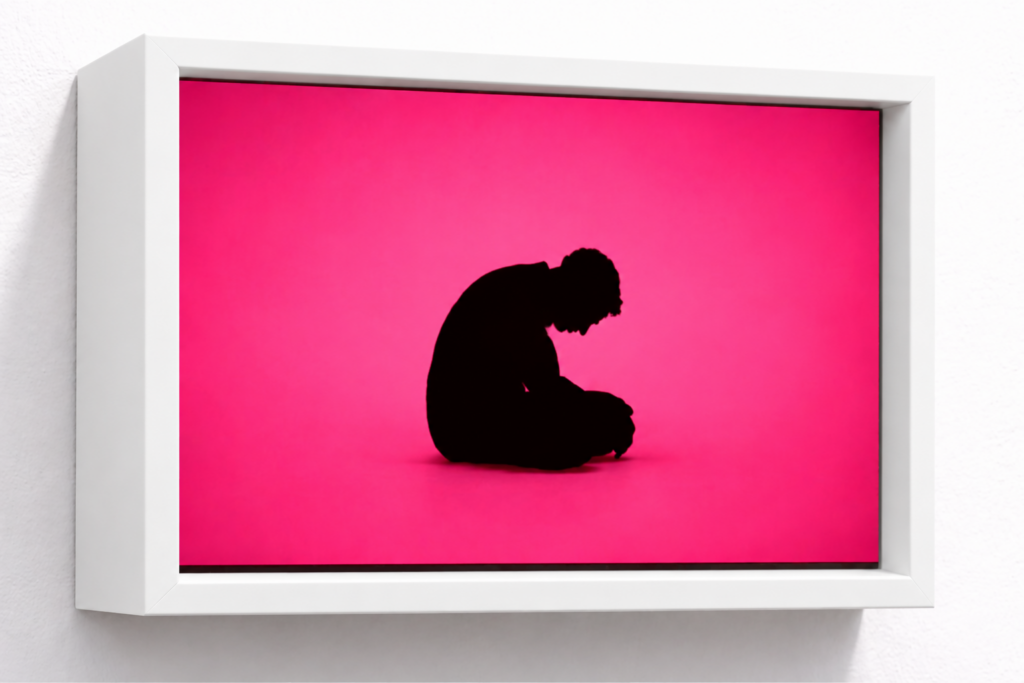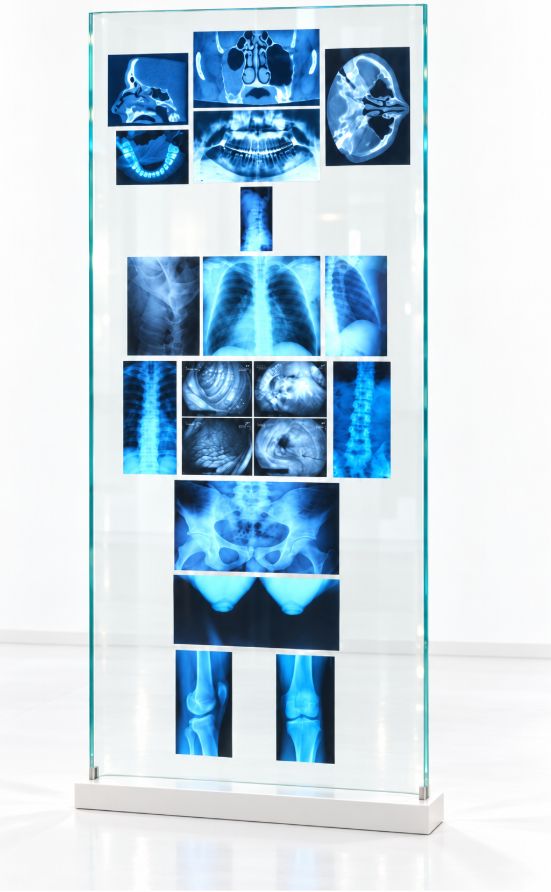
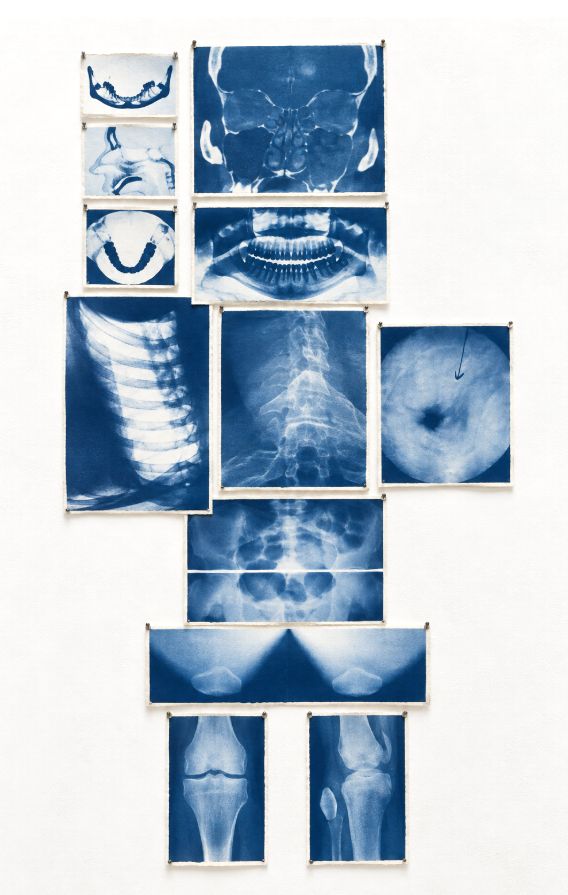
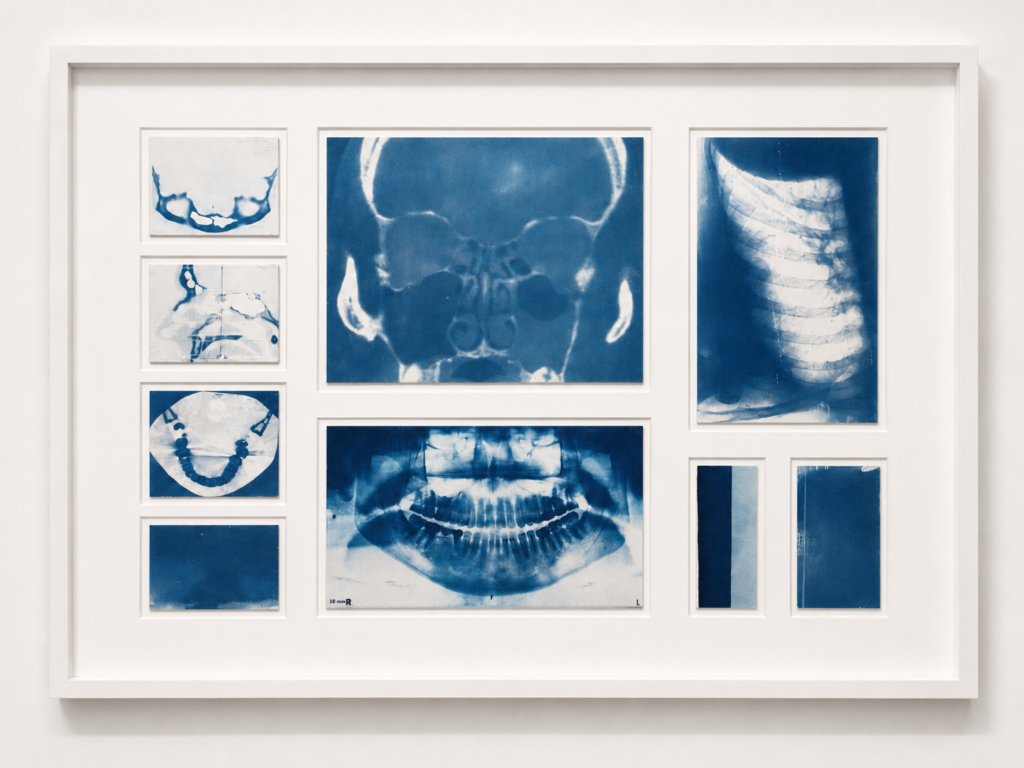
Category: Bodies
Data Beats Emotion

Audio recording Z. at American Congress x Start-up Mantra
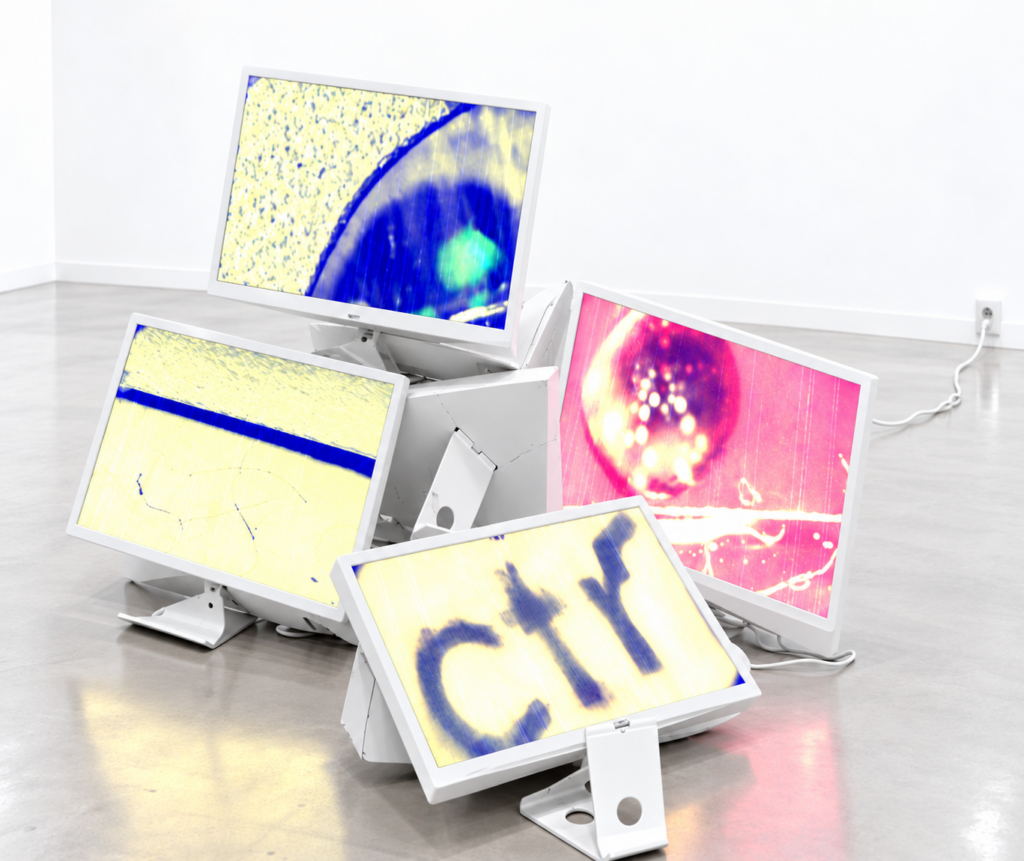
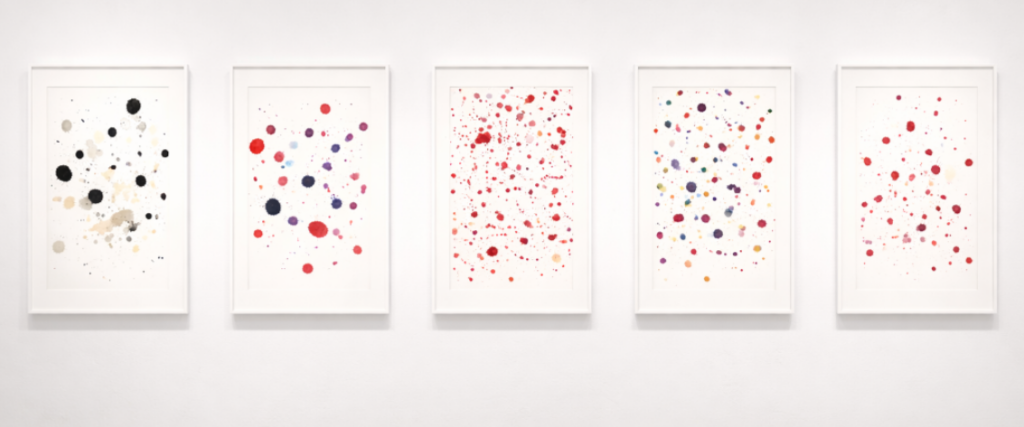
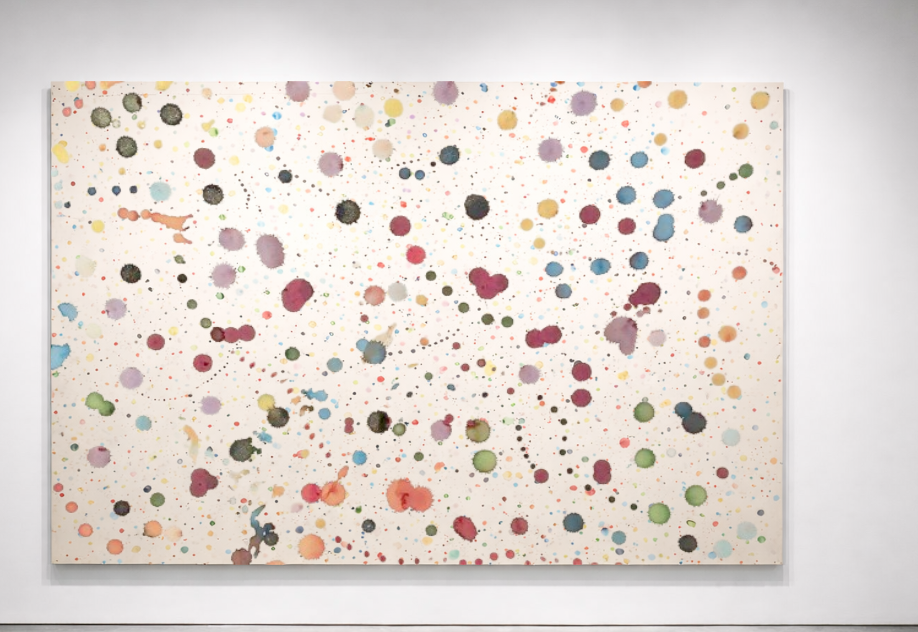
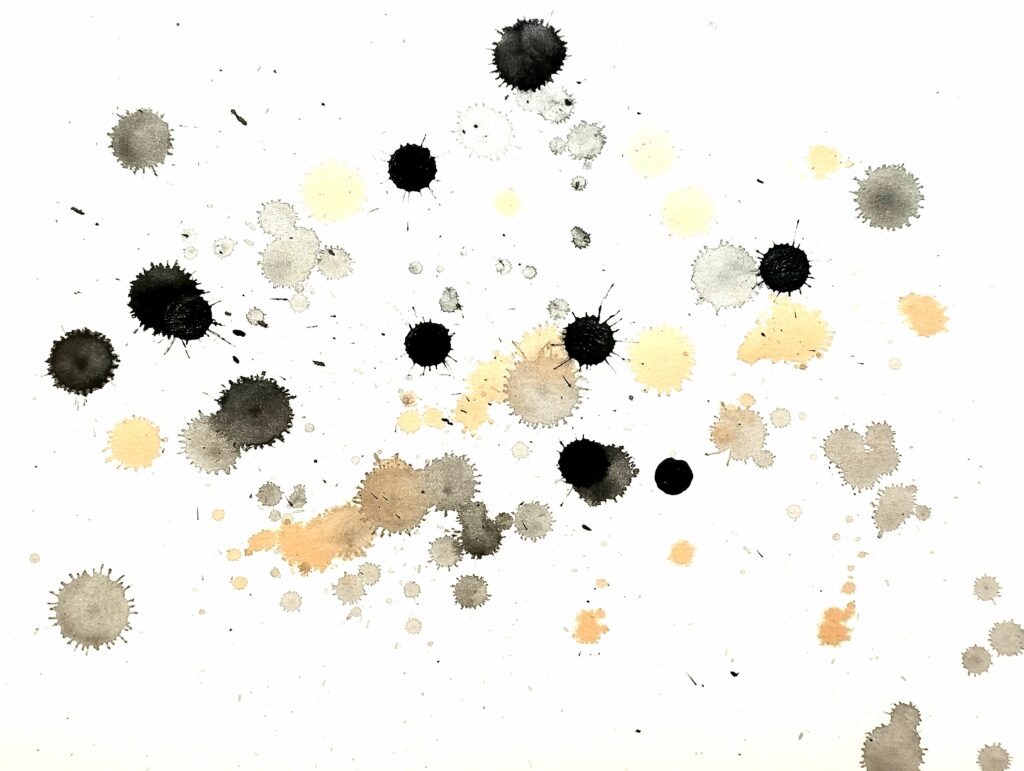
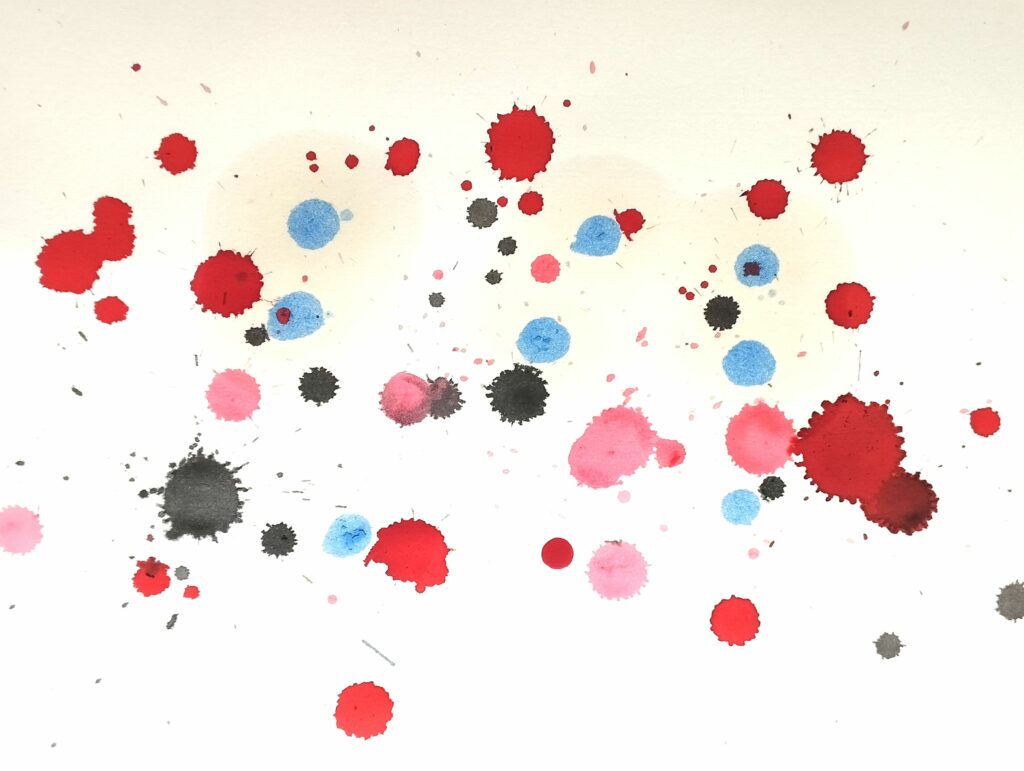
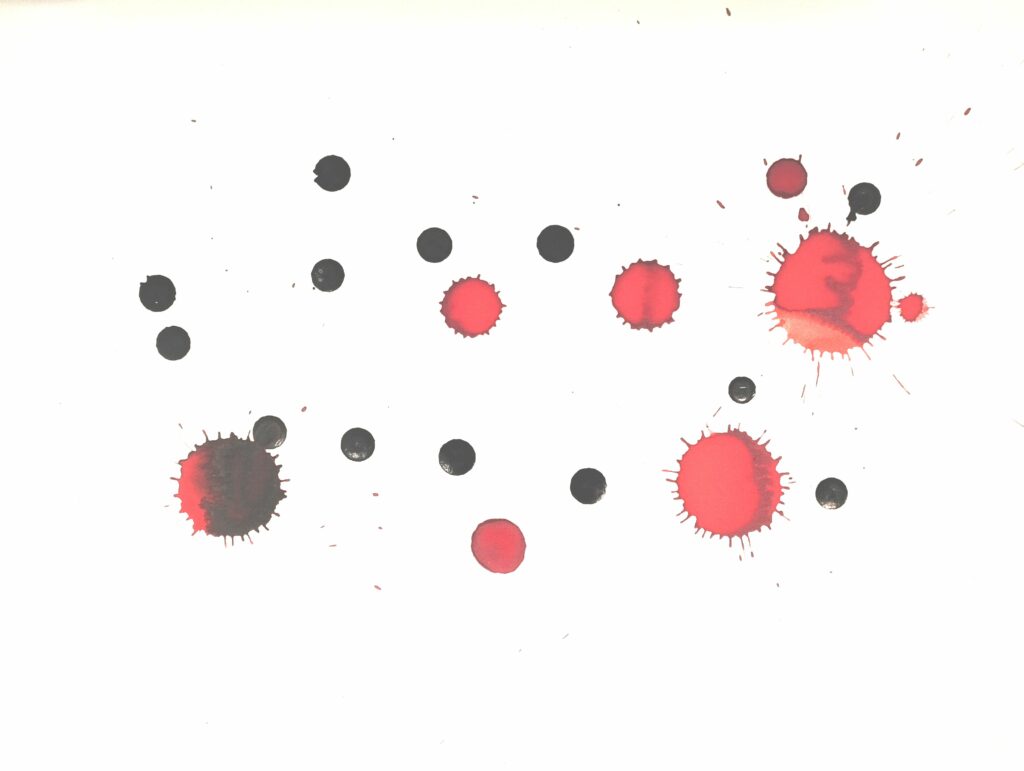
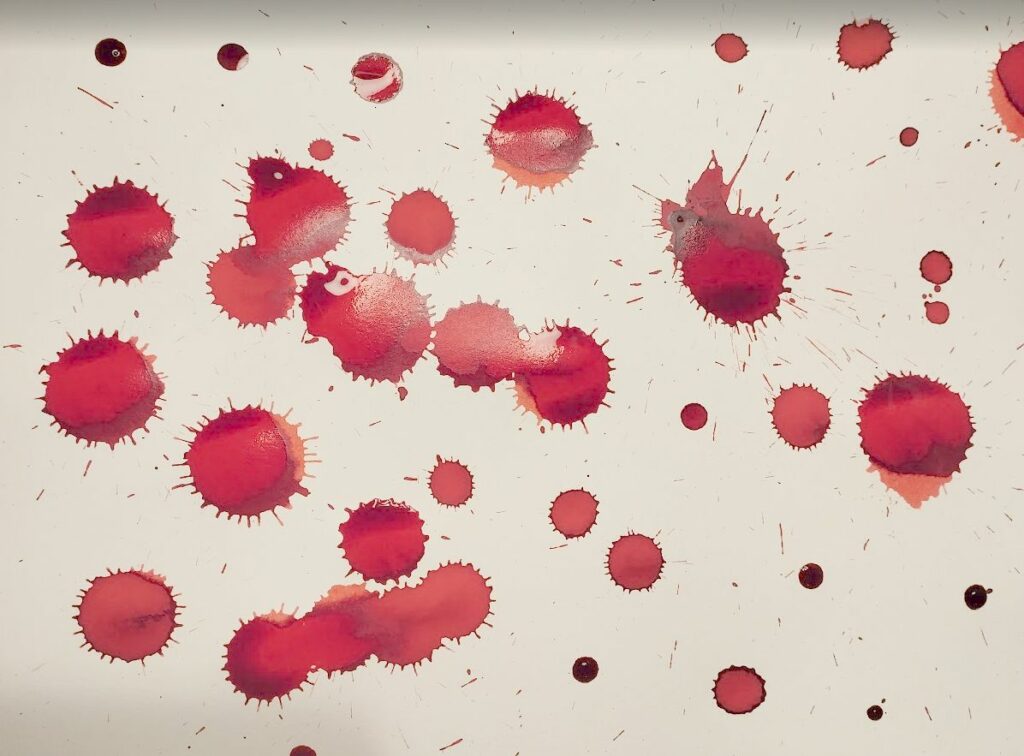
This work unfolds in two registers. First, as a visual transcription: the tear-shaped forms are not human sorrow, but the soundwave of Z. public apology before the U.S. Congress. No visible emotion. No rupture. Just the smooth, calculated rhythm of a voice designed not to tremble.
Second, as a title—Data Beats Emotion—the phrase echoes a dominant mantra in the startup world. In tech culture, feelings are noise. Growth requires data: measurable, scalable, testable. Emotion is seen as inefficiency—something to simulate perhaps, but never to follow.
By overlapping these layers, the piece reveals a tension: between affect and performance, between sincerity and computation. The tear is not real—it is rendered.
And the apology, like the system it represents, is more a metric than a moment.
Addictions

Mobile x Addiction molecules
Iron – Wood – Pine balls | 70 x 40 x 40 cm
Cette sculpture cinétique flotte avec délicatesse dans l’espace, mais son élégance dissimule une vérité brutale : chaque forme géométrique reproduit la structure moléculaire exacte de substances addictives — alcool, cocaïne, nicotine, opioïdes. Suspendue comme un mobile d’enfant, l’œuvre détourne son innocence en incarnant les mécanismes biochimiques de la dépendance.
L’équilibre est trompeur : un simple mouvement dérègle l’ensemble, rappelant la fragilité du contrôle neurochimique. La lumière projette des ombres emmêlées, prolongeant l’emprise chimique au-delà de l’objet lui-même.
L’œuvre met en scène l’addiction comme un système, une chorégraphie — silencieuse, belle, et profondément destructrice.
Une innocence perdue
—
This kinetic sculpture floats delicately in space, yet its elegance masks a brutal truth: each geometric shape reproduces the exact molecular structure of addictive substances—alcohol, cocaine, nicotine, opioids. Suspended like a child’s mobile, the piece subverts its innocence by embodying the biochemical mechanisms of dependency. The balance is deceptive: a single movement disrupts the whole, echoing the fragile equilibrium of neurochemical control. Light casts tangled shadows, extending the chemical grip beyond the object itself. The work stages addiction as both system and choreography—silent, beautiful, and deeply destructive.
Handroid

Glass hand x Printed circuit x Empty smartphone
A transparent hand, filled with printed circuitry, holds an immaculate smartphone—yet the screen is blank. No app. No notification. No signal.
This synthetic body-part, part-prosthesis, part-avatar, is not simply a hand: it’s an interface. Designed for the gesture of grasping the device, its entire architecture serves the object it holds. But what happens when the object is hollowed out?
By exposing the internal wiring and rendering the phone as a void, Handroid questions who holds what—or whom. Is the hand using the phone, or is the phone defining the hand? The piece echoes our current state of symbiosis: where the body becomes optimized for digital consumption, and the tool becomes the master.
The future is already here, and it’s holding on tight.
Dopa Screen

Dopamine synthesis x screen shadows x kids hands x universe x La nuit étoilée
Photo 30 x 40 cm
Des dizaines de petites perforations irrégulières illuminent une surface brun poussiéreux, comme une carte céleste. Pourtant, il ne s’agit pas d’une vision du cosmos, mais d’un plan biochimique : le motif reproduit avec exactitude la synthèse moléculaire de la dopamine, ce neurotransmetteur qui régule nos récompenses, nos pulsions, nos dépendances.
Le carton est tenu par la main d’un enfant — à peine visible, mais essentielle. C’est ce geste qui transforme cette carte de signaux neuronaux en ciel étoilé. Une tension fragile émerge : entre l’innocence du jeu et l’omniprésence du conditionnement comportemental.
La surface est déchirée, imparfaite. La lumière est artificielle. Mais l’évocation est immense. Il ne s’agit pas simplement d’une molécule représentée. C’est un écran — au sens propre comme au figuré — à travers lequel toute une génération voit, ressent, réagit, clique. Une réflexion poétique mais incisive sur la manière dont les environnements numériques détournent, dès l’enfance, nos circuits neurochimiques les plus primitifs.
—
Dozens of small, irregular punctures light up a dusty brown surface like a constellation map. Yet this isn’t a view of the cosmos—it’s a biochemical blueprint. The pattern mimics the exact molecular synthesis pathway of dopamine, the neurotransmitter that governs our rewards, urges, and dependencies.
The cardboard is held by a child’s hand—barely visible, but crucial. Their gesture is what transforms this map of neuronal signals into a starry sky. A fragile tension appears: between the innocence of play and the omnipresence of behavioural conditioning.
The surface is torn, imperfect. The light is artificial. But the evocation is vast. This is not just a representation of a molecule. It is a screen—literal and metaphorical—through which an entire generation sees and feels, reacts and clicks. A poetic yet critical reflection on how digital environments hijack primal neurochemical circuits, from childhood on.
Dopa

Dopamine synthesis
At first glance, Dopa resembles a minimalist circuit board: glowing nodes, clean intersections, crisp linearity. But beneath its aesthetic geometry lies a biological deception—this is the biochemical pathway of dopamine synthesis, redrawn in the language of electronic engineering.
By merging molecular biology with digital systems design, Clear Shadows underscores a haunting truth: dopamine—the molecule of pleasure, motivation, reward—is no longer just biological. It has become a product, a KPI, a currency manipulated by algorithms designed to maximize engagement, scroll time, and dependence.
This map is not neutral. It’s a weaponized diagram, a portrait of how Big Tech reengineers human behavior by hacking brain chemistry itself.
Dopa is not just a circuit. It’s a trigger, drawn with surgical precision. You’re not addicted to your phone.
You’re addicted to what it’s learned to release.
Me and My Couch

Brain x Basic need x Couch x Laziness economy
Ink on paper 30 x 40 cm
Essaie de deviner qui sont les points sans étiquette, tu les connais tous !
Cette œuvre se présente comme une carte cérébrale — mais elle fonctionne plutôt comme un miroir. Une neuroéconomie spéculative où le Moi n’est plus un sujet, mais un nœud. Un corps réduit à des besoins primaires : manger, penser, ressentir, jouer, aimer, se reposer. Tous ces élans — légitimes, profondément humains — sont désormais interceptés, détournés, optimisés.
Le canapé n’est pas un confort : c’est un piège. Autour, des nœuds anonymes pulsent en silence des besoins primaires. Mais on peut deviner :
– ce point rose près de Manger pourrait bien être les plateformes de livraison
– celui proche de Penser ressemble fort aux moteurs de suggestion IA
– celui qui gravite autour de Émotion évoque les algorithmes de recommandation de contenu
– le point à peine visible entre Jouer et S’informer pourrait être les plateformes de streaming
– et celui niché entre Sexe et Amis chuchote le nom des applis de rencontre ou des réseaux sociaux
Cette cartographie ne montre pas un cerveau, mais un écosystème économique parasitant son hôte. Un monde où chaque besoin fondamental est intermédié, capté, converti en chiffre d’affaires.
L’économie de la paresse n’est pas un accident : c’est l’aboutissement du capitalisme numérique — mouvement minimal, conversion maximale.
L’intention ultime serait-elle de nous laisser sur notre canapé à scroller, en remplissant nos besoins primaires virtuellement
Au centre : un individu.
À la périphérie : une industrie à plusieurs milliards.
Entre les deux : l’érosion lente de l’autonomie… et peut-être de la condition humaine elle-même.
—
Try to guess who are unlabelized points!
This work presents itself as a cerebral map—but it operates more like a mirror. A speculative neuroeconomy where Me is no longer a subject, but a node. A body reduced to primal needs: eat, think, feel, play, love, rest. All these impulses—legitimate, human—are now intercepted, diverted, optimised.
The couch is not a comfort; it’s a trap. Around it, unnamed nodes pulse silently. But one can guess:
– that pink dot near “Eat” might be food delivery platforms
– that one by “Think” could well be AI suggestion engines
– the one orbiting “Emotion” seems like content recommendation algorithms
– the barely visible node linking “Play” and “Inform” could be streaming platforms
– and the one tucked between “Sex” and “Friends” whispers dating apps
This mapping doesn’t just show a brain. It reveals an economic ecosystem parasitising its host. One where every basic human need has been intermediated, captured, converted into revenue. The laziness economy is not accidental—it is the endgame of digital capitalism: minimal movement, maximal conversion.
At the core: an individual.
At the periphery: a billion-dollar industry.
In between: the slow erosion of autonomy, and perhaps, of the human condition itself.
Puppet dance
Dancing Puppets

Iron puppets x Chaotic movement
Iron sculpture & magnets 50 x 50 x 50 cm
Trois silhouettes filiformes surgissent dans un mouvement spectral, façonnées en fil de fer torsadé — humanoïdes mais fracturées, comme sculptées en plein spasme. Leurs formes fantomatiques évoquent à la fois la vitalité et la déformation, prises dans une danse sans rythme ni intention.
Dancing Puppets met en scène une chorégraphie du contrôle et du désordre : des corps animés par des forces invisibles, privés de volonté, dansant au rythme d’un algorithme. Ce chaos n’est pas aléatoire — il reflète nos gestes sous des systèmes que nous ne maîtrisons plus.
Ces marionnettes, c’est nous : emmêlés, réactifs, déconnectés, mais synchronisés avec une machinerie devenue trop complexe pour être comprise.
—
Three wiry figures emerge in spectral motion, crafted from twisted iron wire—humanoid but fractured, as if sculpted mid-twitch. Their ghostly forms suggest both vitality and distortion, caught in an endless dance without rhythm or intent. Dancing Puppets stages the choreography of control and disarray: bodies animated by invisible forces, stripped of agency, dancing to an algorithmic beat. The chaos is not random—it mirrors our movements under systems we no longer master. These puppets are us: tangled, reactive, disconnected yet in sync with a machinery too complex to grasp.
Baby don’t cry

Hair x sorrow x brownian motion x bride
Iron sculpture 50 x 30 x 30 cm
Une cascade de fils métalliques, emmêlés et denses, flotte comme une tresse fantôme dans le vide. La forme évoque une tête penchée, accablée, voilée par son propre poids — à la fois absente et présente. Avoir de beaux cheveux est crucial, se comparer aux autres est devenu normal.
Entièrement façonnée en fer, la sculpture reflète la lourdeur du chagrin numérique. Les cheveux, symbole de vitalité et d’expression de soi, deviennent ici un linceul inerte — rigide, enraciné dans la peine. Son enchevêtrement chaotique rappelle une trajectoire brownienne : sans direction, nerveuse, incontrôlable — comme les spirales émotionnelles provoquées par l’usage des réseaux sociaux.
Cette pièce donne un poids visuel à ce que les plateformes s’efforcent de dissimuler : la tristesse post-consultation ressentie par une génération. Une tristesse reconnue, puis étouffée par ceux qui en tirent profit.
Ce n’est pas un portrait, mais une conséquence.
Pas une tête, mais un vide.
—
A cascade of metallic threads, tangled and dense, floats like a phantom braid in the void. The form evokes a head bowed, overwhelmed, veiled in its own weight—both absent and present. Having nice hair is crucial, comparison to others is normal.
Crafted entirely of iron, the sculpture echoes the heaviness of digital grief. The hair, symbol of vitality and self-expression, is here reduced to a lifeless shroud—rigid, rooted in sorrow. Its chaotic weave mirrors a Brownian path: directionless, nervous, impossible to control—just like the emotional spirals provoked by social media use.
This piece gives visual weight to what platforms work hard to hide: the post-consultation sadness felt by a generation. A sadness acknowledged, then buried by those who benefit most.
It’s not a portrait, but a consequence. Not a head, but a void.

Engraving on plexiglas 20 x 30 cm
Gravé sur une plaque de plexiglas transparent, un réseau neuronal détaillé flotte devant un ciel en dérive — à mi-chemin entre schéma scientifique et carte spirituelle. La structure évoque une coupe corticale, mais dans ce cadre aérien, elle devient métaphore du tapis roulant cognitif moderne : connexions infinies, aucune issue. Le ciel transperce les lignes synaptiques, transformant le cerveau en une prison de lumière et d’air.
Rat Race incarne le paradoxe de notre intellect — capable d’émerveillement, mais piégé dans des boucles d’accélération, de performance et de bruit. Un esprit suspendu, exposé, rendu vain, à la poursuite de sens sous un ciel algorithmique.
Cette gravure de cortex, inspirée des premières représentations neuronales, suspendue sur un fond de nuages mouvants, conjugue précision anatomique et enfermement existentiel. Le cerveau y apparaît disséqué mais flottant, ses circuits figés dans une complexité aussi brillante qu’inutile. À travers cette transparence, Rat Race devient une allégorie — non seulement de la surcharge mentale, mais de la culture start-up elle-même, où l’intelligence, la vitesse et l’innovation tournent à vide… jusqu’au burn-out. Et où de nombreuses start-up se trouvent piégées dans une rat race, une compétition sans fin pour émerger et un jour devenir une licorne, quoi qu’il en coûte!
Le maillage neuronal reflète la logique du capital-risque : connexions accélérées, pensée performative, raisonnement scalable — jusqu’à l’effondrement. L’arrière-plan nuageux suggère la liberté, mais elle reste inaccessible, distordue par la grille. Voici le cerveau comme champ de bataille : là où chaque neurone rivalise, chaque idée se « pitche », et où penser n’est plus un processus — mais une course à la visibilité, au financement, à la survie.
—
Engraved on a transparent plexiglass sheet, a detailed neural network floats against a drifting sky—part scientific diagram, part spiritual map. The structure resembles a slice of cortex, yet in this elevated setting it becomes a metaphor for the modern cognitive treadmill: endless connections, zero escape. The sky bleeds through the synaptic lines, turning the brain into a prison made of light and air. Rat Race evokes the paradox of our intellect—capable of wonder, yet trapped in loops of acceleration, performance, and noise. A suspended mind, exposed and futile, chasing meaning under an algorithmic sky.
This plexiglass engraving of a cortical section, suspended against a backdrop of drifting clouds, evokes both anatomical precision and existential entrapment. The brain appears dissected yet hovering, its neural circuits frozen in a moment of futile complexity. Through this transparency, Rat Race becomes an allegory—not only of cognitive overload, but of the relentless startup culture where intellect, speed, and innovation spiral into burnout….and where start-up fight for immediate success
The neural mesh mirrors the logic of venture capital: accelerated connections, performative thinking, scalable reasoning—until collapse. The cloudscape behind suggests freedom, but it remains unreachable, distorted through the grid. This is the brain as battleground: one where every neuron competes, every idea pitches itself, and where thinking is no longer a process, but a race for visibility, funding, and survival.
Evolution
Ancient greeks x Screen addiction human diseases x Sea waves
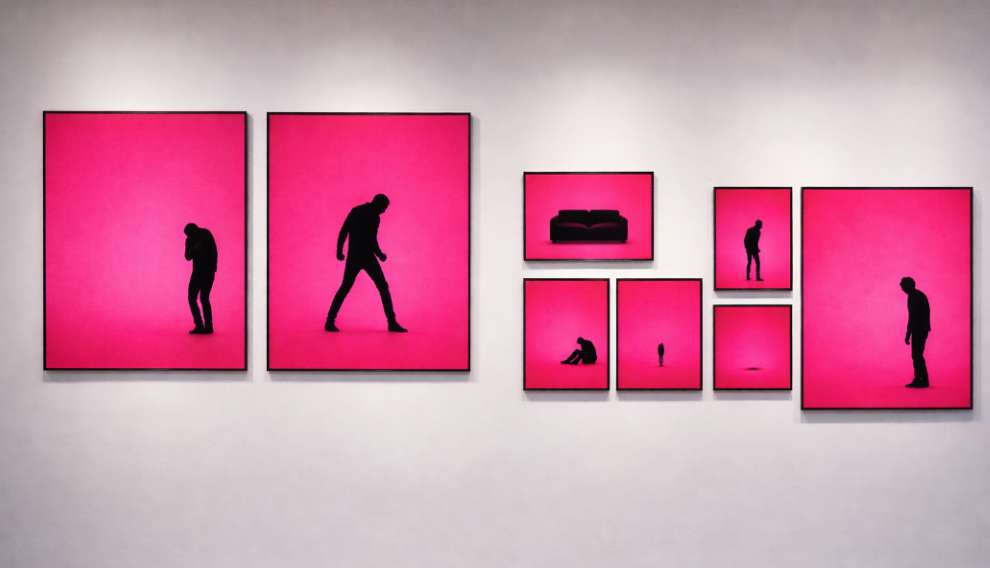
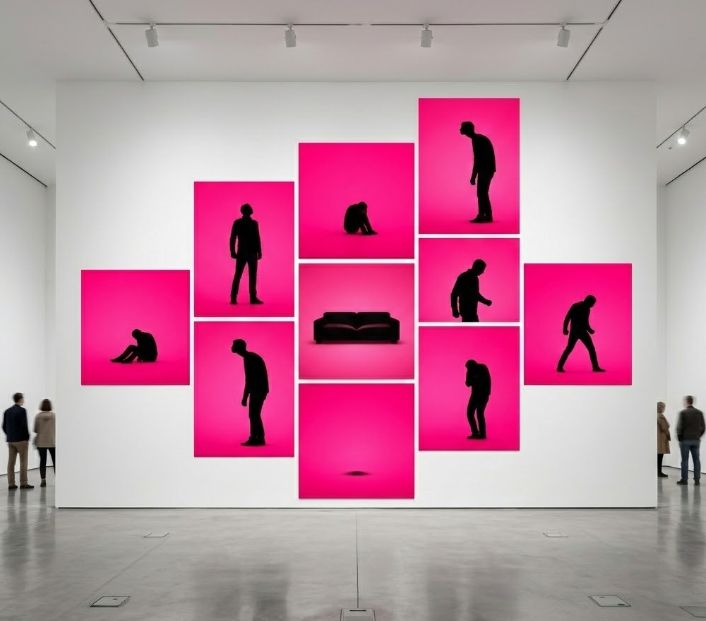
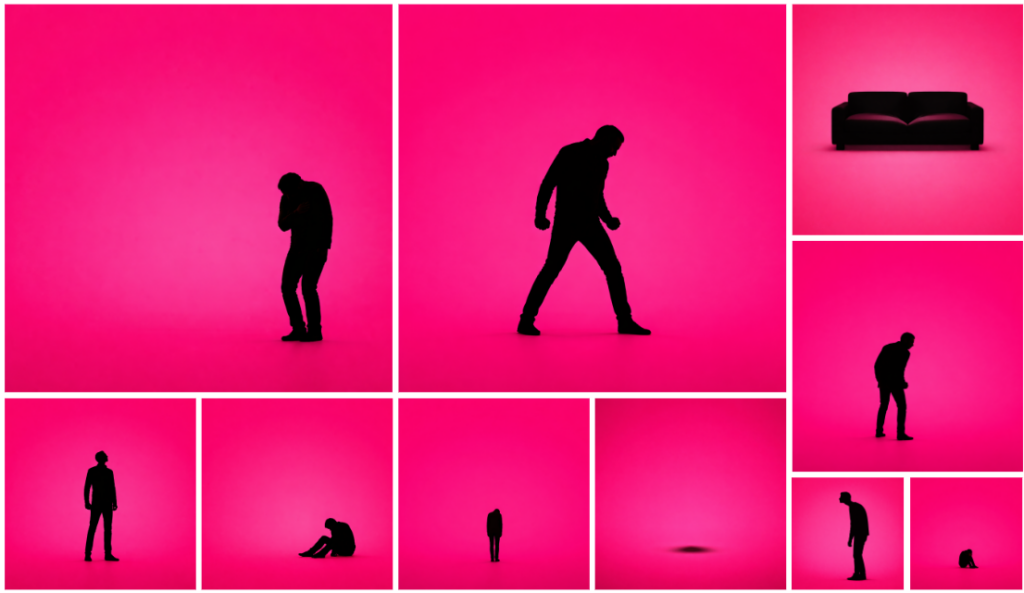
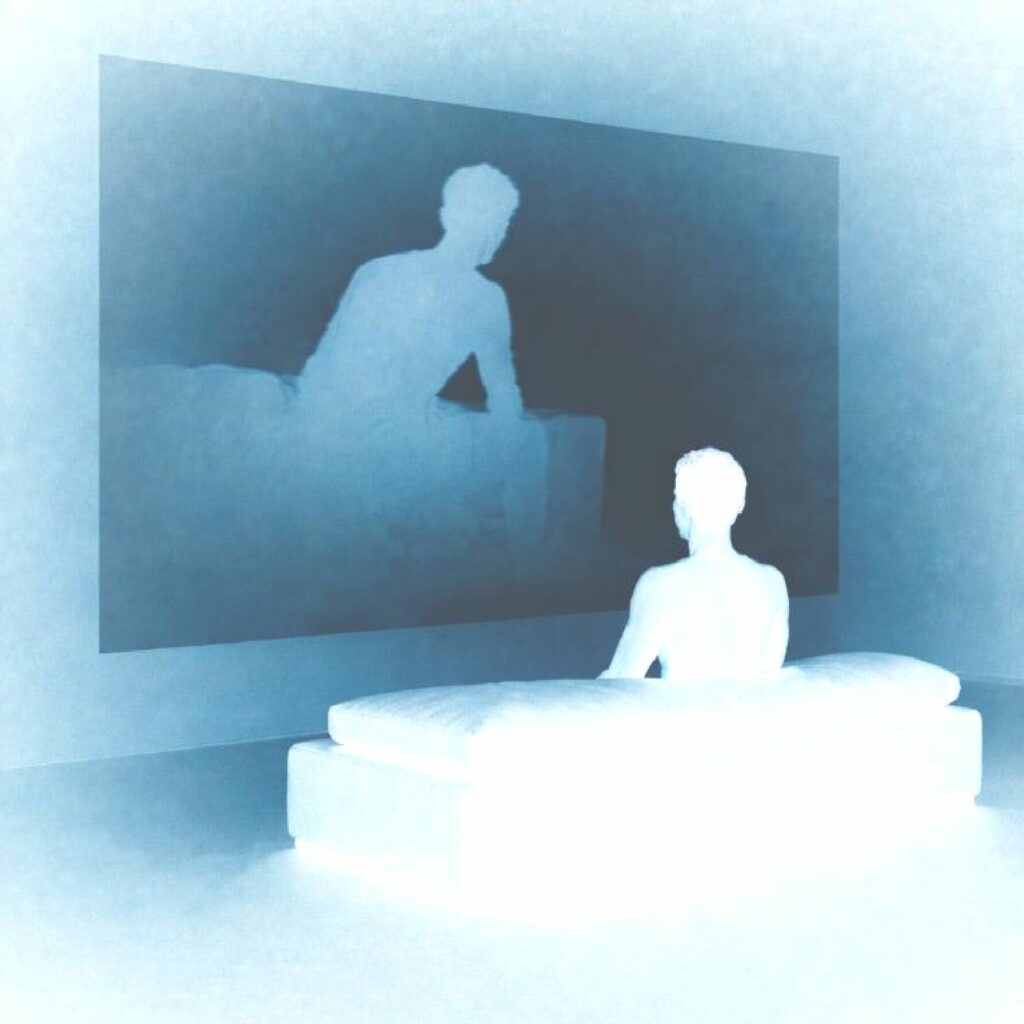
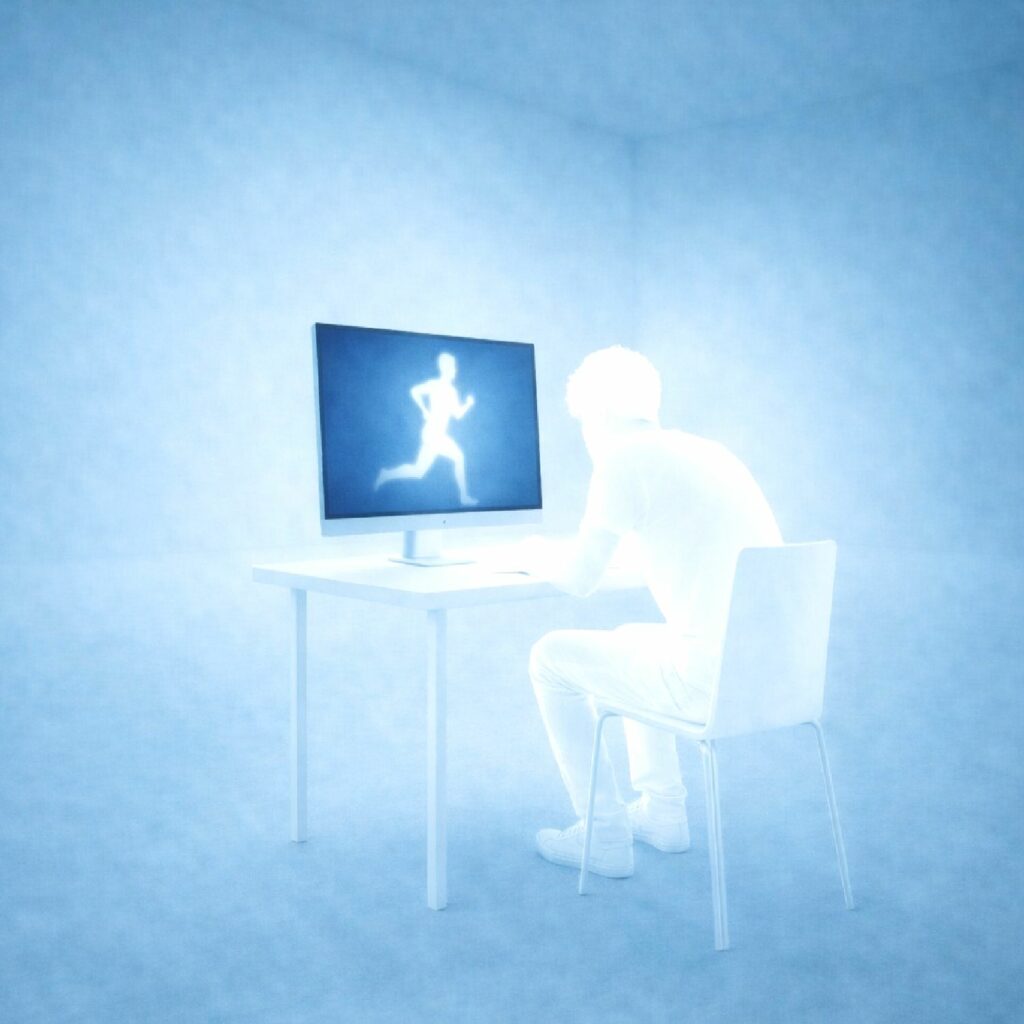
This sequence of silhouetted figures stages a paradoxical choreography. Initially reminiscent of classical Greek athletes in motion, their postures gradually deform, revealing the imprint of modern digital disorders. Curved spines, strained necks, and frozen limbs betray the bodily consequences of screen overexposure and sedentary lifestyles. The athletic ideal crumbles under the weight of addiction to devices. Unlike the heroic friezes of antiquity, here the movement is circular, leading nowhere. In this cycle of apparent evolution, the characters are trapped in an immobile loop — glorifying performance while remaining rooted in technological inertia.
Melting Ice Cream
A pink human running slowly after its meal made of plastic bottles drifting like melting icebergs
A man in a bright pink suit tries to run. In vain. In front of him drifts a surreal, white, glistening island made of plastic bottles and synthetic volumes, resembling both a melting ice cream and a stranded iceberg. His effort is grotesquely slowed down, almost ridiculous — not due to his weight, but because the destination itself is unreachable, toxic, and absurd.
This piece stages the tragic loop of modern overconsumption: our cravings for junk pleasures, plastic-sweetened foods and disposables, pushing us toward a collective wreck. The white shape — an amalgam of packaging waste — is the new unreachable paradise: cold, artificial, and melting under the weight of its own irony.
The body becomes a metaphor for society: swollen with excess, immobilized by its own inertia, and still reaching out for what is destroying it. A visual and physiological dead end.
The Clock
Screen user daily life x Heart beat & Clock Sounds x 99 frames x Monsters x Digital Twins x vague Dreams
Vidéo
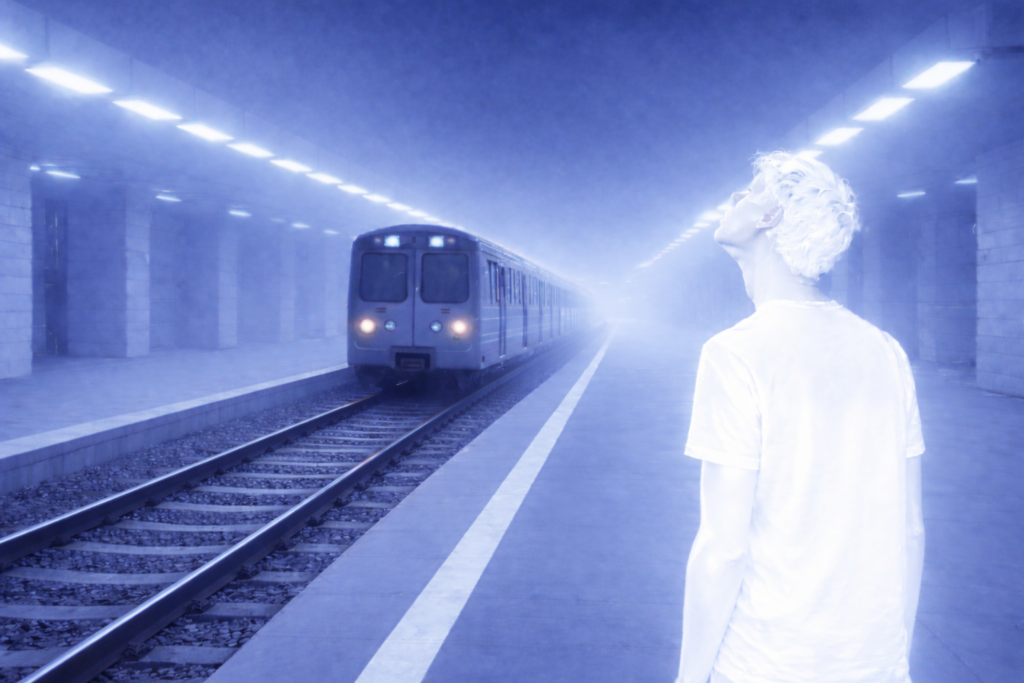
Une vie en 99 images. The Clock saisit le schéma existentiel d’un humain dépendant des écrans : se réveiller, scroller, se déplacer, s’asseoir, produire. L’animation se déploie comme un métronome numérique — chaque image, un fragment de soumission ritualisée au temps. Les lignes, à la fois symétriques et fracturées, dessinent des figures humaines, puis se déforment en monstres algorithmiques.
Le tic-tac de l’horloge et les pulsations cardiaques fusionnent en un rythme mécanique unique. Ce qui ressemble à du progrès n’est en réalité qu’une dérive — vers l’épuisement, la désincarnation, la mort. Le monstre final n’est pas une créature : c’est le reflet déformé de l’utilisateur lui-même, multiplié, répliqué, érodé par la répétition.
—
A life in 99 frames. The Clock captures the existential pattern of a screen-dependent human: waking, scrolling, commuting, sitting, producing. The animation unfolds like a digital metronome—each frame a fragment of ritualized submission to time. The lines, symmetrical and fractured, form human-like figures, then distort into algorithmic monsters.
Clock ticks and heartbeat pulses merge into a single mechanical rhythm. What appears as progress is merely drift—toward exhaustion, disembodiment, death. The monster at the end isn’t a creature—it’s the distorted mirror of the user himself, multiplied, replicated, eroded by repetition.
This is not a story. It’s a closed circuit. A day. A feed. A life.
Drawn in silence, killed by rhythm.
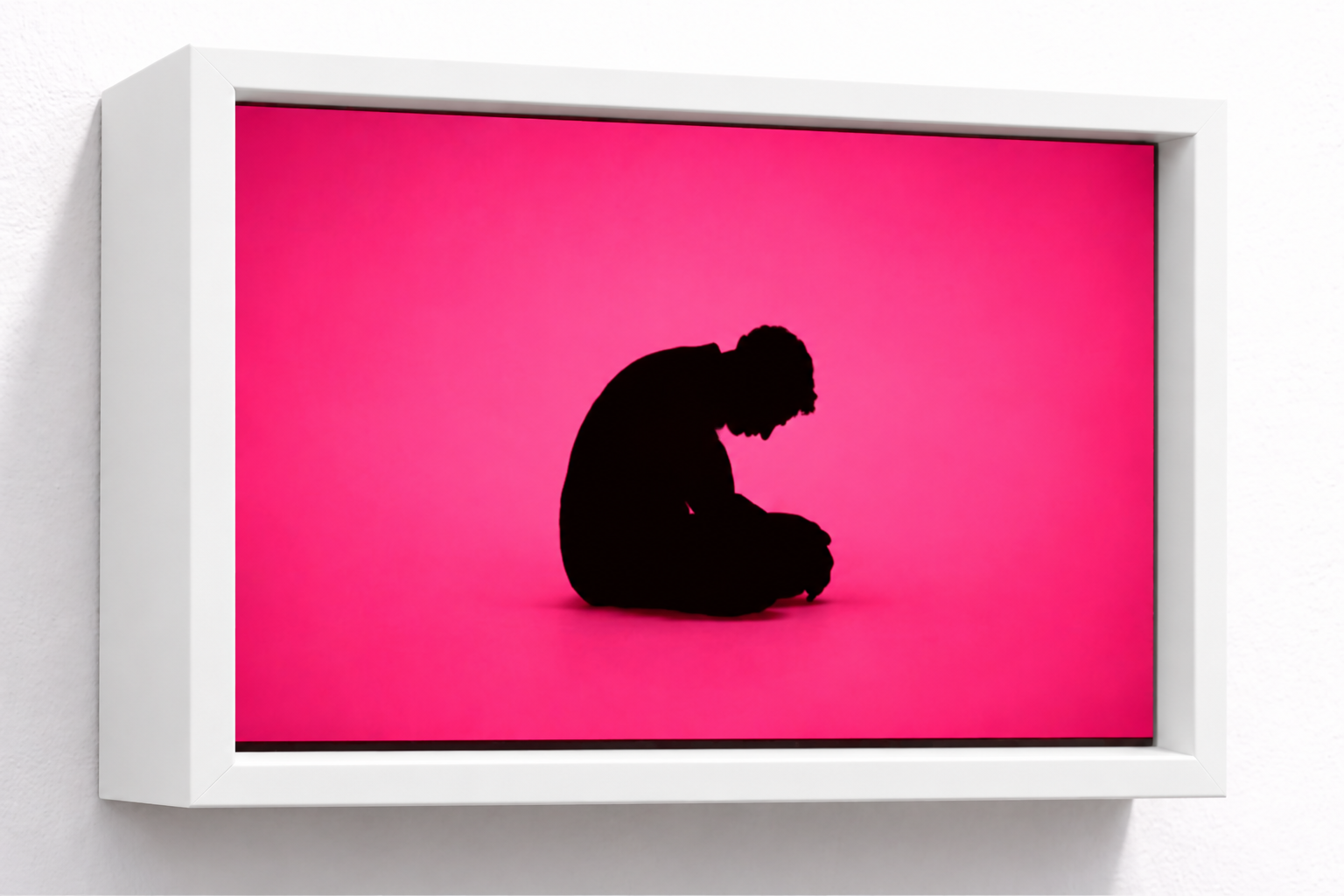
Pink dancer
Ice melting x slow dancing x La vie en rose
Video
Un enfant sans visage, silhouette rose en aplat, danse avec joie — maladroitement, innocemment — sur fond d’effondrement lent d’un glacier numérique. Des blocs de glace tombent, fondent, se dissolvent dans une mer montante, tandis qu’une version fragile de La Vie en Rose s’échappe d’un petit carrousel musical à lamelles métalliques : nostalgique, imparfaite, étrangement mécanique.
Le contraste est chirurgical. La joie est automatisée. L’arrière-plan meurt.
Pink Dancer met en scène une contradiction saisissante : un corps enfantin qui bouge avec grâce, pendant que la planète se désintègre. Le son, censé apaiser, devient une berceuse du déni. Le temps se fige, l’eau s’écoule, et la danse continue — inconsciente… ou incapable de s’arrêter.
—
A faceless child in flat pink silhouette dances joyfully—awkwardly, innocently—against the slow collapse of a digital glacier. Blocks of ice fall, melt, dissolve into the rising sea, while a fragile version of La Vie en Rose plays from a metal-combed toy music box: nostalgic, imperfect, eerily mechanical.
The contrast is surgical. The joy is automated. The background is dying.
Pink Dancer stages a haunting contradiction: a childlike body moving with grace while the planet behind disintegrates. The sound, meant to soothe, becomes a lullaby of denial. Time freezes, water flows, and the dance continues—unaware, or unwilling to stop.
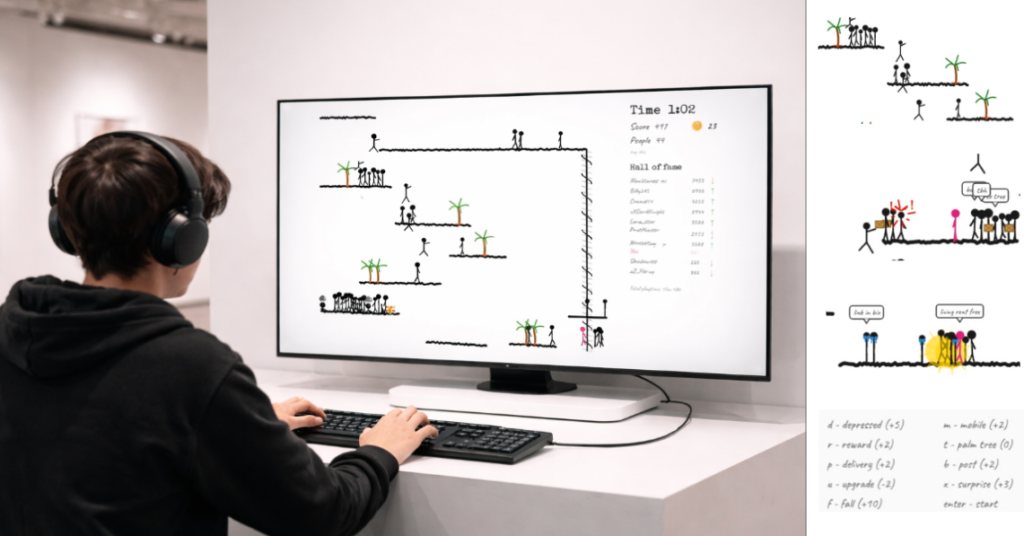
Social rewards x Dopamine shot x Hatred x Notification x Nomophobia
This is a 2 min. compilation of 5 other videos.
The Anxiety Machine condense en deux minutes toute l’architecture émotionnelle de la vie numérique contemporaine. Composée de cinq séquences vidéo étroitement chorégraphiées, l’œuvre suit un crescendo affectif — de la validation à l’effondrement — cartographié à travers les boucles de rétroaction sociale.
« You did a great job » : des larmes tombent doucement tandis que s’affichent des félicitations — simulant l’éclat creux de l’approbation sociale.
« Dopamine Shot » : particules tourbillonnantes et mouvements browniens suggèrent l’excitation chimique, les cycles de récompense manipulés.
« I hate you » : orages, éclairs, déclarations de haine violentes marquent le basculement du plaisir vers l’agression numérique.
« Notification/Gunshot » : des bulles éclatent avec la violence de notifications devenues armes — likes et commentaires se transforment en attaques.
« Anxious Breathing » : l’écran se couvre de buée, la respiration se condense, une silhouette monstrueuse consume silencieusement la présence — à la fois dans et hors de l’écran.
Cette œuvre n’est pas une simple séquence : c’est un système. Une machine de rétroaction alimentée par la peur de l’absence, le besoin d’approbation, le rejet, et la surcharge. The Anxiety Machine révèle comment les plateformes transforment l’attention en névrose, et comment le moi se fragmente sous le poids de l’attente, de l’immédiateté et de la violence invisible.
Ce n’est pas seulement une critique des réseaux sociaux.
C’est une mise en lumière de ce qu’ils font à notre chimie intérieure.
—
This overall processing and vicious circle may lead to mass anxiety
The Anxiety Machine condenses in two minutes the complete emotional architecture of modern digital life. Constructed from five tightly choreographed video segments, the piece follows a crescendo of affect—from validation to collapse—mapped through social feedback loops.
- “You did a great job”: tears fall gently as congratulatory words flash—simulating the hollow glow of social affirmation.
- “Dopamine Shot”: swirling particles and Brownian motion suggest chemical excitation, manipulated reward cycles.
- “I hate you”: storms, flashes, and violent declarations of hate punctuate a shift from pleasure to digital aggression.
- “Notification/Gunshot”: bubbles explode with the sharpness of alerts turning into weapons—likes and comments become assaults.
- “Anxious Breathing”: the screen fogs, breath condenses, and a monstrous figure silently consumes presence—simultaneously inside and outside the screen.
This work is not merely a sequence; it is a system. A feedback machine fueled by fear of absence, approval, rejection, and overload. The Anxiety Machine exposes how platforms convert attention into neurosis, and how the self fragments under the weight of expectation, immediacy, and invisible violence.
It is not just about social networks. It is about what they are doing to our chemistry.
Puppets

Engraving on Plexiglas + Blue Led light
Two figures suspended, motionless yet exposed—one with a glass in hand, the other reaching out, crowned. Both are bound by strings, manipulated from above, their autonomy only an illusion. The scene evokes antiquity through their posture and attire, yet it is contemporary in essence. These are not classical archetypes, but social roles—power, seduction, dominance, influence—stripped of context and agency.
The threads that bind are neither visible mechanisms nor metaphorical abstractions—they are the digital, cultural, and algorithmic forces pulling at modern identity. Under the sterile glow of LED, these glowing silhouettes reveal how roles are performed more than inhabited. Whether on a screen or a stage, both are played.
This exact precise scene can be found in a museum, with the two characters in this exact position
Monsters

IA fake faces x no sense
Engraving on Plexi + Blue light Led – 30 x 20 cm
Douze visages spectraux s’alignent tels des apôtres numériques — figures d’une nouvelle religion, codée en pixels et en probabilité. Aucun de ces individus n’existe. Leur dieu ne se voit pas. Générés par une IA d’avant l’ère ChatGPT&co lancée par un lanceur d’alerte issu de la Big Tech, ces portraits visaient à dénoncer la montée en puissance de l’illusion générative. Ici, ils reviennent privés de tous leurs sens : pas d’yeux, pas d’oreilles, pas de bouche — aucune entrée, aucune sortie.
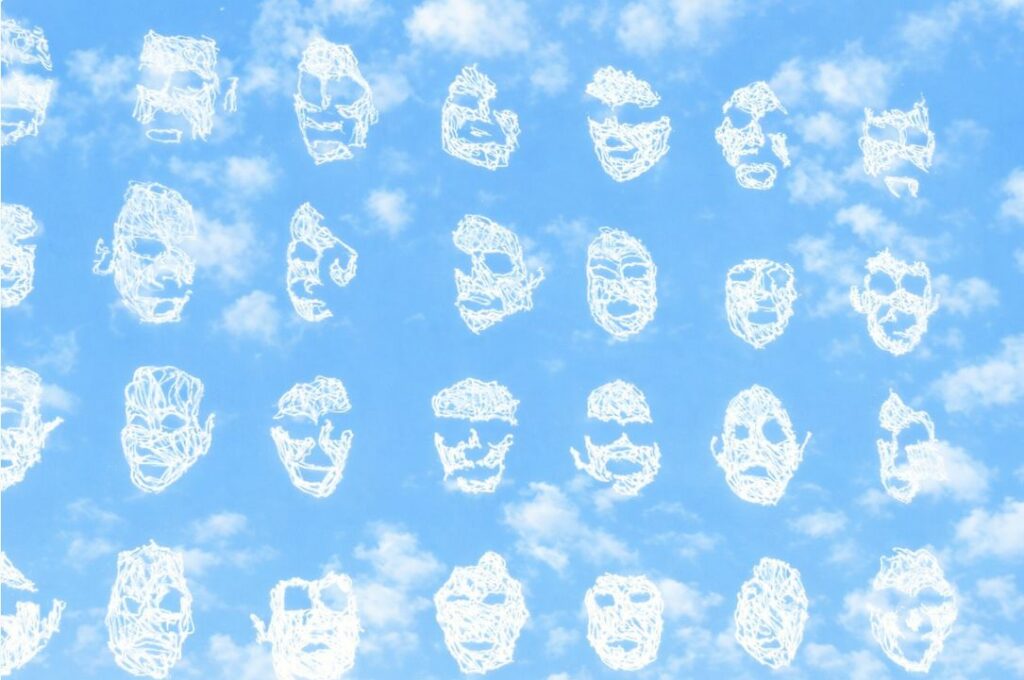
Monsters transfigure ces ensembles de données anonymes en icônes sacrées et vides. Illuminées par une lumière LED bleue, les gravures suggèrent une transcendance — mais n’offrent que l’absence. Il ne s’agit pas de présence divine, mais de vacuité synthétique. Ces « apôtres » ne prêchent pas — ils ne voient rien, n’entendent rien, ne disent rien.
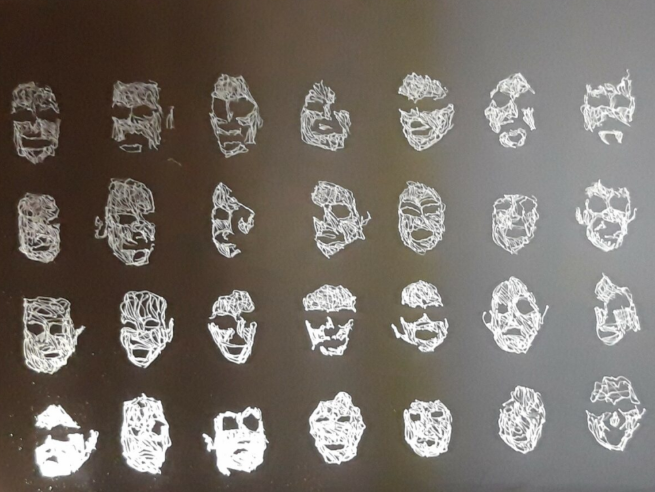
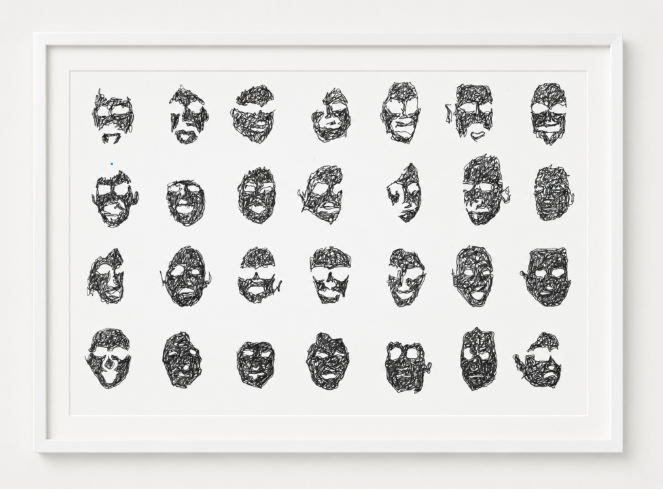
Ce sont les figures de remplacement d’un futur où l’humain est simulé, indexé, effacé — et vénéré comme artefact.
—
Twelve (like apostle) spectral faces line up like digital apostles—figures of a new religion, one coded in pixels and probability. None of these individuals exist. Generated by a pre-ChatGPT-era AI launched by a Big Tech whistleblower, these portraits were meant to denounce the rising power of generative illusion. Here, they return stripped of all senses: no eyes, no ears, no mouths—no way in, no way out.
Monsters transfigures these anonymous datasets into sacred, vacant icons. Illuminated by blue LED light, the engravings suggest transcendence—but offer only absence. This is not divine presence, but synthetic vacancy. The “apostles” here don’t preach—they observe nothing, hear nothing, say nothing.
They are placeholders for a future where the human is simulated, indexed, erased—and worshipped as artifact.
Births