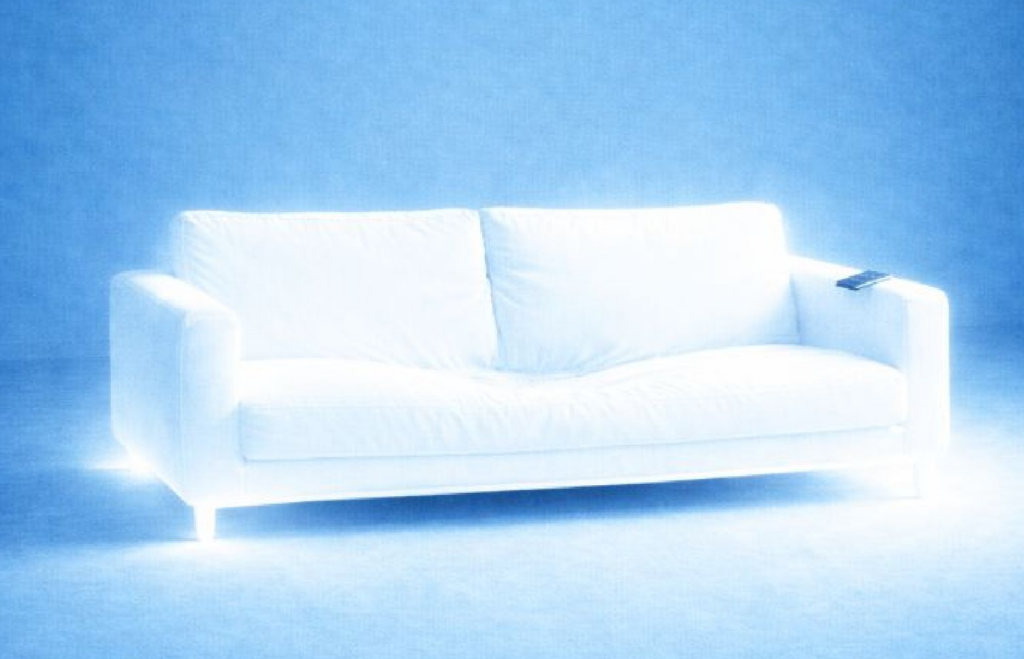
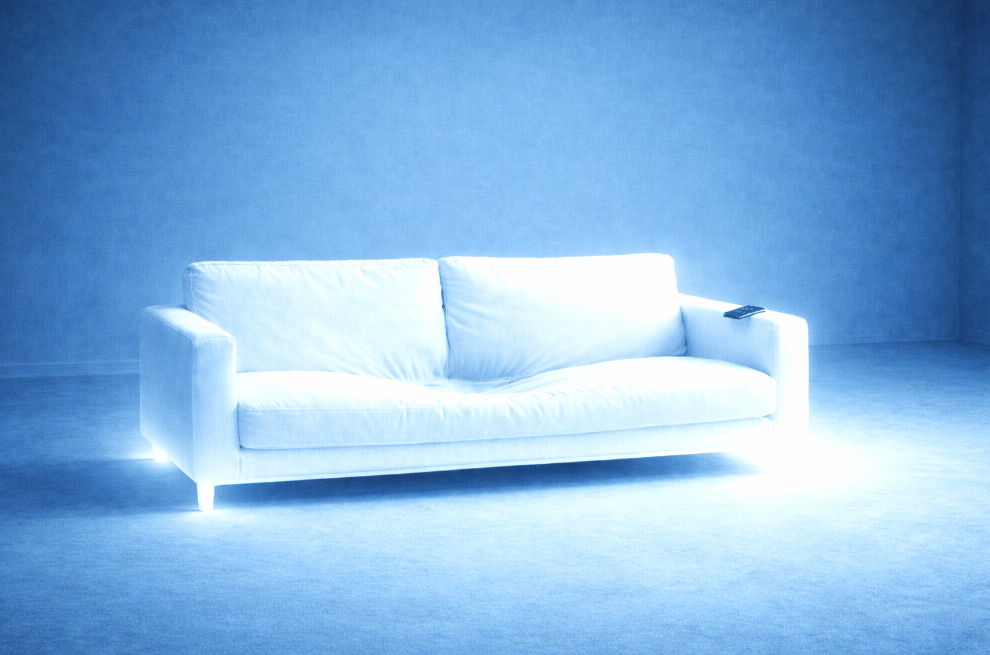
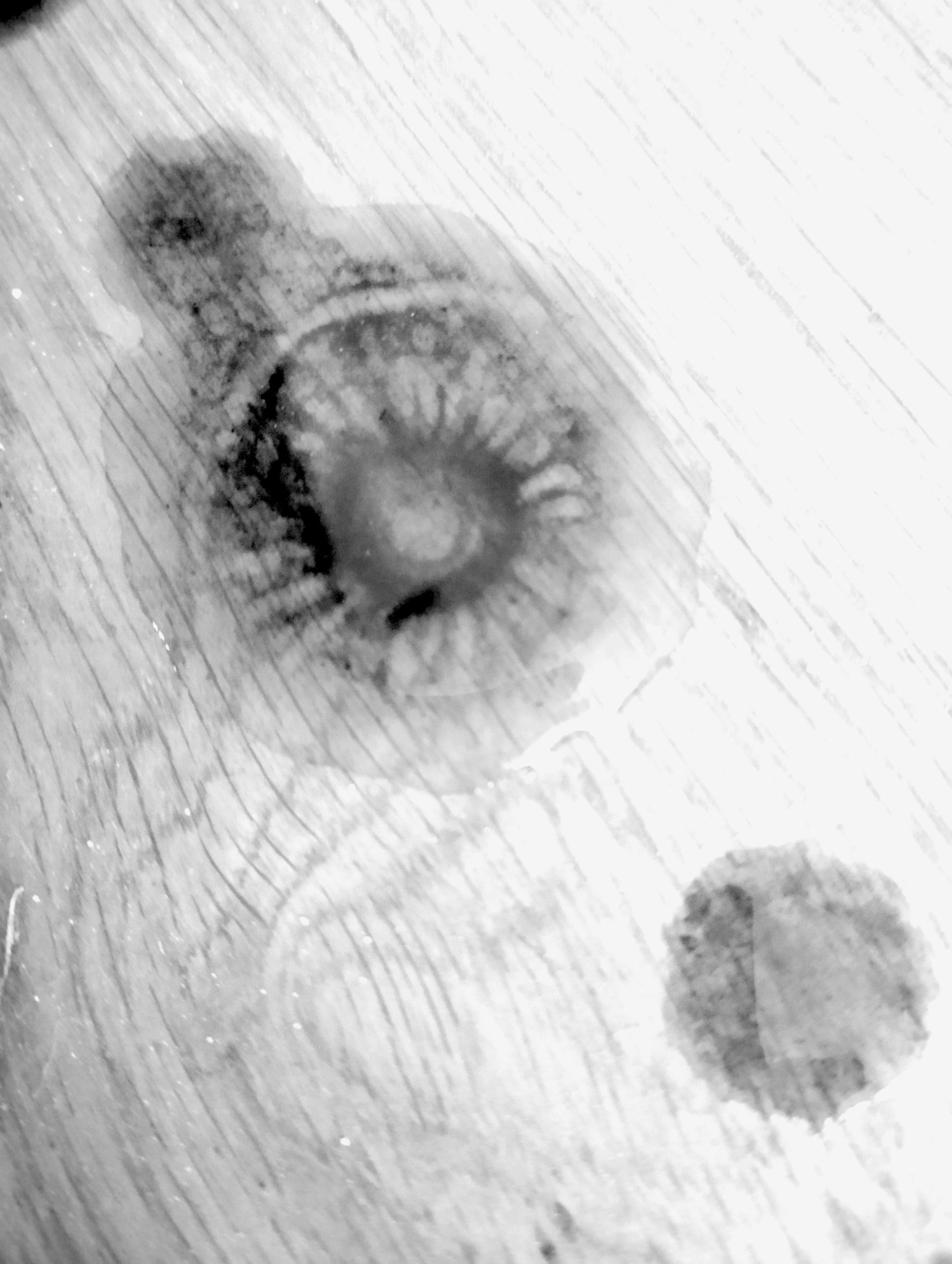
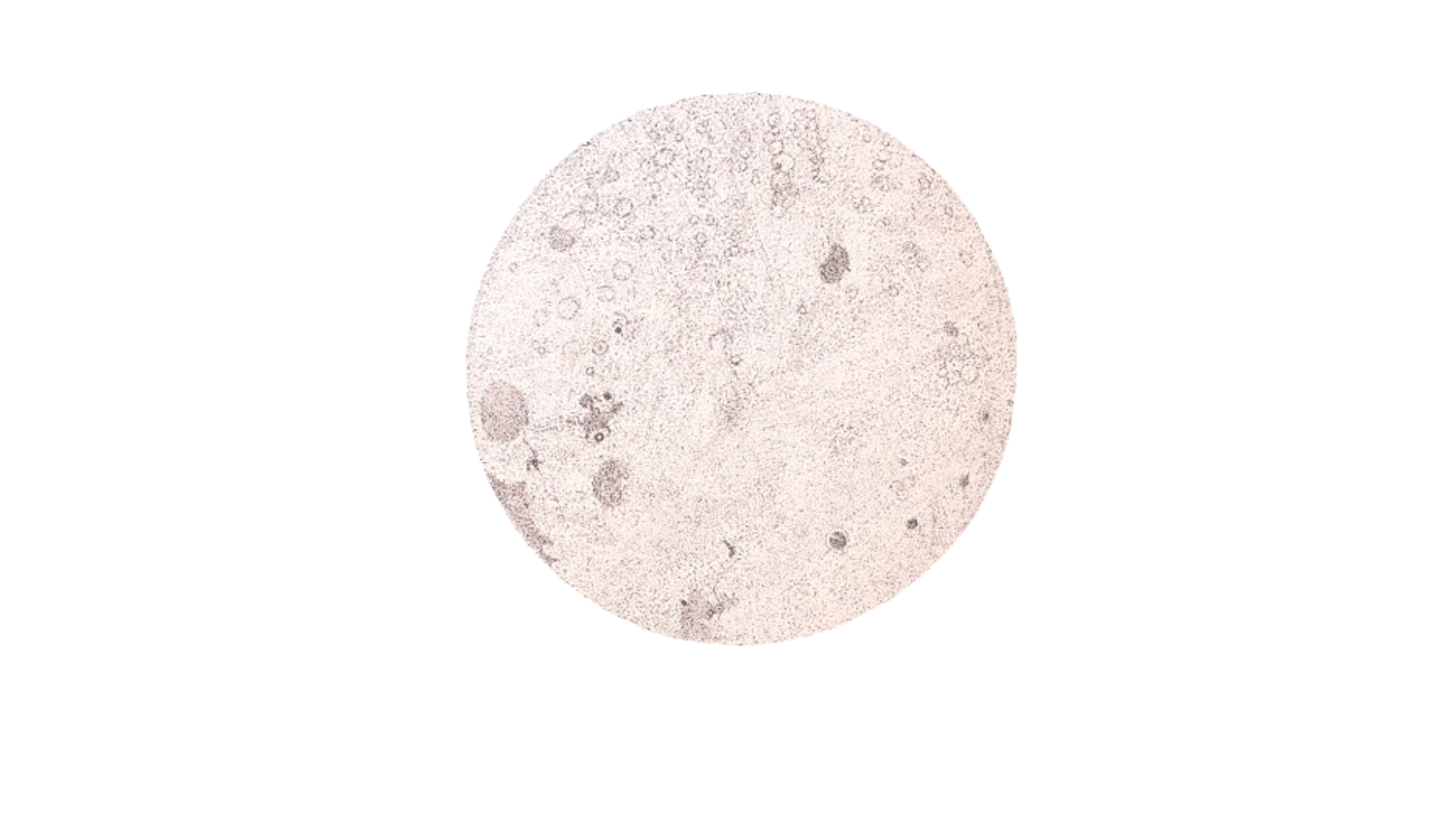
Le blanc éclaire tout, jusqu’à l’effacement. La place est encore tiède, creusée, comme si le corps venait de se dissoudre dans la lumière. Rien ne bouge, rien ne parle, et pourtant quelque chose insiste. Une empreinte demeure, molle, silencieuse, irréfutable. Le sujet s’est levé, peut-être pour une absence brève, peut-être pour autre chose. Une pause triviale, ou une fuite plus profonde, indiscernable.
La télécommande repose là, non comme un oubli, mais comme une promesse de retour jamais formulée. Elle attend, inutile, témoin d’un temps suspendu. Le canapé garde la mémoire du poids, de l’abandon répété, de la fatigue accumulée. Ce n’est pas un vide, c’est une trace. Une preuve qu’un corps a choisi l’immobilité assez longtemps pour que le meuble s’y adapte.
Ici, l’absence n’est pas un manque, elle est une forme. Elle s’imprime, elle façonne, elle modifie l’espace. Le sujet n’est plus visible, mais il continue d’agir par ce qu’il a laissé. Une cavité douce, presque accueillante, qui semble attendre que quelqu’un revienne s’y dissoudre à nouveau.
Cette image est une cour silencieuse. Un rectangle de murs, un puits de regards, un espace où l’on habite sans jamais se rencontrer. Elle naît de Fenêtre sur cour, mais n’en retient que la tension immobile, ce moment où tout est visible et rien ne se dit.
Les fenêtres flottent comme des aplats de couleur. Elles ne racontent plus des vies, elles signalent des présences. Chaque teinte évoque un monde extérieur qui s’est glissé à l’intérieur, une lumière artificielle posée sur l’architecture. La cour n’est plus un refuge, elle est une surface. On ne ferme plus ses volets pour se protéger, on s’allume pour exister.
Les lignes sombres traversent l’image comme des nerfs. Ce sont des escaliers de secours, mais ils n’offrent aucune issue. Ils dessinent des chemins suspendus, des gestes répétés, des fuites qui tournent sur place. Leur forme rappelle celle d’une souris, prolongement discret de la main, indice d’un autre type de mouvement, plus abstrait, plus docile.
Rien ne bouge, et pourtant tout circule. Le regard passe d’une fenêtre à l’autre, sans s’attarder, sans rencontrer de corps. L’absence humaine n’est pas un manque, elle est le sujet. Ce qui reste, ce sont des cadres, des couleurs, des trajectoires, comme si l’intimité avait quitté les lieux avant même que l’on s’en aperçoive.
La cour devient un écran collectif. Un espace où l’on se voit sans se toucher, où l’on est exposé sans être présent. Une veille permanente, douce, presque belle, qui ne fait pas de bruit mais ne s’éteint jamais.
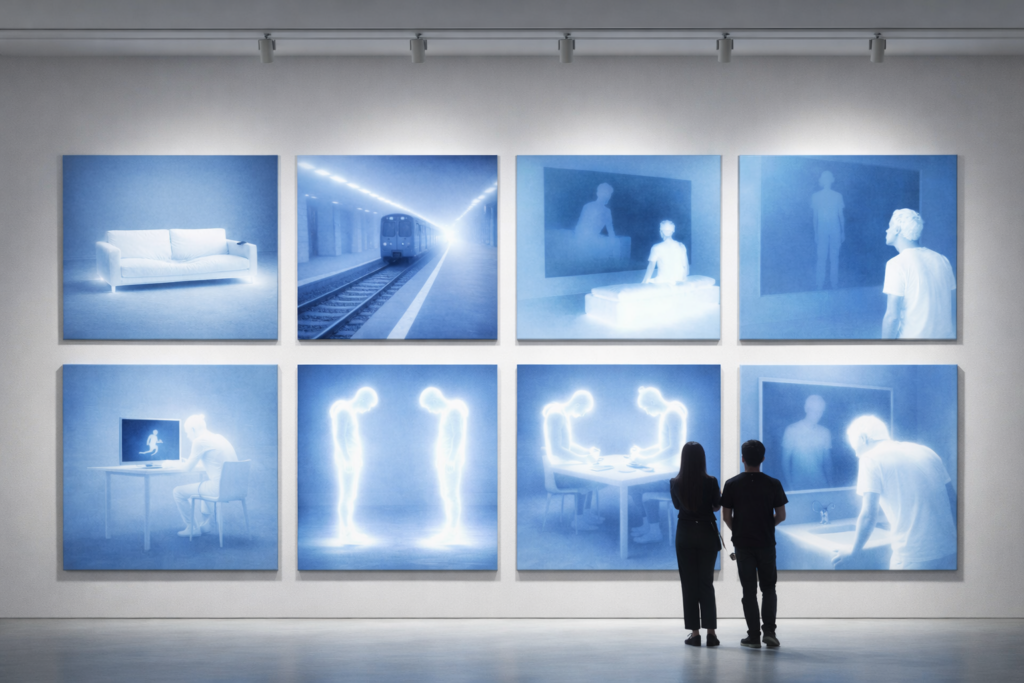
My couch, my desk, my sink, my friends, my home x My loneliness x Blue screens x Cavern Myth
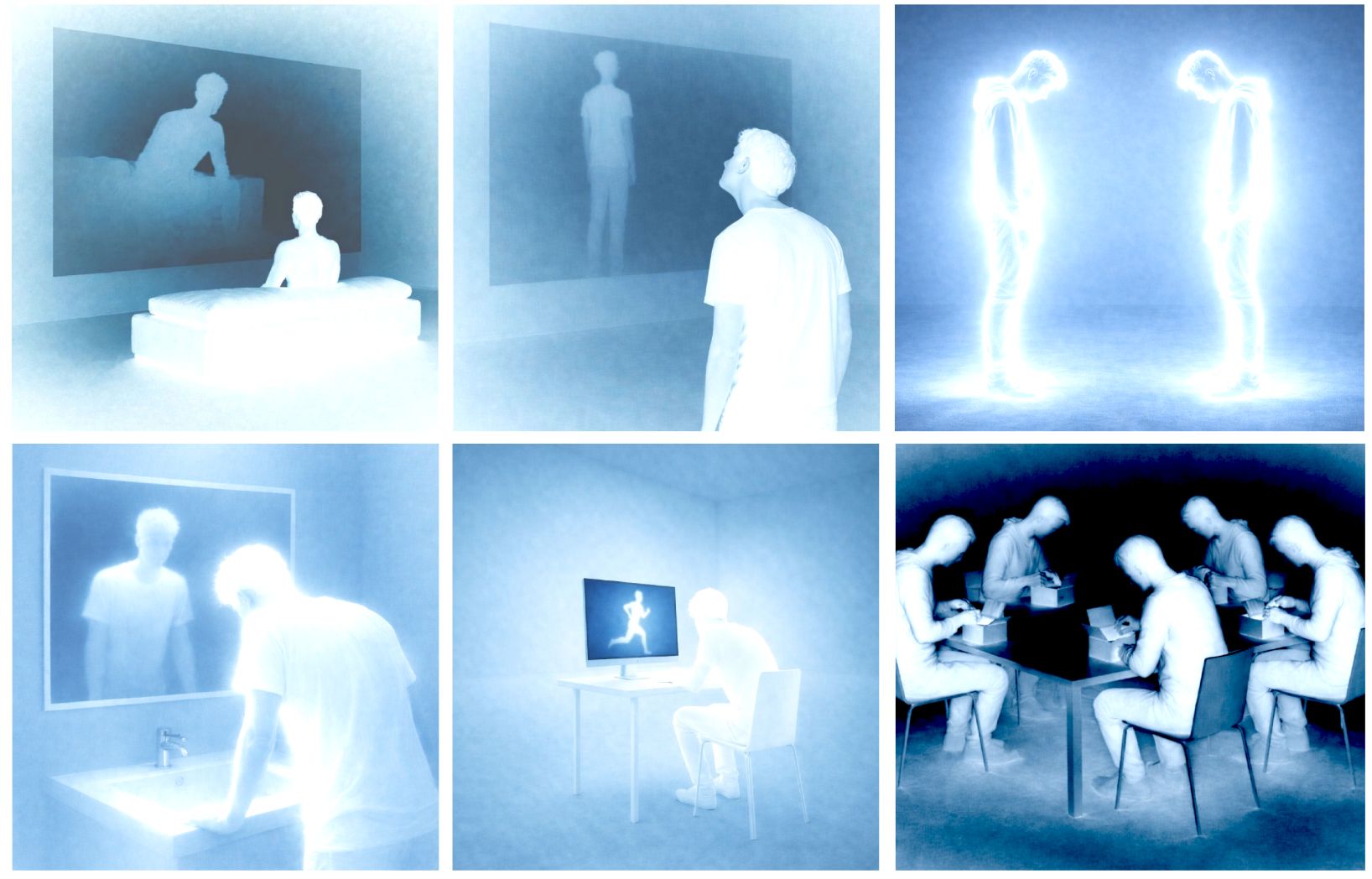
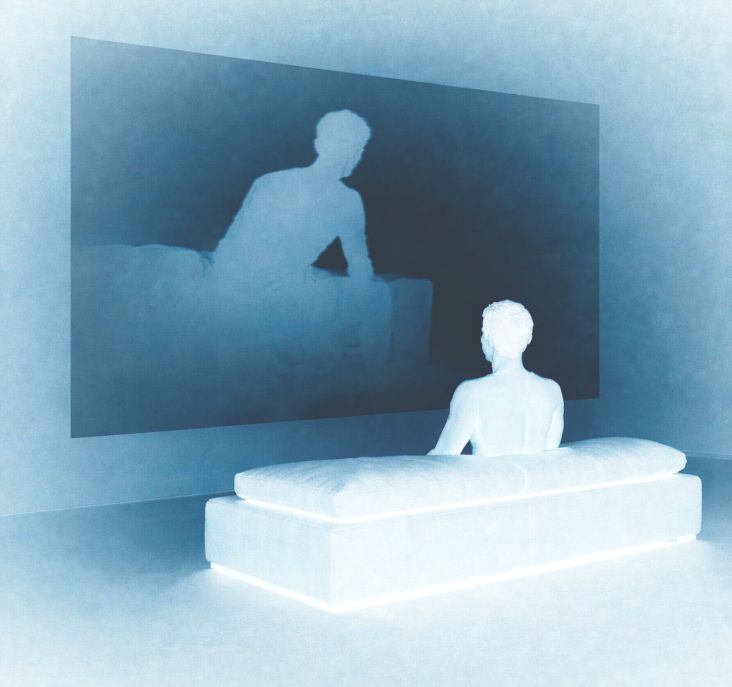
Cette série rejoue le mythe de la caverne, mais en inversant la source de lumière. Ici, ce n’est pas l’écran qui éclaire. En négatif, l’écran devient une masse sombre, presque muette. La vraie émission lumineuse vient du corps lui-même, un corps surexposé, éblouissant, comme s’il avait été converti en signal. L’humain n’est plus celui qui regarde la projection, il devient le projecteur, la batterie, le combustible.
Ce renversement change tout. Le dispositif ne vole pas seulement l’attention, il transforme le sujet en surface lumineuse, en objet visible, en silhouette blanche qui irradie malgré elle. La lumière n’exprime pas une puissance, elle dit une fuite. Elle est l’effet d’une extraction, d’une consommation lente, d’une présence trop sollicitée jusqu’à devenir transparente.
Le face-à-face est d’abord un face-à-face avec soi. Le personnage se tient seul devant une surface qui ressemble à un miroir, mais qui fonctionne comme un écran. Il n’y cherche pas son reflet, il y cherche une version idéale, une ombre parfaite, droite, stable, presque héroïque. Or cette projection n’est pas vraie. Elle n’a ni poids, ni fatigue, ni contraintes. Elle est une vie rêvée, une posture corrigée, une existence qui ne se courbe pas.
En contrepoint, le corps réel est incliné, tête penchée, résigné. Le tech neck apparaît alors comme une écriture du renoncement. Un corps qui cède, qui se plie à l’angle imposé, qui vit en regardant vers le bas, même lorsqu’il est debout. La nuque cassée devient le signe physique d’une soumission douce, quotidienne, sans drame, mais irréversible.
La solitude n’est jamais un décor, c’est le mécanisme. Les espaces sont vides, les interactions impossibles. Même quand plusieurs figures coexistent, elles n’entrent pas en contact. Elles sont côte à côte comme des doubles, des clones, des instances d’un même être séparées par des parois invisibles. Le collectif devient une addition de solitudes lumineuses.
La dominante bleue renvoie à la lumière froide des interfaces, mais ici elle sert surtout à faire ressortir l’éblouissement des corps. Un bleu de veille, de nuit numérique, de pièce fermée, qui encadre des silhouettes trop blanches, presque fantomatiques. La photographie en négatif agit comme une preuve que quelque chose est inversé dans l’ordre des choses, le sujet n’est plus éclairé par le monde, il se consume pour maintenir l’image.
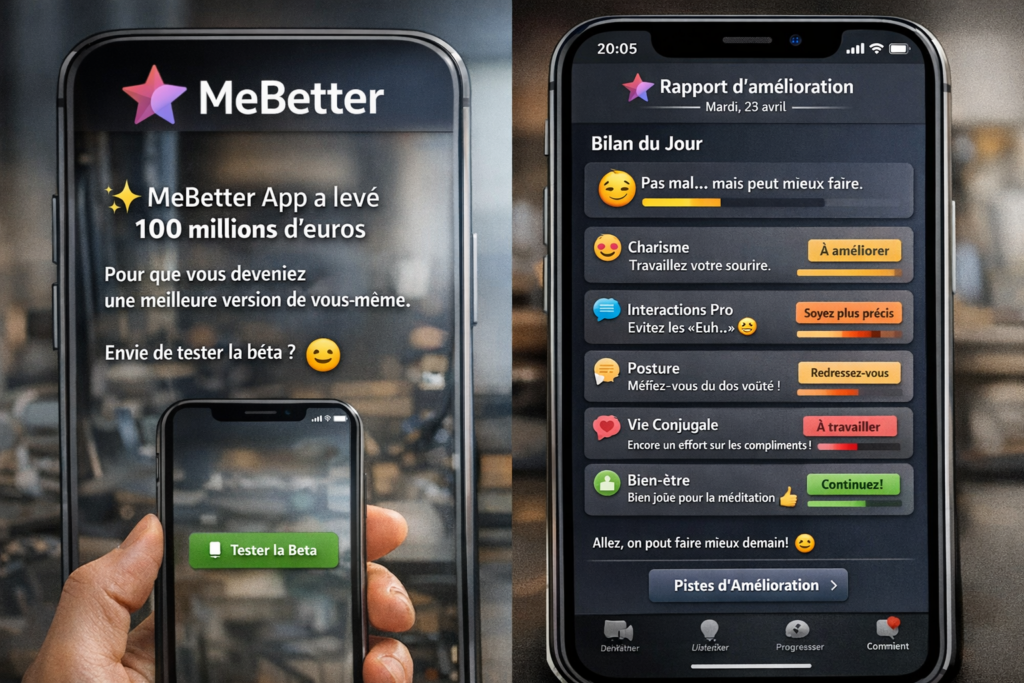
Pour que vous deveniez une meilleure version de vous-même. Oui, vous. Actuellement en recherche de 100 millions d’euros. MeBetter vous accompagne au quotidien. L’app se connecte à vos lunettes, votre smartphone, votre montre, votre bague, votre balance, bientôt à votre grille-pain. Elle vous écoute, vous analyse, vous coache. En continu. Pas de blabla. Juste du coaching opérationnel pour: booster votre charisme, améliorer vos interactions au travail, avec vos collègues et votre hiérarchie, affiner votre posture et votre présence, optimiser votre bien-être, détecter vos maladresses de langage, optimiser votre vie sentimentale, recevoir chaque soir, à 20h05 précises, un rapport détaillé sur vos zones de progression. Le tout dans un ton bienveillant, mais légèrement passif-agressif. Parce que c’est comme ça qu’on progresse. Grâce à MeBetter, devenez la version de vous-même que LinkedIn aimerait voir. Plus éloquente, plus impactante, plus persuasive, plus successful. Même si, au fond, vous rêviez surtout d’une sieste. Des milliers d’heures de personal improvement vous attendent. Gratuit. Enfin, jusqu’à la version Premium à 39,90 € par mois, avec IA intégrée. Détection des silences gênants en visio incluse. Suppression des publicités ultra-intrusives en option. Des publicités qui, de toute façon, vous connaîtront mieux que personne.
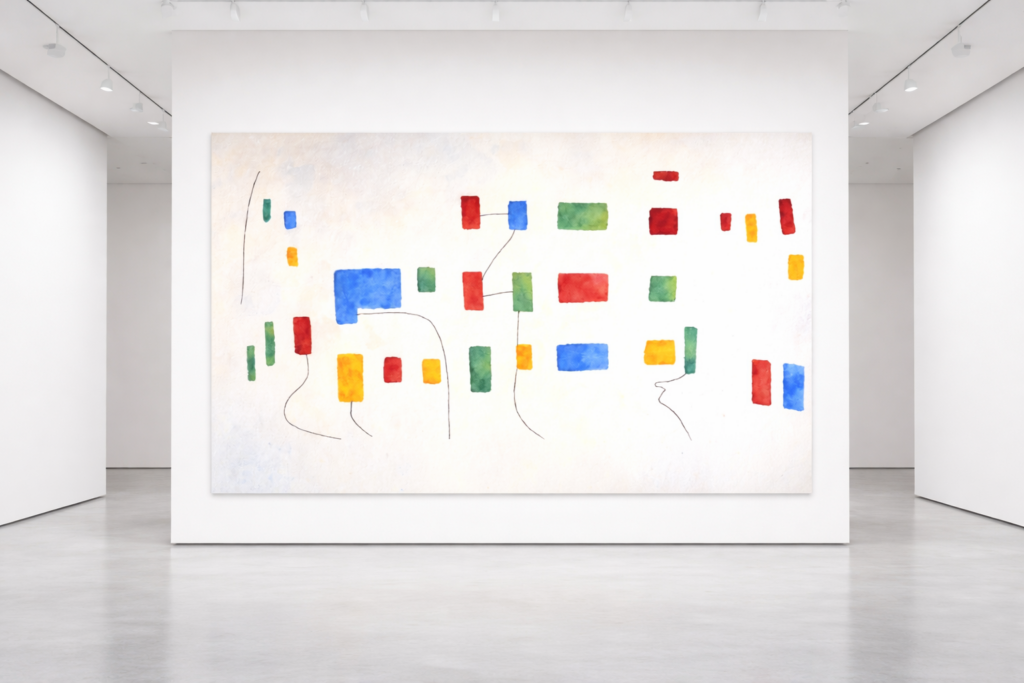
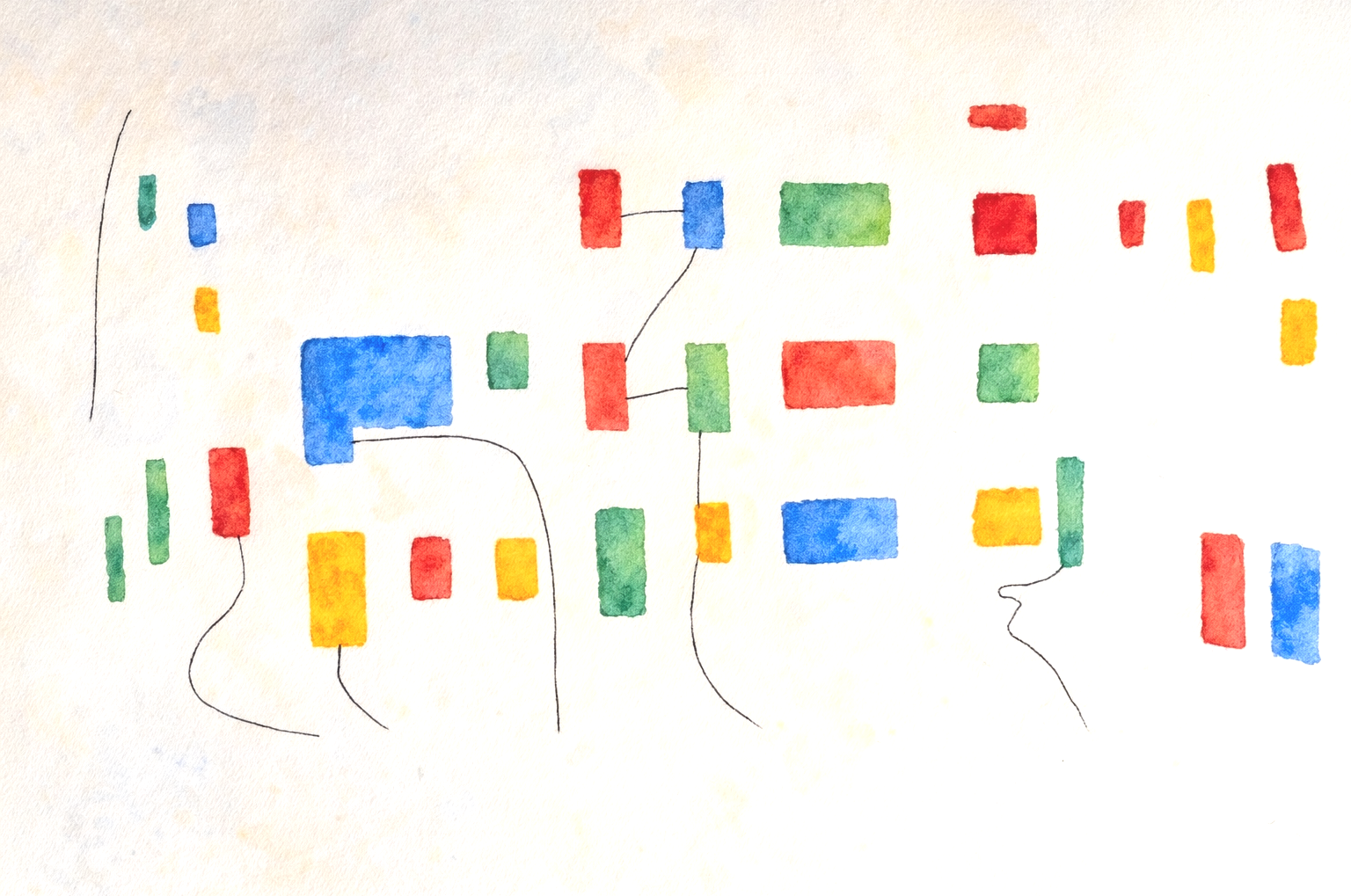
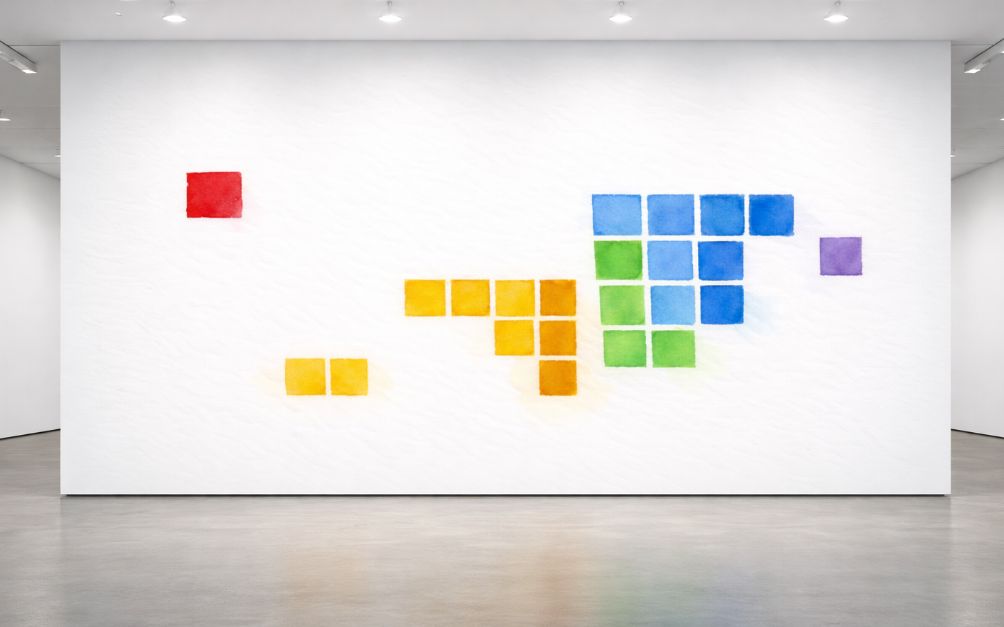
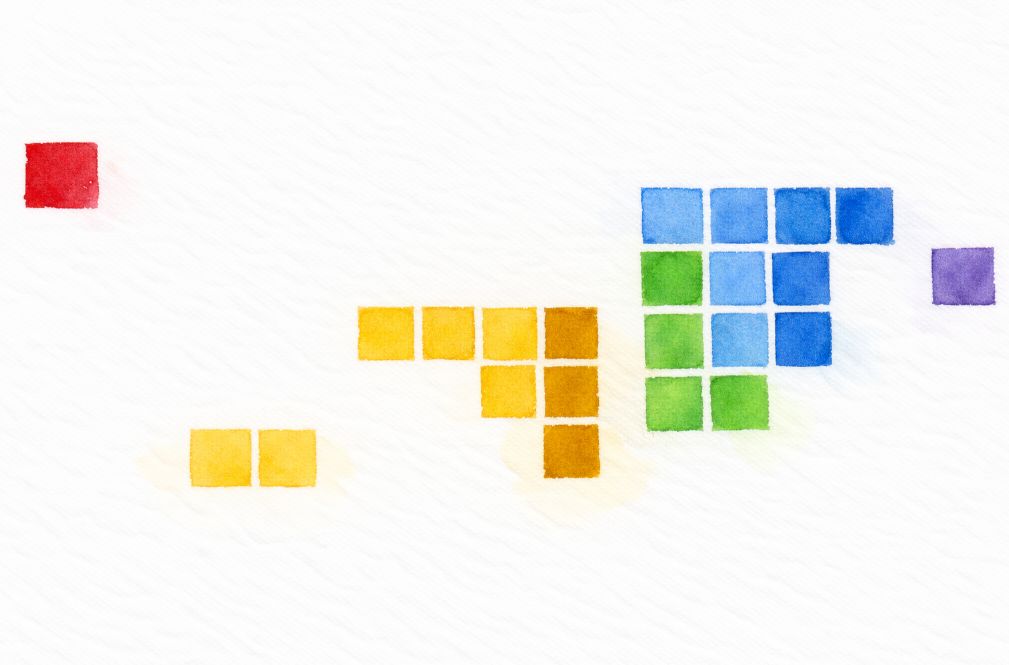
AGILE – Periodic Table x Tetris x NVidia GPU x Acido Basic
AGILE propose une cartographie abstraite des éléments matériels nécessaires à la fabrication des cartes graphiques dédiées à l’intelligence artificielle, notamment celles de Nvidia. Les formes géométriques ne représentent pas des lieux précis mais l’agencement réel, supposé et documenté, des minéraux et éléments chimiques entrant dans la composition des puces et de leurs infrastructures. Les carrés ne sont pas décoratifs. Leur position correspond à une organisation matérielle exacte, un empilement fonctionnel de ressources, comme une table de Mendeleïev fragmentée et déplacée dans l’espace. La référence à Mendeleïev est centrale. Ce qui fut à l’origine une tentative de mettre de l’ordre dans la matière devient ici une grille éclatée, où les éléments ne dialoguent plus pour comprendre le monde mais pour nourrir une machine de calcul. Silicium, métaux conducteurs, terres rares et dopants sont réduits à des blocs, abstraits, interchangeables, privés de leur histoire géologique et humaine. L’ensemble évoque une carte d’extraction des terres rares ou un Tetris suspendu. Un équilibre précaire, figé, où chaque pièce est indispensable et où le moindre manque ferait s’effondrer l’édifice. Ce jeu visuel masque une réalité lourde. Derrière cette apparente simplicité se cachent des chaînes industrielles complexes et des dépenses colossales. À l’échelle mondiale, près d’un milliard par jour est investi pour maintenir et étendre les infrastructures nécessaires au calcul intensif, usines de gravure, data centers, réseaux énergétiques et systèmes de refroidissement. Les vides sont aussi importants que les formes. Ils symbolisent ce qui disparaît du récit technologique, les coûts environnementaux, l’extraction, l’épuisement des ressources et la violence silencieuse d’une industrie présentée comme immatérielle. L’œuvre montre une organisation froide et rationnelle, où l’ordre apparent dissimule une dépendance extrême à la matière et un monde physique constamment sollicité, mais toujours tenu hors champ.
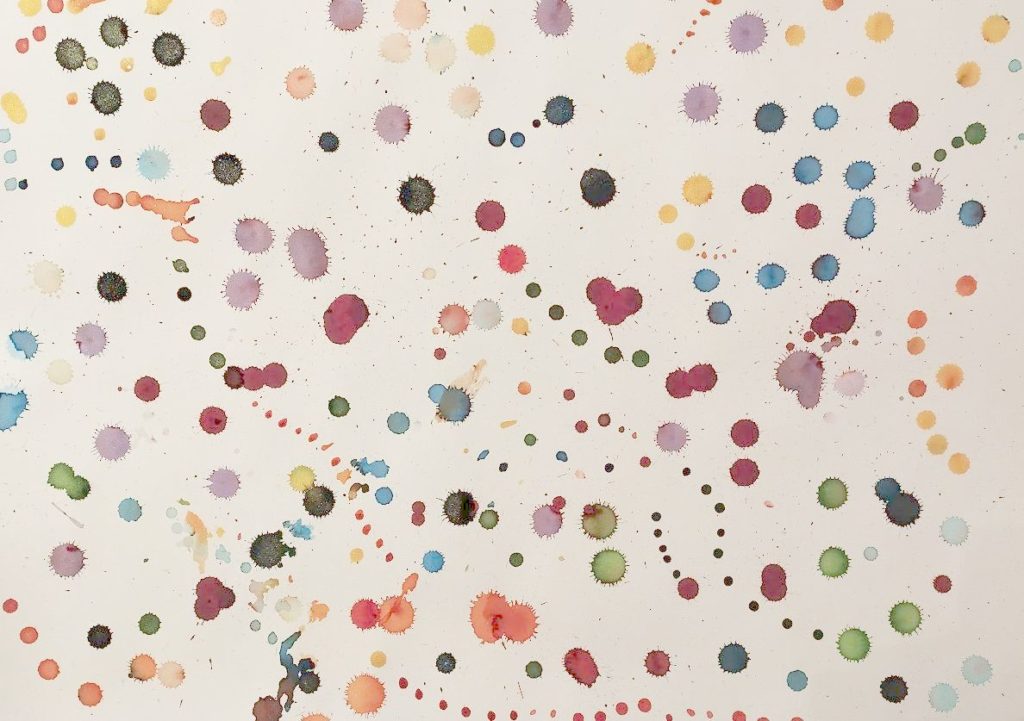
Les engrenages apparaissent disjoints, dispersés, comme si le mécanisme avait perdu son axe. Ils ne s’imbriquent plus, ils flottent, rappelant davantage des cellules que des pièces industrielles. Le corps devient système, fragmenté, morcelé, observé à une échelle presque organique. Chaque forme évoque une unité vivante isolée, autonome en apparence, mais privée de relation fonctionnelle avec l’ensemble.
Les taches colorées évoquent des saignements de nez, non pas réalistes mais transposés, filtrés, esthétisés. Le sang n’est plus rouge, il devient signal, donnée, émotion chromatique. Il circule sans blessure visible, comme une fatigue interne, un trop-plein invisible. Le corps saigne sans choc, comme nos esprits saturent sans impact immédiat.
Les bulles éclatées rappellent celles que l’on lance, que l’on partage, que l’on consomme dans les réseaux. Elles promettent une légèreté, une vie merveilleuse, mais finissent toujours par imploser. L’éclatement est silencieux, sans drame, presque normalisé. Il ne reste que des traces, des auréoles, des résidus colorés sur un fond neutre, clinique.
L’ensemble compose une anatomie contemporaine, ni totalement humaine ni totalement mécanique. Un corps soumis à des micro-pressions continues, enfermé dans des bulles successives, convaincu de sa liberté alors qu’il ne fait que circuler d’un espace clos à un autre. L’œuvre ne montre pas la violence frontale, mais l’usure lente, la désorganisation douce, la perte de cohérence d’un corps devenu réseau.
Prometheus x Olympic fire x Smartphone x Canvas x Negative x Phone
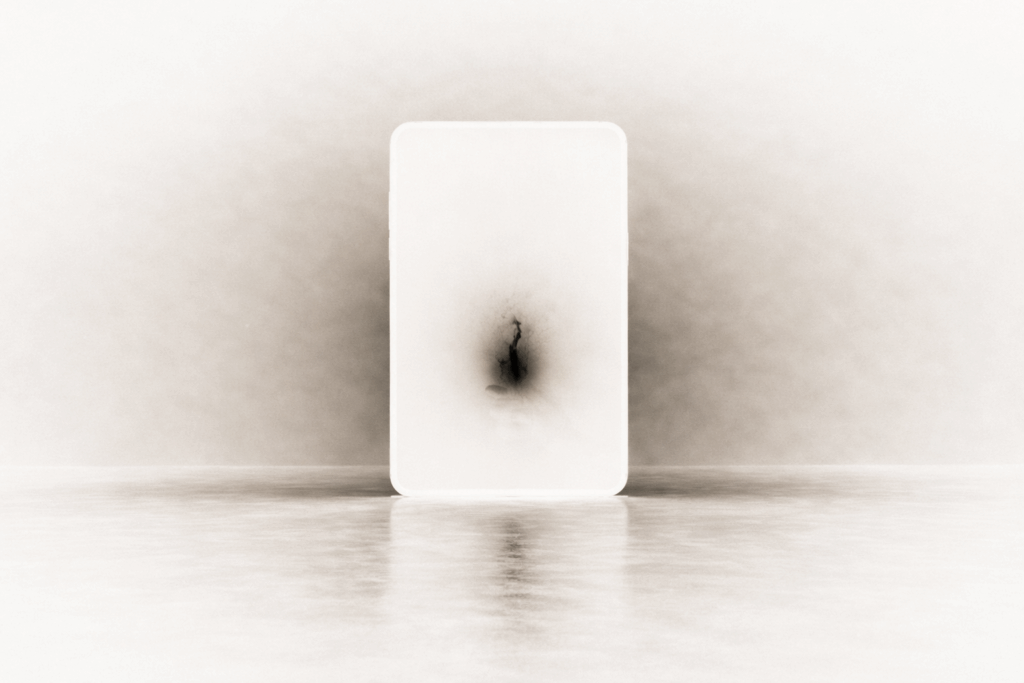
Un écran monumental se tient debout dans l’espace. Sa forme rappelle immédiatement celle d’un smartphone, mais vidé de toute fonction, de toute interface, de tout usage. Il ne renvoie plus à un objet personnel, mais à une présence verticale, blanche, presque silencieuse.
L’image est en négatif. La lumière n’éclaire plus, elle consume. Ce qui devrait révéler semble avoir déjà brûlé la surface qu’il habite.
Au centre, une trace sombre apparaît. Une flamme, ou plutôt ce qu’il en reste. Un feu inversé, absorbé, comme s’il avait laissé son empreinte plutôt que sa lumière. Certains y reconnaissent le feu de Prométhée, d’autres la flamme olympique. Un feu censé unir, transmettre, élever. Un feu devenu image, rituel, symbole figé.
Ici, le feu ne circule plus. Il ne passe plus de main en main. Il reste enfermé dans l’écran, stabilisé, contenu, neutralisé. Il n’éclaire pas l’espace réel. Il se suffit à lui-même.
L’ombre qu’il laisse dessine une autre origine. Plus ancienne, plus organique. Une forme qui évoque l’Origine du monde, déplacée, désincarnée, technologisée. L’origine n’est plus le corps, elle est devenue surface.
Mais une autre lecture demeure possible, plus triviale. Un matelas. Un mégot de cigarette. Une brûlure accidentelle, laissée là comme une trace de passage. Le feu n’est plus sacré. Il est devenu résidu.
Le mythe de Prométhée affleure sans être raconté. La transgression a déjà eu lieu. Le feu a été pris. Mais le châtiment ne frappe plus un héros. Il s’est diffusé, dissous dans l’image, dans l’objet, dans le regard.
Le feu n’éclaire plus le monde. Il éclaire l’écran. Et l’humanité, immobile, ne reçoit plus la flamme. Elle la contemple.Lighting
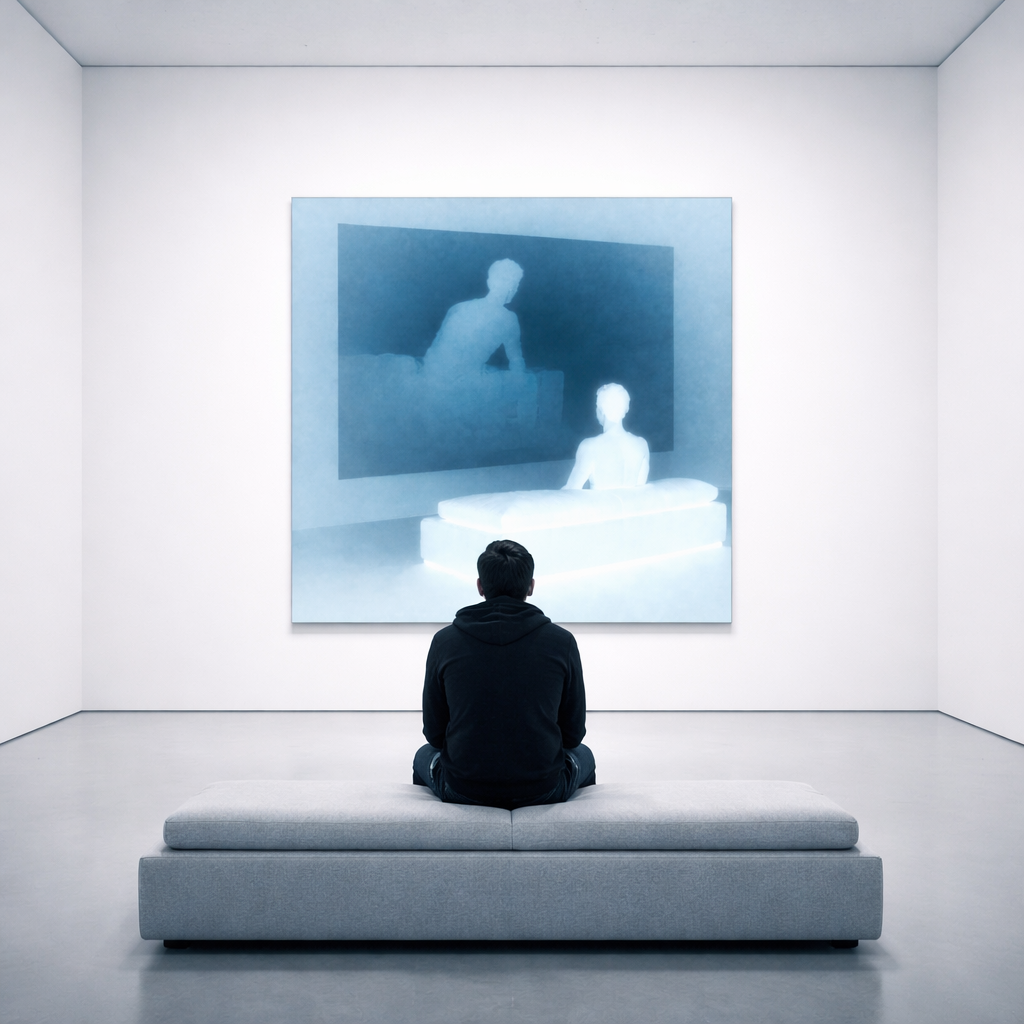
Projection x blue screen x couch economy x cavern myth
Un corps assis. Un canapé réduit à sa fonction minimale. Un écran, face à lui.
La lumière ne vient pas de l’image. Elle vient d’ailleurs. Invisible, directive, elle projette sans éclairer. Ce qui apparaît sur l’écran n’est pas une représentation fidèle, mais une ombre recomposée, légèrement décalée, déjà séparée de celui qui la produit. Un infime glissement suffit à installer le trouble.
L’homme ne regarde rien d’extérieur. Il assiste à sa propre projection.
Le corps est lisse, anonyme, sans signes distinctifs. Ni visage, ni regard identifiable. L’individu est là, présent physiquement, mais absent à lui-même. Il ne fait plus face au monde, il fait face à un système qui le lui renvoie sous une forme simplifiée, stabilisée, contrôlée.
Le canapé n’est pas un objet de repos. C’est un dispositif d’arrêt. Il accueille le corps pour mieux le fixer, pour installer la durée, pour rendre l’immobilité acceptable. Le confort devient une condition de la passivité.
L’écran ne raconte rien. Il confirme. Il boucle. Il renvoie l’individu à une version de lui-même déjà traitée, déjà normalisée. L’image ne ment pas, elle réduit.
La scène évoque une caverne sans murs, sans chaînes, sans contrainte visible. Une caverne domestique, douce, volontaire. Ici, l’ombre n’est pas imposée, elle est préférée. Elle rassure. Elle évite la confrontation. Elle protège du réel.
L’œuvre parle d’un basculement silencieux. Celui d’un monde où l’on ne regarde plus ce qui est, mais ce que le système accepte de projeter de nous. Une existence vécue par procuration, assise, stable, optimisée.
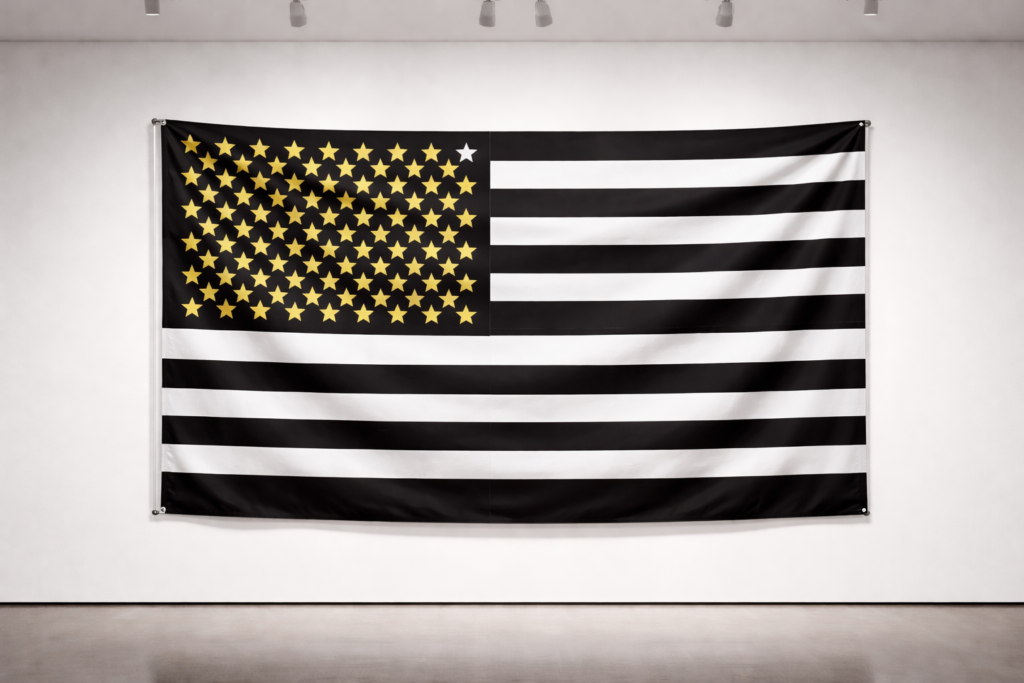
Please rate me détourne le drapeau américain en remplaçant ses étoiles par celles du rating numérique. Des étoiles de confiance, jaunes et standardisées, celles que l’on distribue, que l’on collecte, que l’on attend avant d’agir. Sans elles, plus de réservation, plus d’achat, plus de service. La transaction n’existe que si elle est notée. Ici, la confiance n’est plus politique ni symbolique, elle est calculée. Elle repose sur des scores, des moyennes, des avis agrégés. Les étoiles ne représentent plus des États mais des niveaux d’acceptabilité. Être visible, fiable, fréquentable. Le drapeau devient une interface. Toutes ces étoiles renvoient à un même territoire. Les plateformes qui structurent la confiance mondiale sont presque exclusivement américaines. Elles organisent les flux, arbitrent la crédibilité, hiérarchisent les acteurs. Internet n’a pas de frontière, mais il a un centre de gravité. Plusieurs étoiles s’ajoutent aux cinquante autres. J’ai demandé 5 fois à ChatGPT de ne m’en mettre que 51, il n’a jamais réussi. Elles ne sont pas géographiques. Ce sont les géants de la Tech. Un État sans sol, sans citoyens déclarés, mais doté de lois, de normes et de sanctions. Un pouvoir qui ne s’affiche pas comme tel, mais qui conditionne l’accès, la visibilité et l’existence économique. Please rate me montre comment un symbole de souveraineté se transforme en tableau de scores. Comment la confiance, devenue métrique, gouverne silencieusement les échanges. Un drapeau qui ne protège plus, mais qui demande à être validé. Encore. Toujours
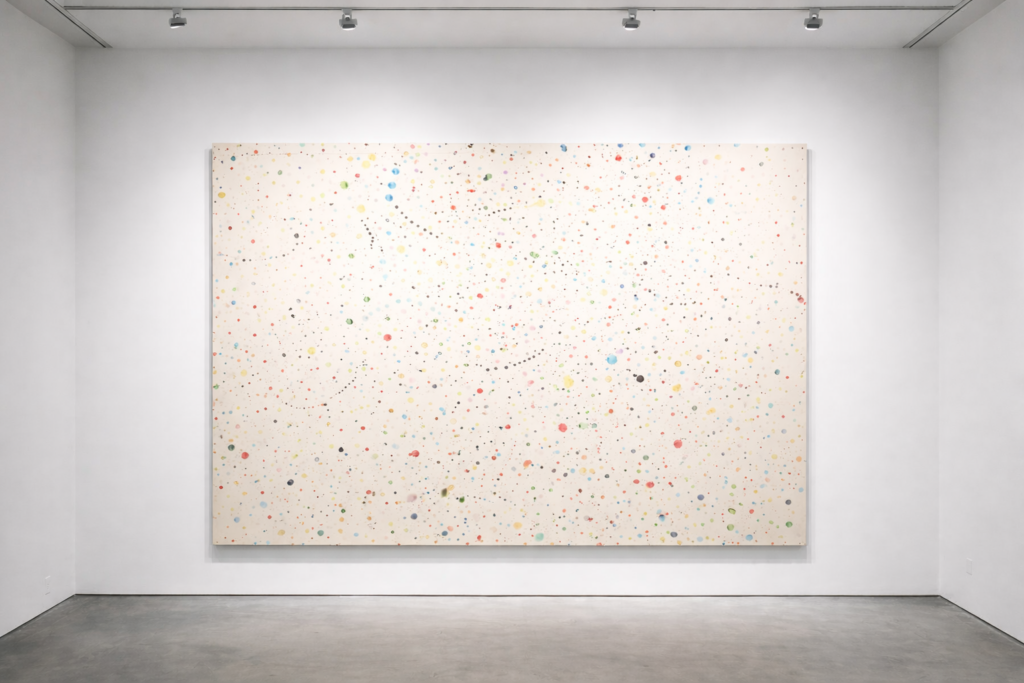
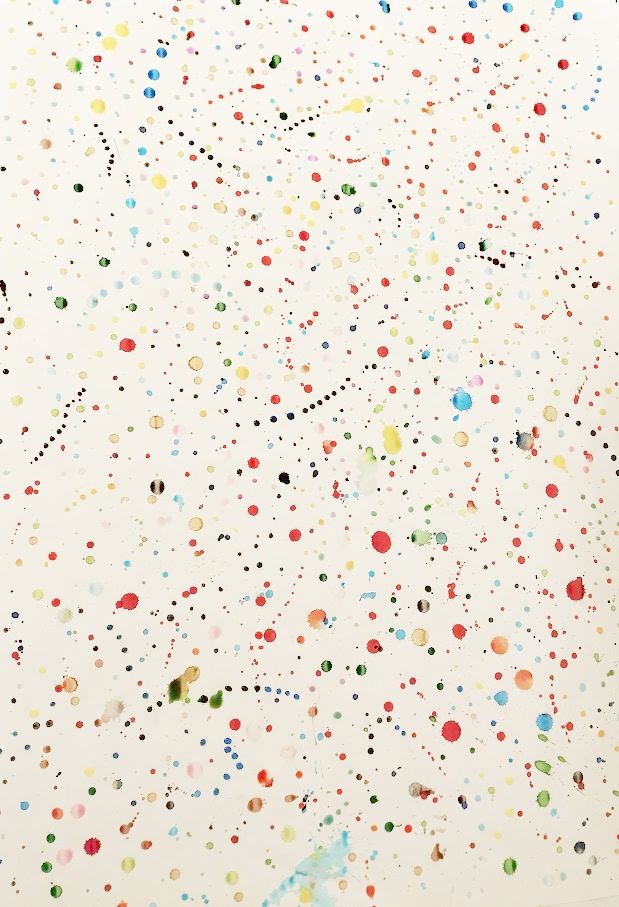
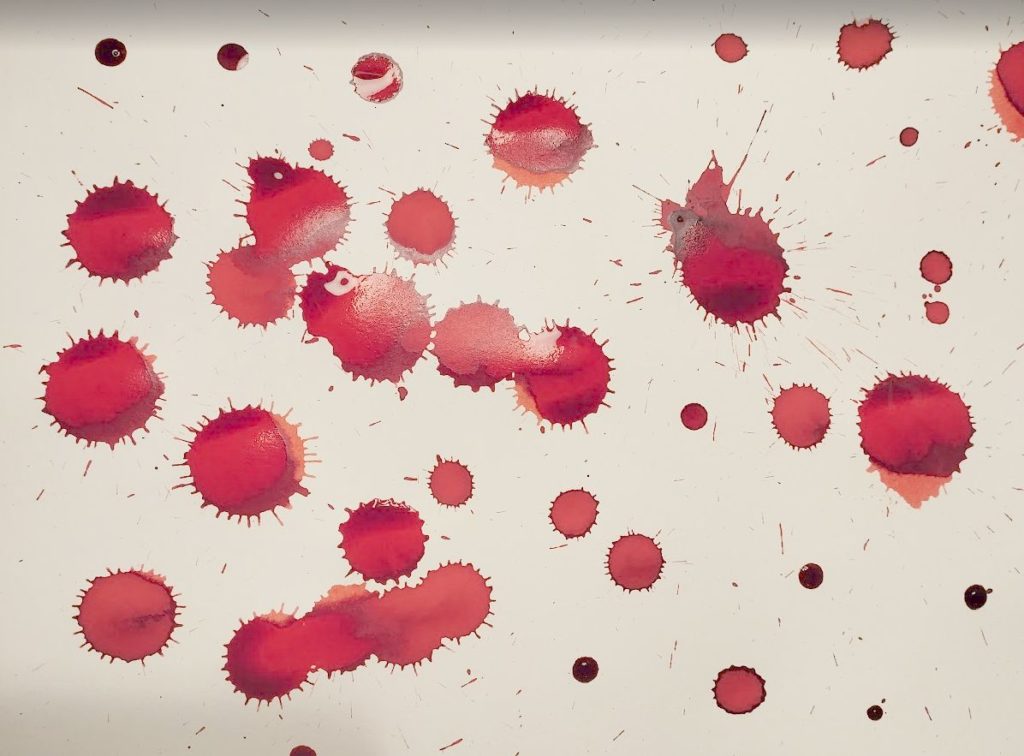
Encre rouge dispersée, gouttes éclatées par la pression, zones plus denses où la matière semble coaguler. On pourrait croire à un accident organique, mais la répartition trop régulière, la répétition des cercles brisés, laisse deviner un geste qui n’appartient plus au vivant. Ici, chaque impact ressemble à un engrenage inversé, un gear biologique, une denture faite de micro-giclures. Un mécanisme qui tourne sans axe, sans centre, mais qui garde la précision froide d’un système conçu pour répéter.
La couleur évoque un sang encore frais, mais ce sang ne nourrit rien. Il ne transporte plus d’oxygène, il n’incarne plus aucune présence humaine. Il devient fluide technique, résidu d’un organisme devenu moteur. Une ressource extraite, utilisée, expulsée. C’est un liquide fonctionnel, non un liquide vital. Sa vivacité apparente masque une logique d’exploitation continue : la dépense, la perte, la fuite sont absorbées dans le cycle, comme si ce rouge devait rappeler que même la biologie peut être réduite à un combustible.
Les éclaboussures périphériques renforcent cette idée du mouvement mécanique. Elles sont les traces d’un choc répété, l’écho visuel d’un rouage, d’un automate qui ne s’arrête jamais. Le motif n’est pas aléatoire, il est trop systématique. C’est la signature d’une automatisation des gestes, d’un processus qui produit du vivant sans intention, ou plutôt qui imite le vivant jusqu’à l’épuiser.
Dans cet espace blanc presque clinique, les taches deviennent des erreurs programmées. Ce qui devrait être une preuve de vie se transforme en preuve de fonctionnement. Le blanc absorbe le rouge comme une interface absorbe un signal : sans émotion, sans mémoire. Tout se déroule dans la froideur d’un protocole, d’une machine qui extrait, projette, répand.
L’œuvre montre ce moment où l’organique n’est plus événement, mais routine. Où le sang n’est plus un choc, mais un motif. Où les éclats ne racontent plus une blessure, mais l’usure d’un système qui continue de tourner même quand il n’y a plus rien à faire tourner.
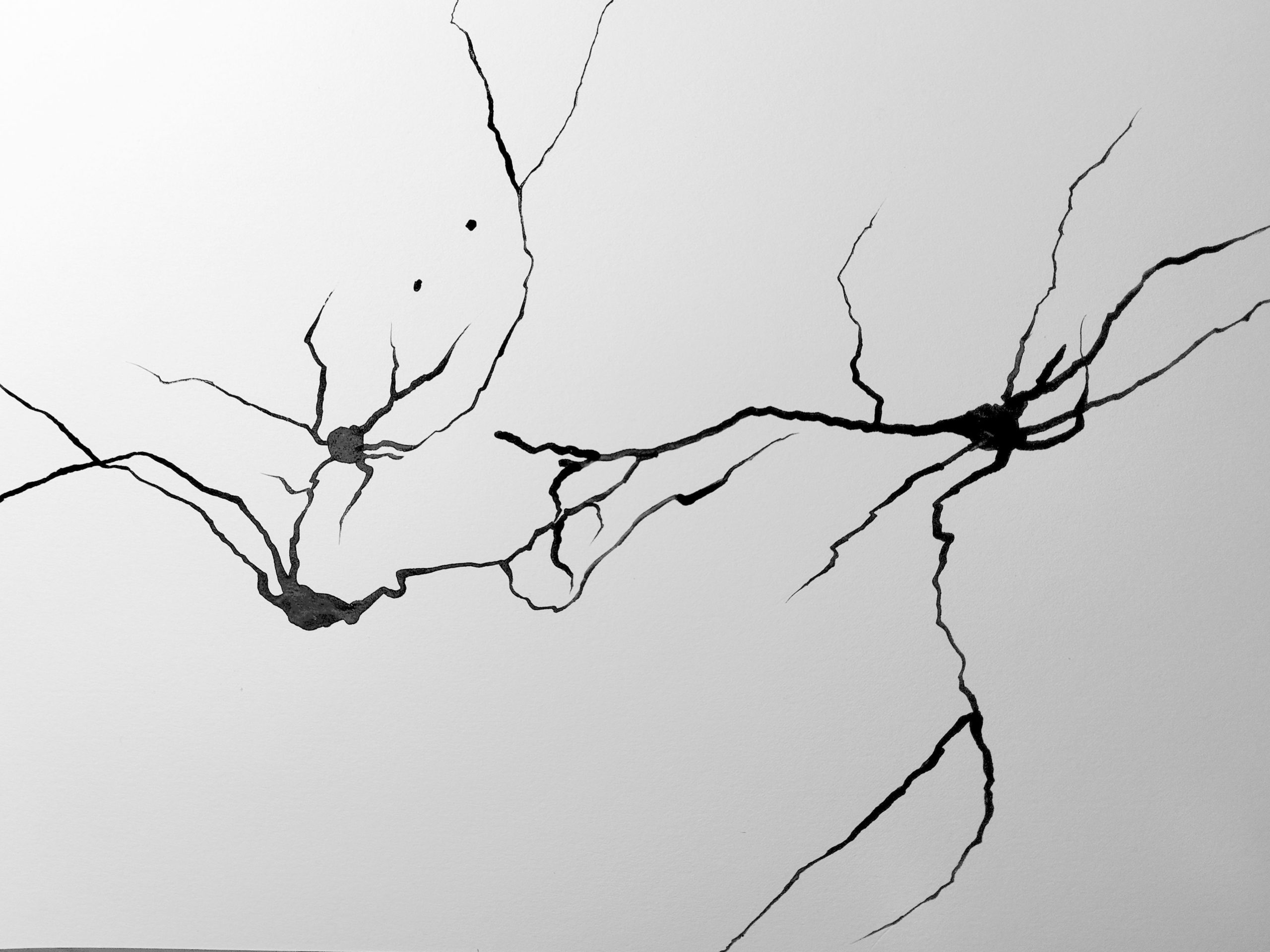
Encre noire, papier blanc, aucune enveloppe humaine. Seulement des ramifications nerveuses qui s’étirent comme des éclairs figés, des axones qui avancent malgré eux, portés par un cycle dopaminergique devenu mécanique. Le dessin suggère des neurones mais ne cherche jamais à les représenter fidèlement. Ils fonctionnent ici comme des silhouettes biologiques vidées de leur intimité, des circuits élémentaires, réduits à leurs impulsions.
La dopamine n’a plus rien du messager de la récompense, elle devient ce flux imposé qui sourd en continu dans nos vies digitales. Sur le papier, les traits se propagent par capillarité comme le ferait une impulsion qui ne sait plus quand s’interrompre. Chaque branchement semble hésiter entre la croissance organique et la fracture, entre l’arborescence du vivant et la ligne cassée du réseau technique. L’encre avance en spasmes irréguliers, comme si le système nerveux lui-même avait été soumis aux logiques d’un algorithme trop simple et trop persistant.
La lumière blanche du support laisse croire à une zone de liberté, puis disparaît en silence derrière les lignes qui se multiplient. Le dessin devient une cartographie minimale d’une chimie manipulée, un cycle biologique repris en main par des usages numériques répétés jusqu’à l’automatisme. Dans ces fissures d’encre, il n’y a plus de sujet, seulement des signaux. Plus de plaisir, seulement une boucle.
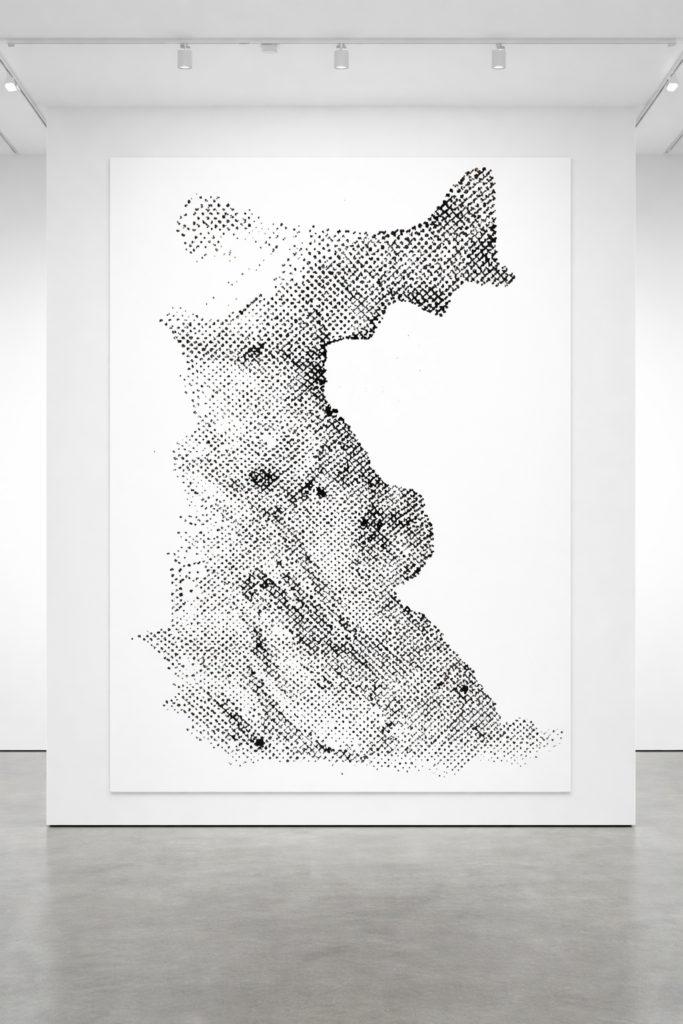
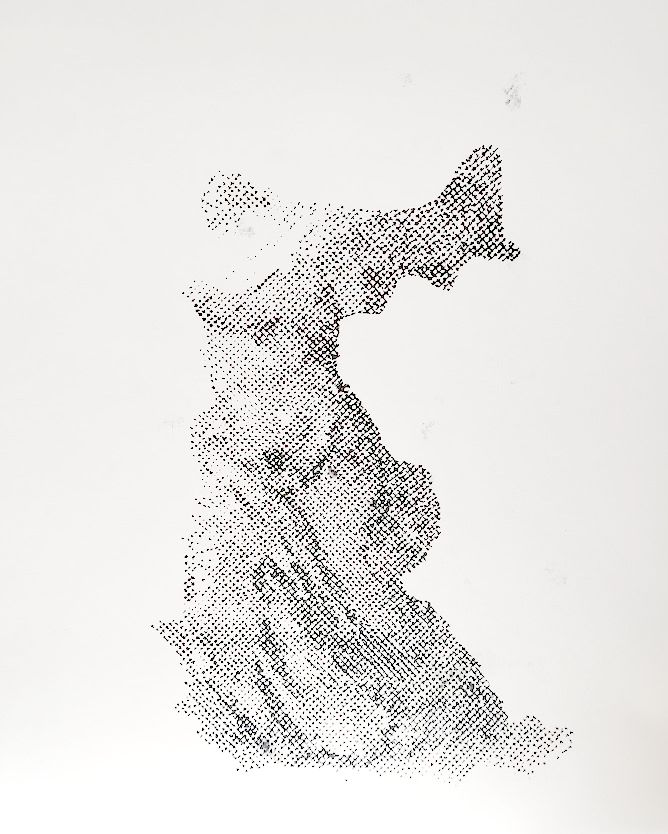
La victoire ne guide rien, ne célèbre rien : elle a perdu sa tête, perdu son cerveau, perdu ce qui fait direction. Elle ne tient plus. Elle s’enfonce lentement. Elle semble prier malgré elle, penchée, affaissée, retenue au moment de tomber. Le souffle ne soulève plus mais pousse. Les ailes sont rognées, ont perdu toute idée de liberté. Elle est au point de chute.
Chaque point est posé mécaniquement, d’un geste toujours le même, sans élan, sans choix. De micro-impacts qui construisent par ce qu’ils détruisent.
De loin : la draperie, l’inclinaison, la dynamique figée. De près : trous, manques, zones qui s’effacent sous leur propre trame, fragments.
Le triomphe n’existe plus. Défaite silencieuse, corps sans élan, signal faible en voie d’extinction.
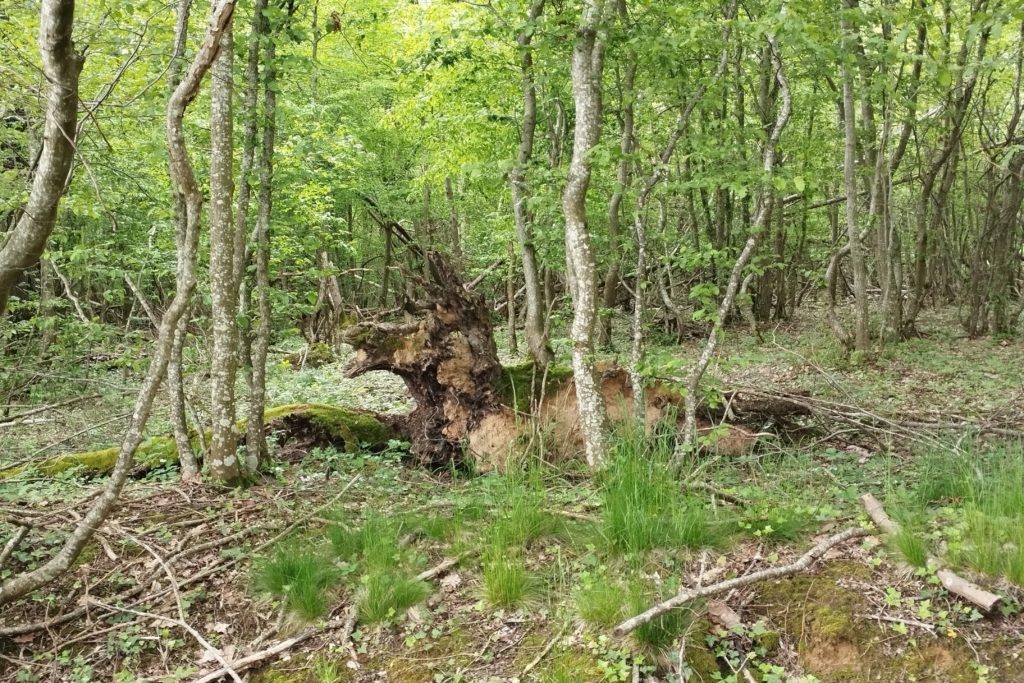
Hello my dear naît d’un arbre déraciné, affaibli par les tempêtes qui secouent désormais les forêts trop souvent. Le tronc mort s’est effondré dans une posture inattendue : une tête, un museau, des bois improvisés par des éclats. Aucun geste humain, seulement la rupture et la fatigue du vivant.
La mousse recouvre le bois comme une seconde peau, épaisse, silencieuse. Elle adoucit la violence de la chute, renforce la silhouette, maintient l’illusion d’une présence immobile. Le mort et le vivant glissent l’un dans l’autre.
Hello my dear n’imite rien : il apparaît. Une créature sans yeux qui semble pourtant regarder. Une figure offerte par le hasard, visible seulement à celui qui accepte de lire dans les fractures du paysage.
Les forces à l’œuvre sont simples : vent, pluie, épuisement, dérèglement. La nature compose ici sans intention, mais avec une précision qui surprend. Une sculpture involontaire, née du climat qui se dérègle autant que des gestes invisibles de la forêt.
Hello my dear rappelle que les présences surgissent parfois là où un corps tombe. Et qu’un arbre mort peut encore, une dernière fois, porter la forme d’un vivant.
Moon dark side x Attraction x Craters x Holes x Circles x Smoke
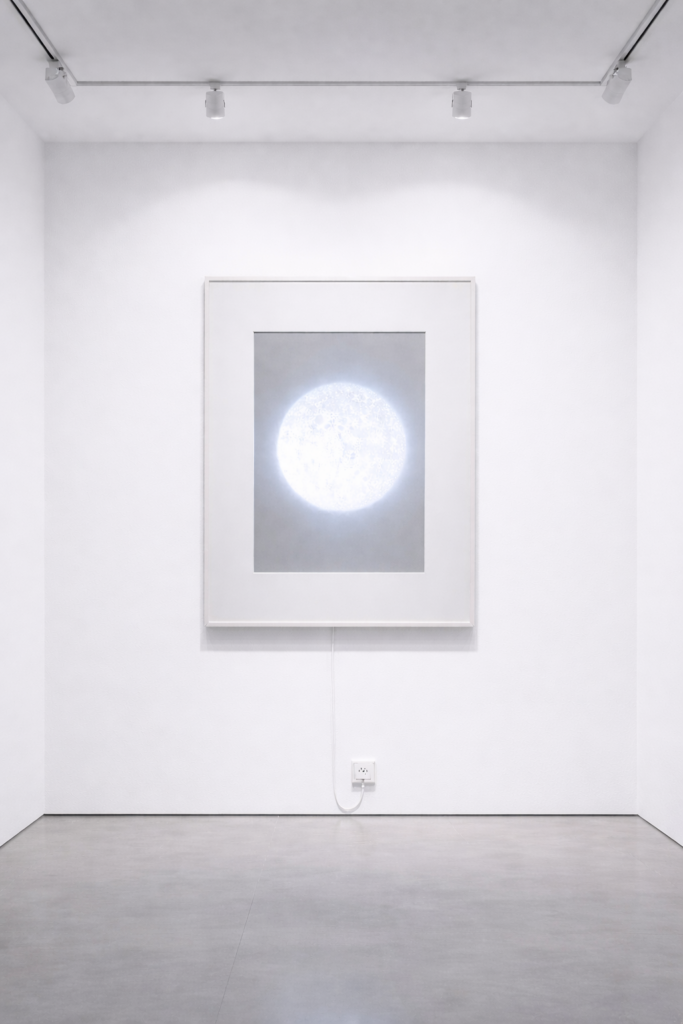
Elle ne produit rien, elle renvoie. Elle éblouit. Elle attire. Comme l’écran que l’on fixe sans y penser. La lumière passe à travers les perforations du papier, agit comme un révélateur. Le dessin n’est pas déposé dessus, mais creusé dedans, vidé, révélé par ce qui disparaît. L’astre existe par des manques. On n’en voit qu’une face, l’autre reste dissimulée. Comme dans la réalité, la face cachée n’est dévoilée qu’avec de la technologie, tardivement, grâce aux instruments et à la science.
L’astre agit sur les corps. À distance, il déplace les marées, règle des cycles, dérange les nuits, nourrit des légendes, métamorphose. Il est une force discrète mais constante, dont l’influence traverse l’espace.
Le geste est répété, percée après percée, jusqu’à l’automatisme. La respiration est mécanique. Les impacts s’accumulent, s’organisent, se troublent. Ils forment des cratères, nets ou diffus. De loin, la surface semble lisse. De près, elle devient un relevé de chocs, une cartographie de cicatrices. Une peau marquée. La surface est paysage, épiderme marqué, matière sensible, traces, empreintes, ombres.
Chaque trou est un minuscule déplacement, une pression, un impact muet.
Présence lointaine qui modèle en silence. Attraction permanente, réfléchie, passive. Lumière que l’on regarde trop longtemps sans s’en rendre compte.
La Full Moon Party est ici vidée de son folklore. La fête n’est plus un moment d’excès collectif, mais une surface surexposée, blanchie par la lumière, saturée jusqu’à l’épuisement. Ce qui reste après la nuit, ce ne sont pas les corps, ni la musique, mais des traces, des impacts, des manques. La célébration s’est dissoute dans sa propre intensité. La fête est finie, il ne subsiste qu’un sol criblé, une lune cratérisée, témoin muet d’une attraction consommée jusqu’à l’usure. L’œuvre montre l’après, quand l’éblouissement retombe et que l’on découvre, dans le silence, les marques laissées par une fascination prolongée.
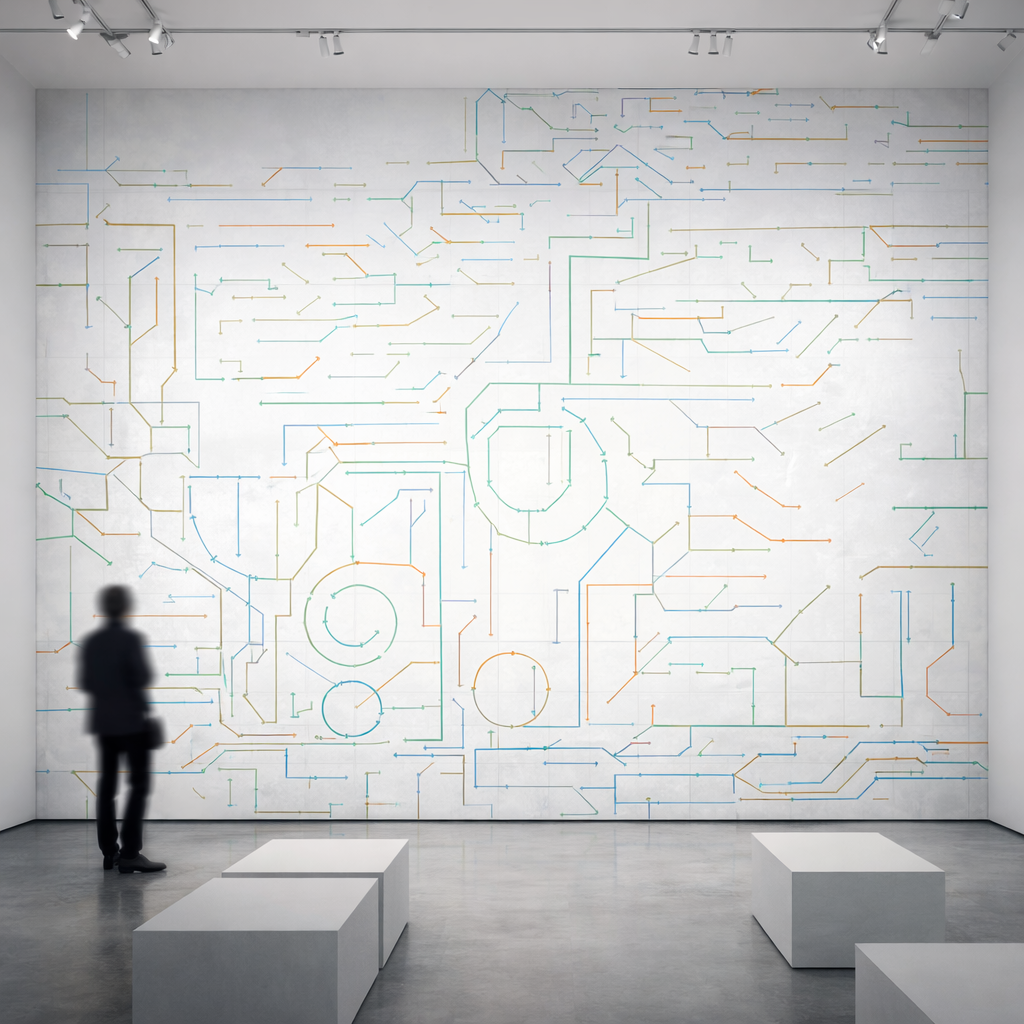
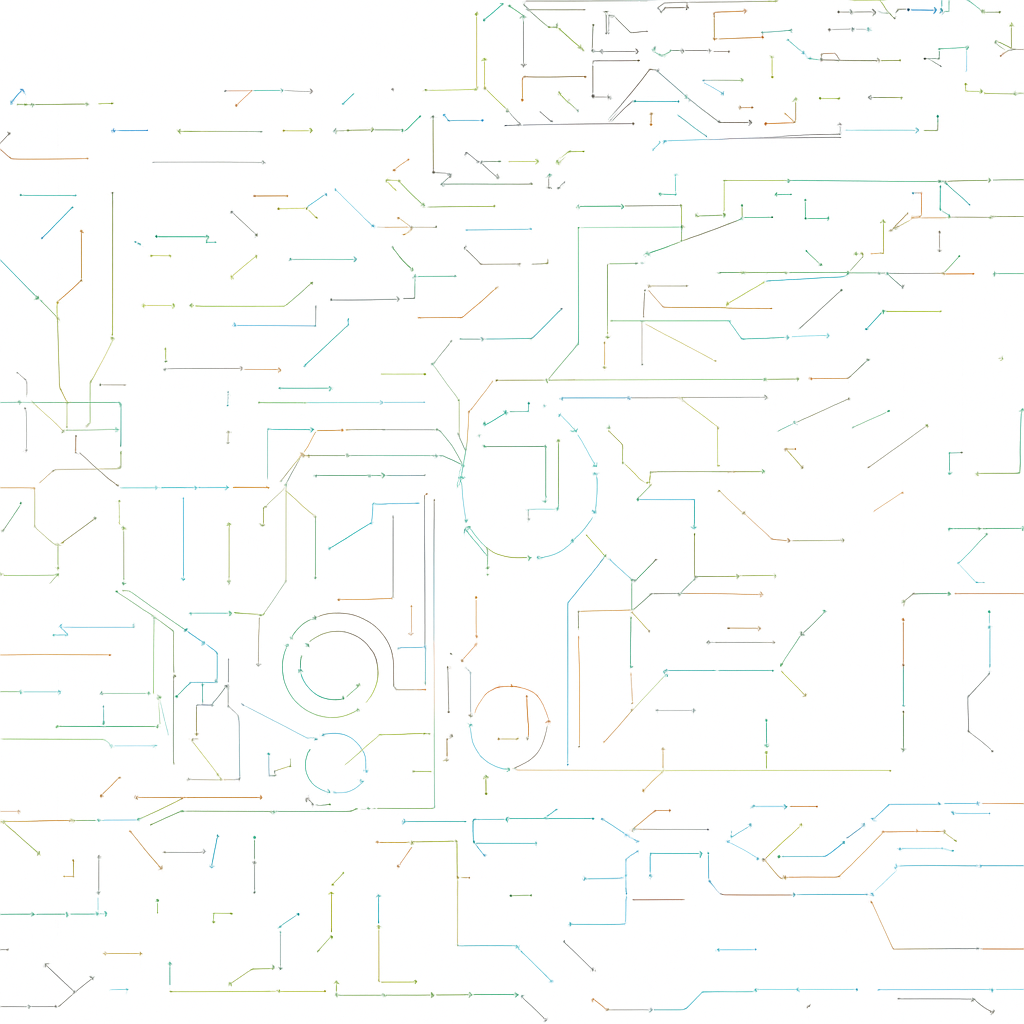
Inspirée de la célèbre carte métabolique de Boehringer, Traffic Jam transpose la complexité biochimique du corps humain dans une logique de congestion systémique. Ce qui, à l’origine, illustre la perfection des cycles vitaux devient ici une cartographie d’automatismes : un réseau saturé, une circulation continue où chaque molécule obéit à un trajet imposé.
Les flèches, dépouillées de leurs noms et de leurs légendes, ne signalent plus la vie mais la répétition aveugle du mouvement. Tout y circule, rien ne s’y incarne. La biologie se confond avec la logique algorithmique, le métabolisme devient protocole, l’humain s’efface derrière le processus.
En jouant sur la métaphore de l’embouteillage métabolique, l’œuvre questionne la réduction de la vie à une somme de flux automatisés, le corps à un réseau de production sans conscience, et le monde vivant à une mécanique d’optimisation. Sous l’apparente neutralité scientifique, Traffic Jam évoque l’épuisement du vivant pris dans les circuits fermés de ses propres algorithmes.
Moon hidden face x pixel art x craters x cells x map x coding x Full moon Party
Face cachée, dessin d’ombre et de poussière. Un astre muet, disséqué en milliers de points, s’étire sur le papier comme une carte du silence. Aucune lumière, seulement la mémoire de ce qui frappe et s’efface.
La Lune ne crée rien. Elle ne fait que renvoyer la lumière des autres. Un astre mort devenu influenceuse du vivant.
Toujours visible, jamais entière : la moitié de son visage nous échappe. Cette face cachée — muette, opaque — rappelle tout ce qu’on ne veut pas voir dans nos propres reflets numériques.
Comme elle, nos écrans brillent sans source, éclairent sans comprendre, attirent sans nourrir. Pixel après pixel, nous orbitons autour d’images mortes, convaincus qu’elles nous éclairent.