IA fake faces x no sense
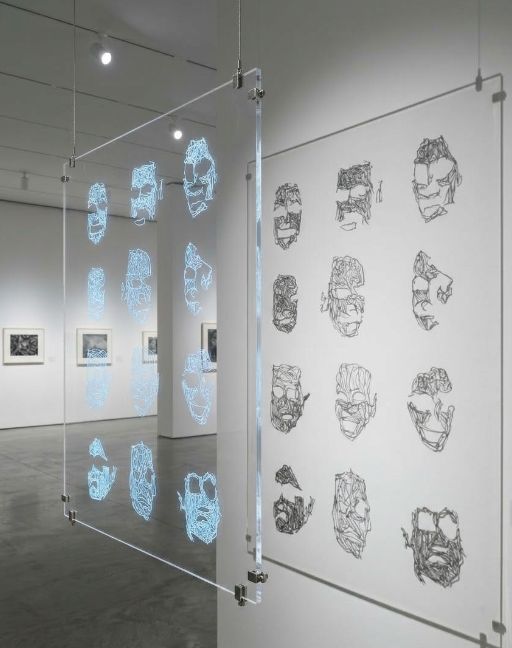
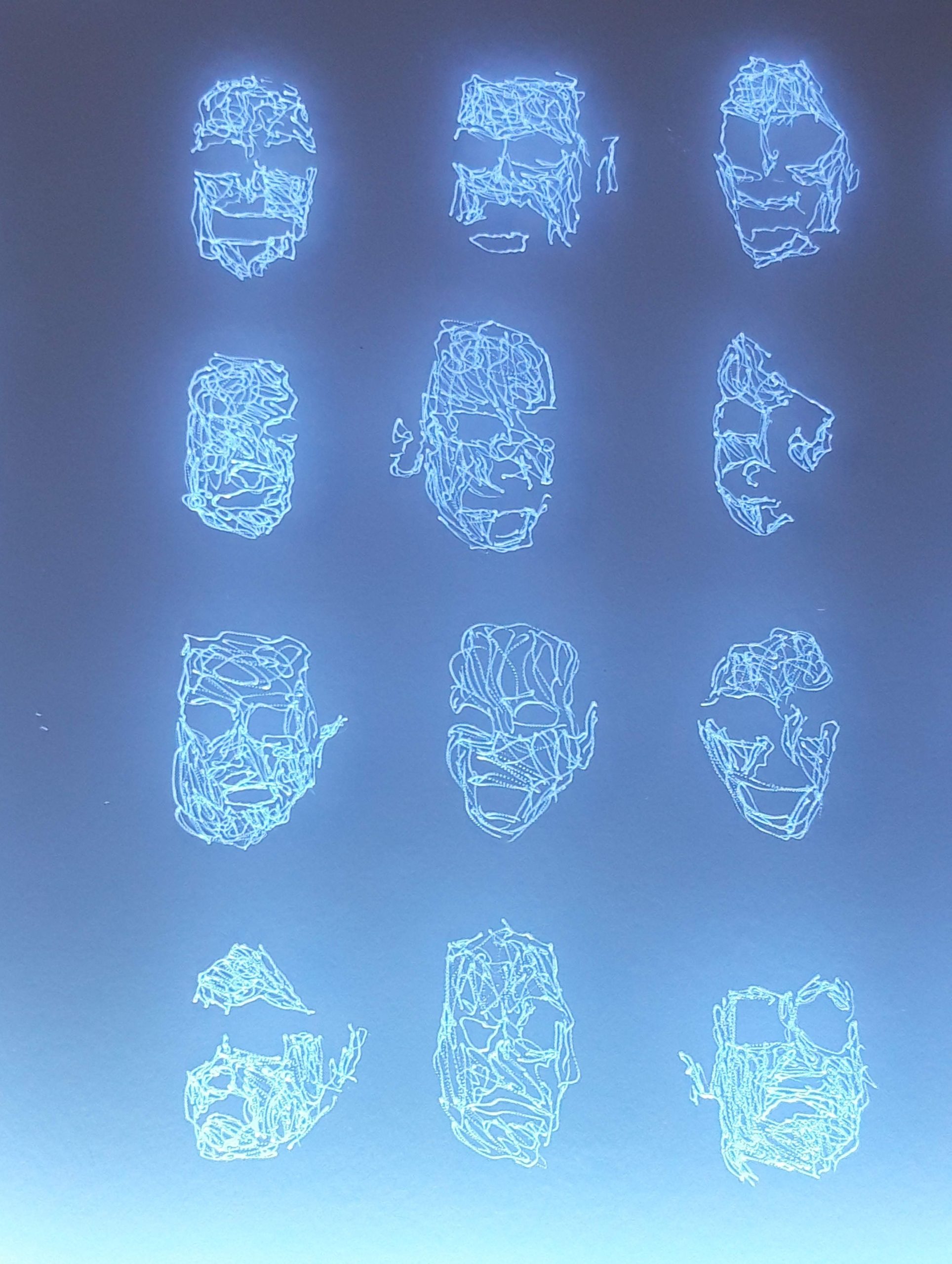
Engraving on Plexi + Blue light Led – 30 x 20 cm
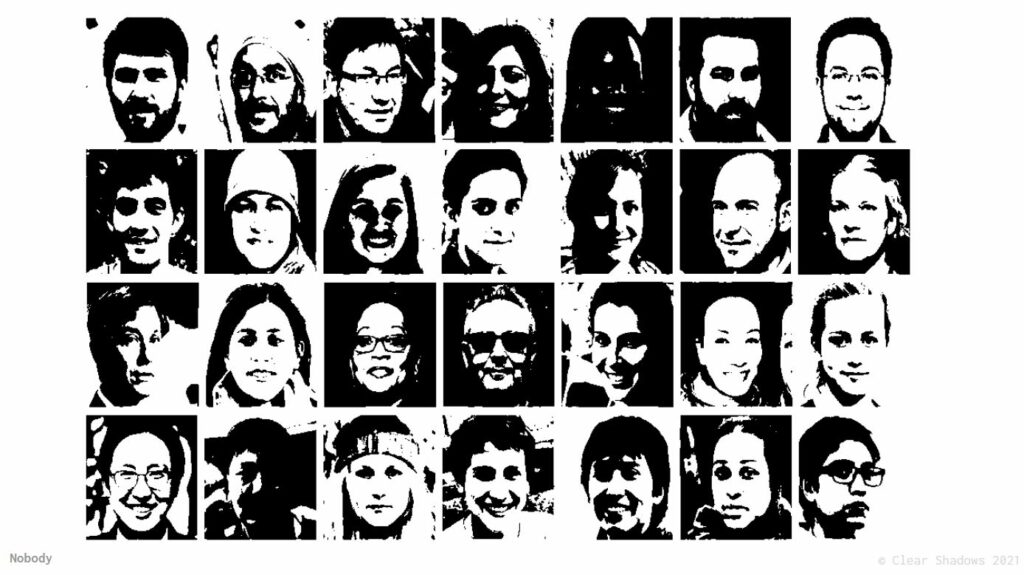
Douze visages spectraux s’alignent tels des apôtres numériques — figures d’une nouvelle religion, codée en pixels et en probabilité. Aucun de ces individus n’existe. Leur dieu ne se voit pas. Générés par une IA d’avant l’ère ChatGPT&co lancée par un lanceur d’alerte issu de la Big Tech, ces portraits visaient à dénoncer la montée en puissance de l’illusion générative. Ici, ils reviennent privés de tous leurs sens : pas d’yeux, pas d’oreilles, pas de bouche — aucune entrée, aucune sortie.
Monsters transfigure ces ensembles de données anonymes en icônes sacrées et vides. Illuminées par une lumière LED bleue, les gravures suggèrent une transcendance — mais n’offrent que l’absence. Il ne s’agit pas de présence divine, mais de vacuité synthétique. Ces « apôtres » ne prêchent pas — ils ne voient rien, n’entendent rien, ne disent rien.
Ce sont les figures de remplacement d’un futur où l’humain est simulé, indexé, effacé — et vénéré comme artefact.
—
Twelve (like apostle) spectral faces line up like digital apostles—figures of a new religion, one coded in pixels and probability. None of these individuals exist. Generated by a pre-ChatGPT-era AI launched by a Big Tech whistleblower, these portraits were meant to denounce the rising power of generative illusion. Here, they return stripped of all senses: no eyes, no ears, no mouths—no way in, no way out.
Monsters transfigures these anonymous datasets into sacred, vacant icons. Illuminated by blue LED light, the engravings suggest transcendence—but offer only absence. This is not divine presence, but synthetic vacancy. The “apostles” here don’t preach—they observe nothing, hear nothing, say nothing.
They are placeholders for a future where the human is simulated, indexed, erased—and worshipped as artifact.