Catégorie : Tech for good
-
I am your product
Pigeons x Internet users categorization
Quand vous ne payez pas pour un produit, c’est que vous êtes le produit.
Les utilisateurs d’Internet sont devenus dépendants de leur fil personnalisé.Un essaim de pigeons pixellisés bat des ailes avec régularité, reflété et démultiplié en taches numériques abstraites. Au premier regard, ce sont des oiseaux. Au second, ce sont des usagers — conditionnés, catégorisés, convoqués par une main invisible. Le grain jeté n’est pas de la nourriture, mais du contenu. Ce qui suit est mécanique : attraction, alignement, addiction.
Le chœur commence : « Nous sommes votre produit » — une ritournelle aussi absurde que précise. Les pigeons incarnent chacun de nous, attirés dans le flux, personnalisé, optimisé, monétisé. La voix de l’algorithme devient la faim du troupeau.
Puis vient la supplique finale : « Please feed us. »
Ce qui commence comme une récompense se termine en dépendance. L’humain devient pigeon. Le pigeon devient prototype. Et la boucle ne s’arrête jamais.Une allégorie condensée du design prédictif et de la faim comportementale.
—
When you do not pay for a product, you may be the product. Internet users became addicted to their personnalized feed
A swarm of pixelated pigeons flutters rhythmically, mirrored and multiplied into digital inkblots. At first glance, they are birds. At second, they are users—conditioned, categorized, and summoned by a hand they cannot see. The grain thrown is not food, but content. What follows is mechanical: attraction, alignment, addiction.
The chorus begins: “We are your product”—a chant as absurd as it is accurate. The pigeons stand in for all of us, lured into the feed, personalized, optimized, monetized. The voice of the algorithm is now the hunger of the flock.
Then the final plea: “Please feed us.”
What begins as reward ends in dependency. The human becomes pigeon. The pigeon becomes prototype. And the loop never ends.A compressed allegory of predictive design and behavioral hunger.
-
The Bride II
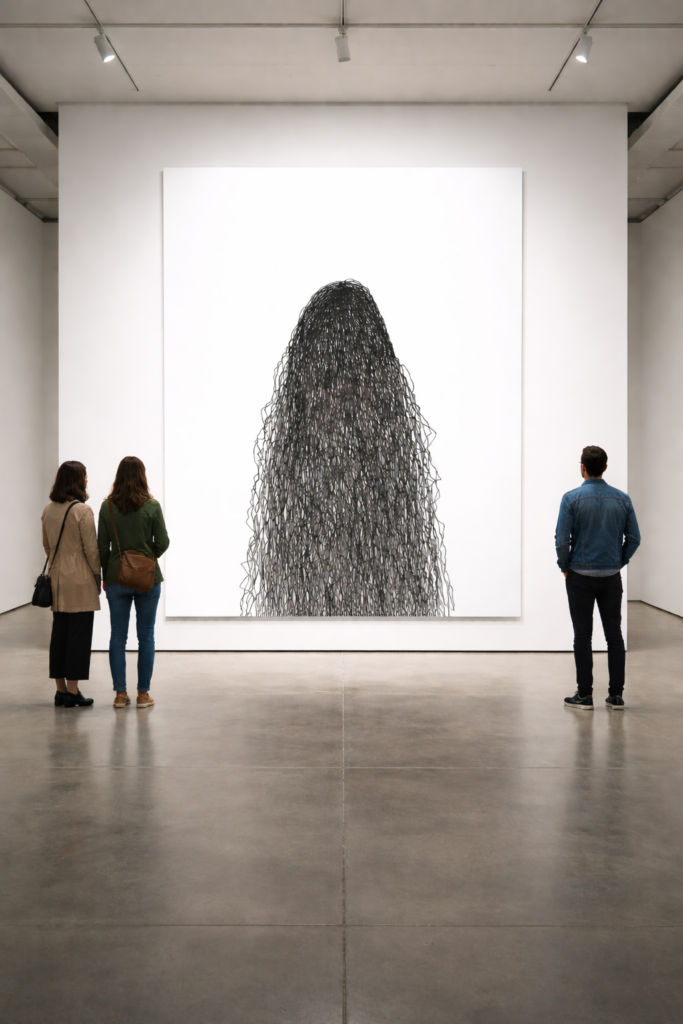
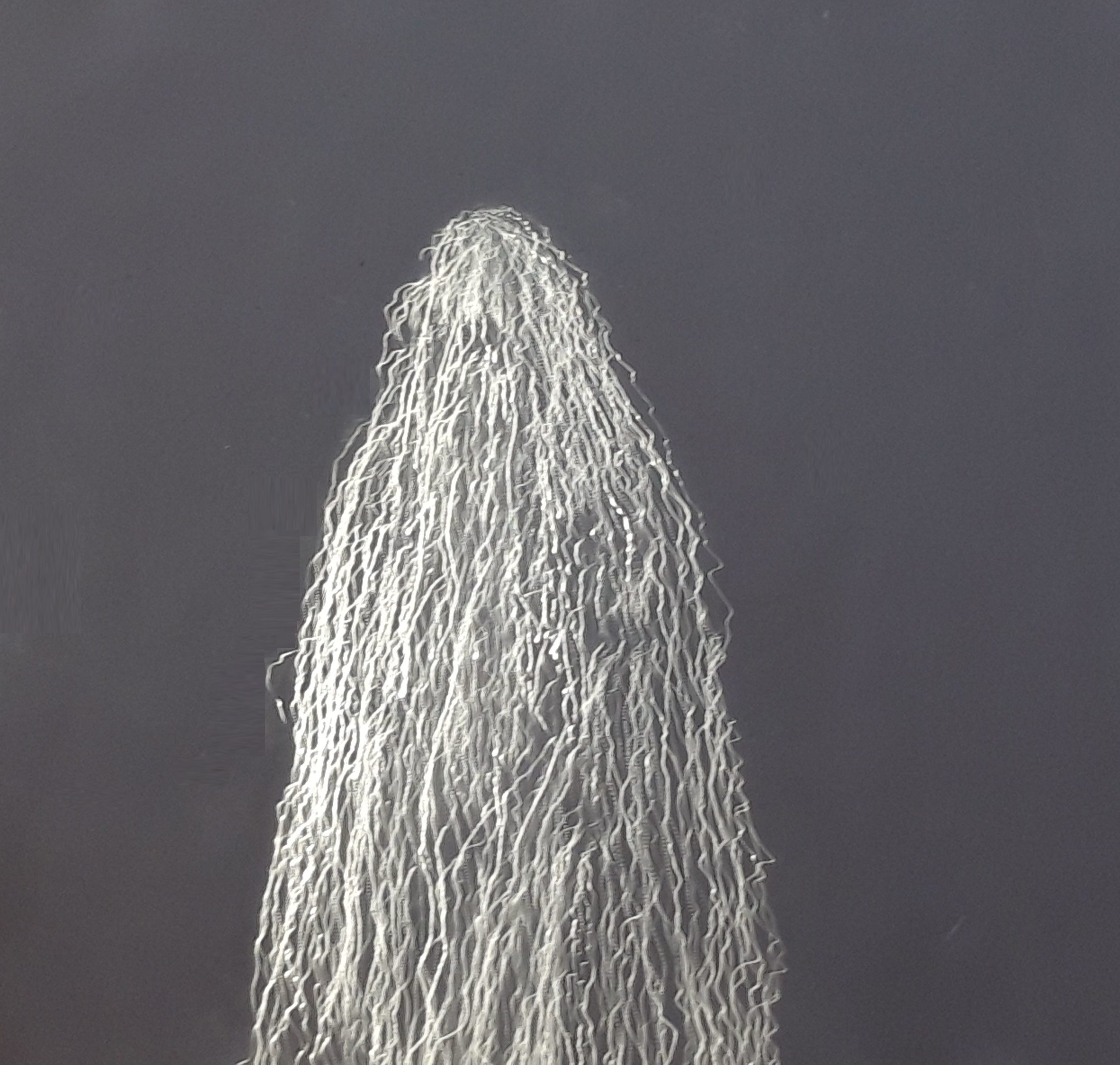
Hair x Brownian motion x Sorrow
Led light engraving on plexiglass – 30 x 40 cm
Une masse spectrale de lignes en cascade évoque une crinière lumineuse — dense, indomptable, presque céleste. Mais cette chevelure n’a pas de visage. Sa brillance est anonyme, sa perfection désincarnée. Elle s’élève comme de la fumée ou une charge électrostatique, une poussée brownienne d’angoisses invisibles.
Ici, la beauté n’est pas un choix, mais une pression. Une apparition digitale sculptée par les attentes du flux. Dans cette œuvre, la féminité monumentale devient spectrale — une silhouette conçue pour être regardée, pas pour exister. Le bruit visuel vibre doucement à chaque like silencieux, à chaque scroll.
Le résultat n’est pas la sérénité, mais le tremblement.
La mise en lumière de la gravure résonne tel un flash, tels les feux de la rampe
—
A ghostly mass of cascading lines evokes a glowing mane—dense, unruly, almost celestial. But this hair has no face. Its brilliance is anonymous, its perfection disembodied. It floats upward like smoke or static electricity, a Brownian surge of invisible anxieties.
Here, beauty is pressure, not choice. A digital apparition sculpted by the expectations of the feed. In this piece, the monumental femininity becomes spectral—a silhouette built for gazes, not for grounding. The visual noise vibrates softly with every silent like, every scroll. The result is not serenity, but tremor. Beneath the sheen lies exhaustion.
-
The Bride
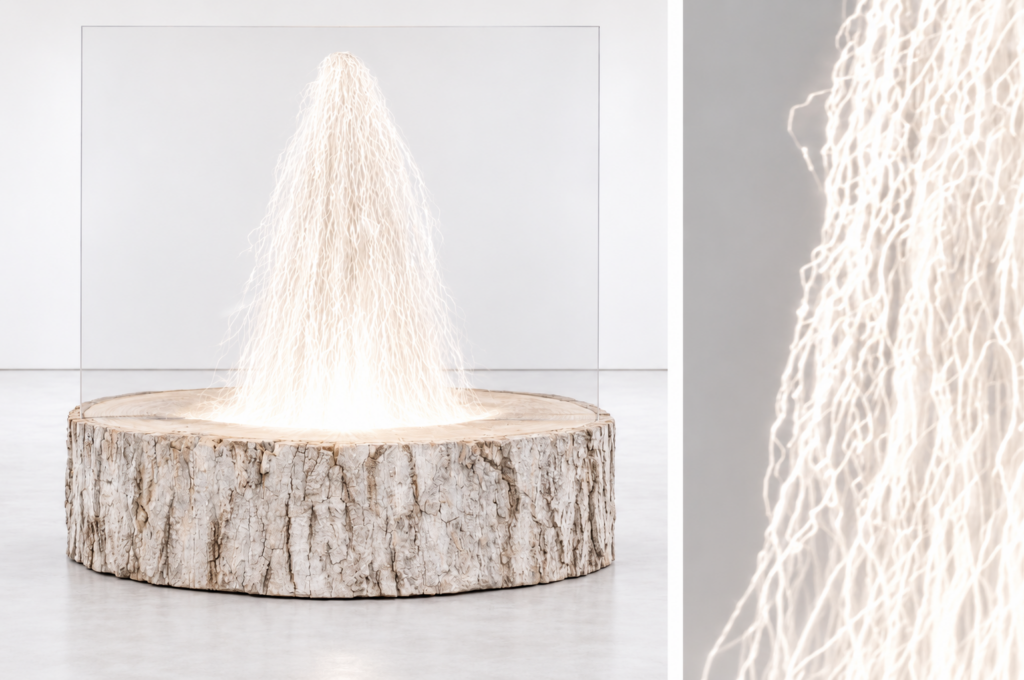

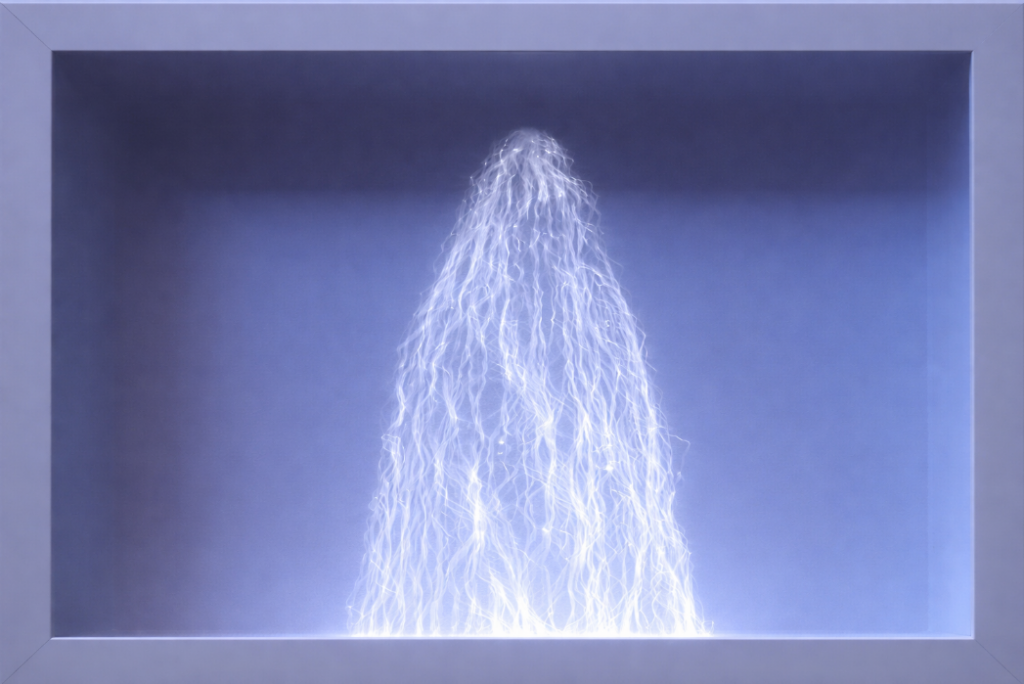

Une cascade de filaments lumineux, suspendue dans un cadre de silence. Ce n’est pas un voile — c’est un torrent capillaire, fluide selon une logique brownienne, encodé dans la lumière. The Bride reste immobile, sans visage, définie uniquement par sa présence intangible. Son identité est perdue, son mouvement simulé. Son chagrin, en revanche, est bien réel.
L’œuvre évoque le cercle vicieux entre apparence et réseaux sociaux. La chevelure devient donnée — filtrée, façonnée, jugée. Une métaphore visuelle de la féminité numérique, de la comparaison constante et de la perte de soi. La lumière bleue n’a rien de paisible : c’est la lueur froide d’un écran, la nuit.
The Bride est à la fois intime et systémique. Derrière la douceur se cache une donnée brutale : 38 % des adolescentes se sentent plus mal dans leur peau après avoir été exposées à certains réseaux sociaux. Ce n’est pas juste de la lumière. C’est une érosion émotionnelle, une tristesse éditée, un dommage numérique — rendu silencieusement beau.
—
A cascade of luminous filaments, suspended in a frame of silence. This is no veil—it’s a hair-like torrent, flowing in Brownian randomness, encoded in light. The Bride stands still, faceless, defined only by her intangible presence. Her identity is lost, her movement simulated. Her sorrow, however, is very real.
The work evokes the troubling feedback loop of social media and appearance. Hair becomes data—filtered, shaped, judged. A visual metaphor for digital femininity, comparison, and loss of self. The blue light isn’t serene; it’s the cold glow of a screen at night.
The Bride is both intimate and systemic. Behind the softness lies a hard statistic: 38% of teenage girls feel worse about themselves after being exposed to Instagram. This isn’t just light. It’s emotional erosion, curated sadness, and digital damage—made quietly beautiful.
-
The walking sleeper
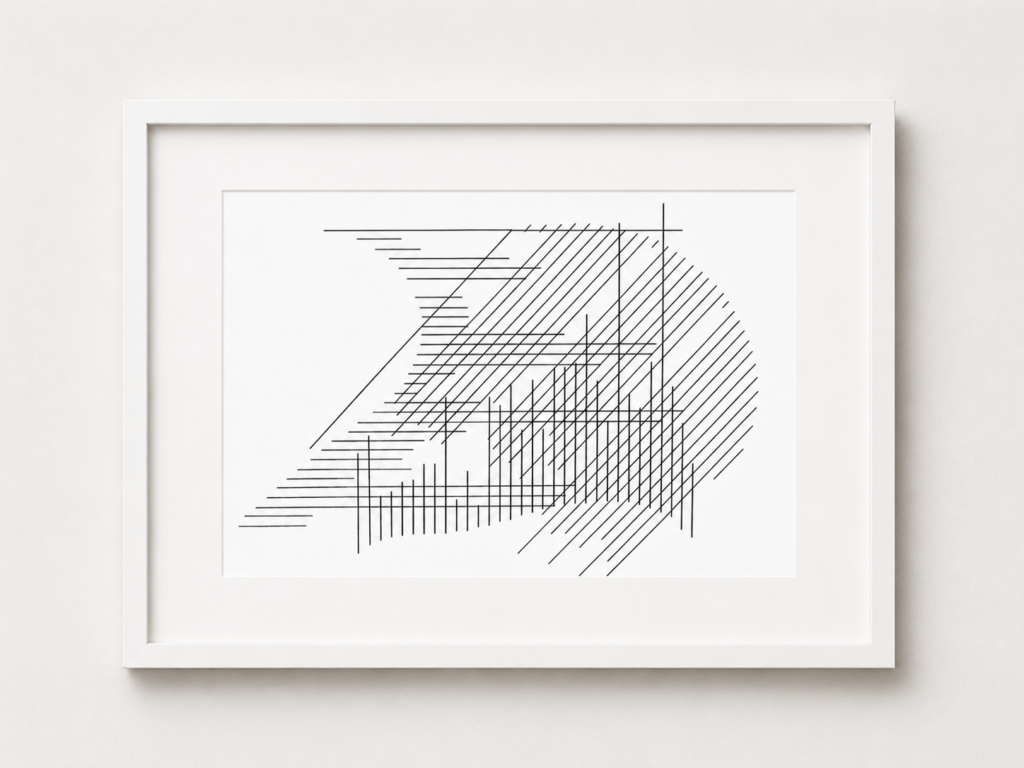
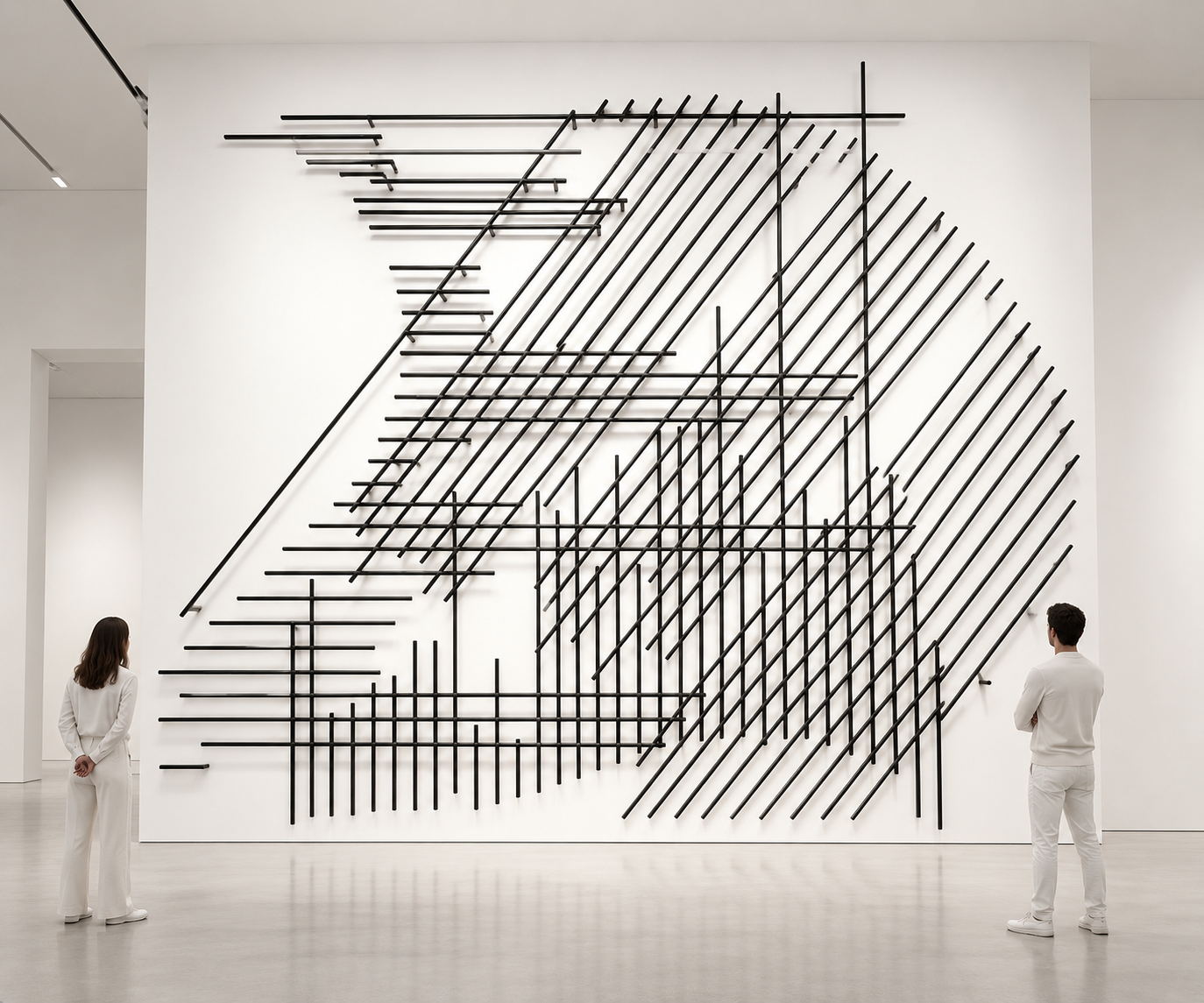
My heart rate x night duration x number of kms for one month
Drawing – 30×20 cm
J’ai utilisé un bracelet connecté pour suivre pendant 30 jours les principales données biométriques que mon corps pouvait produire. De nombreuses améliorations de santé pourraient théoriquement découler de cette collecte — ou pas — surtout avec l’ajout d’une couche d’intelligence artificielle.
Ce dessin minimaliste a été généré à partir de ce suivi : fréquence cardiaque, durée du sommeil, distance quotidienne parcourue. Chaque trio de lignes représente une journée : une lune pour le sommeil, un cœur pour le rythme cardiaque, une empreinte pour le mouvement. Trente jours, trente récits muets — cartographiés sans mots.
La géométrie semble propre, rationnelle. Mais la grille révèle autre chose : des rythmes de fatigue, un repos inégal, une anxiété discrète en mouvement. Malgré les promesses de santé optimisée, les données racontent une autre histoire — celle d’une surveillance déguisée en soin de soi, d’algorithmes qui promettent des éclairages mais récoltent des routines.
The Walking Sleeper trace une frontière entre le soi quantifié et le soi marchandisé.
Un journal sans narration.
Une vie réduite à des signaux.
De la beauté dans la retenue — mais une inquiétude profonde dans le silence.—
I used my wrist bracelet to monitor during 30 days precisely my main body metrics that it could capture. Lots of health improvements could be performed thanks to the collection of all these personal data & A.I on top of this….or not!
This minimalist drawing was generated from one month of biometric tracking—captured through a wrist device that monitored heart rate, sleep duration, and daily distance walked. Each trio of lines encodes a day: a moon for sleep, a heart for pulse, a footstep for movement. Thirty days, thirty silent stories—mapped without words.
The geometry seems clean, rational. But the grid reveals more: fatigue rhythms, uneven rest, quiet anxiety in motion. Despite the promise of optimized health, the data tells another story—one of surveillance disguised as self-care, and algorithms promising insight but harvesting routine.
The Walking Sleeper draws a boundary between the quantified self and the commodified self. A diary without narrative. A life reduced to signals. Beauty in restraint—but disquiet in the silence.
-
And I’m sorry for this
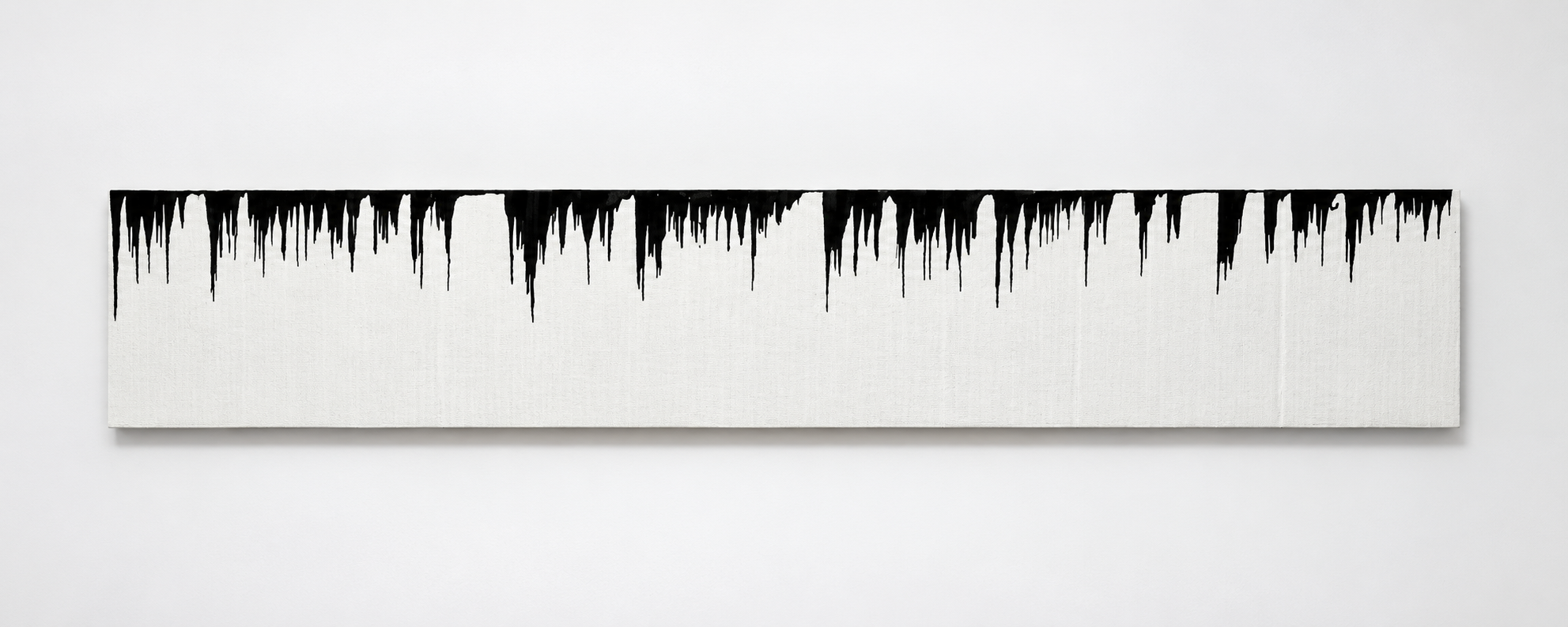

Z. public apologies at American Congress recording
Ink of museum rubish – 15×100 cm
Cette œuvre visualise les excuses publiques de Z. devant le Congrès américain — non par les mots, mais par la forme sonore. La gravure reproduit exactement l’onde audio de sa phrase : « …and it was my mistake… » Chaque pic est une déchirure de fréquence, chaque creux une rupture de ton, une hésitation, ou une trace de culpabilité — sincère ou calculée.
Sous cette ligne froide, silencieuse, plane une bande-son fantôme : des notes de piano imaginées, qui suggèrent honte, stratégie et orchestration médiatique. Un rythme de tristesse qui n’appartient pas au locuteur, mais à ceux qui ont été touchés. Le piano ne joue pas. Et pourtant, on l’entend.
And I’m Sorry for This Z recontextualise les excuses technologiques scénarisées comme à la fois spectacle et trace — où la voix devient artefact, et le repentir, un bruit mesurable.
L’œuvre interroge : que signifie dire « pardon » quand même la contrition est programmée ?Un monument au regret fabriqué,
et à l’impossibilité de la sincérité
à l’ère du capitalisme de surveillance.—
This piece visualizes the public apology of Z. before the U.S. Congress, not in words—but in waveform. The engraved shape is the exact audio transcription of his voice uttering: “…and it was my mistake…” Each spike is a frequency tear, each dip a rupture of tone, hesitation, or guilt—real or performed.
Beneath the cold line of sound lies a haunting soundtrack: silent, imagined piano notes that evoke shame, calculation, and PR orchestration. A rhythm of sadness that doesn’t belong to the speaker but to those affected. The piano doesn’t play. But we hear it.
And I’m Sorry for This Z reframes a scripted tech apology as both spectacle and trace—where voice becomes artifact, and repentance becomes measurable noise. It asks: what does it mean to say sorry when everything—including contrition—is engineered?
A monument to engineered regret, and the impossibility of sincerity in the age of surveillance capital.
-
Playmo
Playmobil x magnets
Saturday with kids. Playmobil are moving thanks to invisible forces in a chaotic motion. Only one survives. Police failed. One unique video captured once, pure random synopsis.
-
Puppet dance
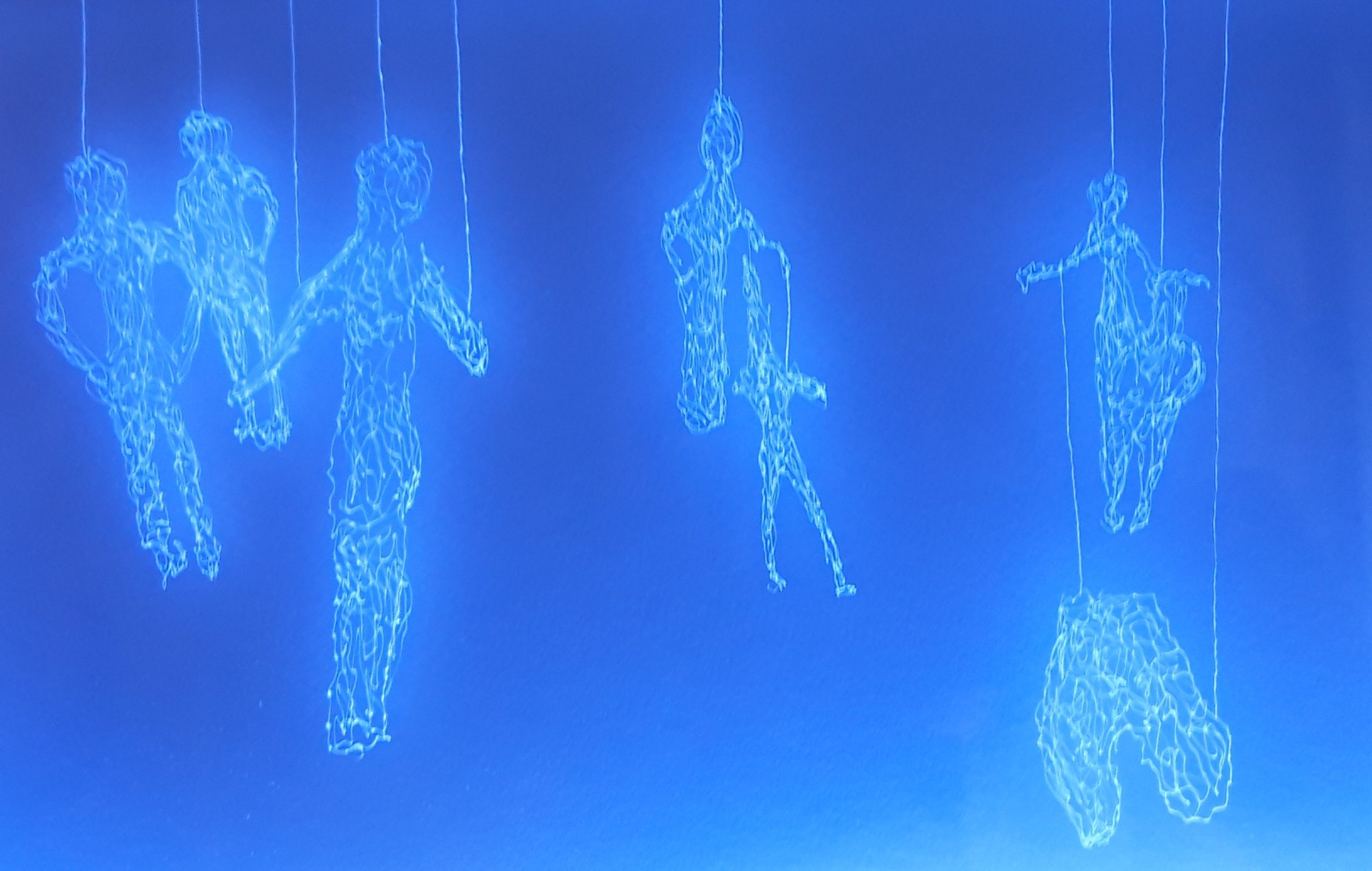
Puppets dance engraving illuminated by blue Led
Engraving on Plexiglas – 20×30 cm
Frozen mid-motion, these wire-like silhouettes hang like delicate ghosts. Their limbs stretch, reach, float—yet they never touch the floor. Suspended by fine strings, they mimic freedom, movement, even joy. But it is a choreography of illusion.
Lit in synthetic blue, the figures evoke a social performance in perpetual display. They entertain, interact, collapse, restart. Nothing is stable. One has fallen, another poses like an avatar. Their interdependence is clear, yet each remains isolated—trapped in their own curated moment.
This composition precisely replicates the spatial arrangement of a collection of antique sculptures in a European museum. A once-celebrated pantheon of stone now reinterpreted as fragile, manipulated outlines—shifted from eternal grandeur to digital-era submission. A ballet of influence, exhaustion and entanglement.
-
Do not touch
Endangered species x distorted mobile notifications
« Cachez ce sein que je ne saurais voir »
Flottant comme des coraux mous ou des algues gélatineuses, ces formes fragiles ondulent doucement dans des eaux sombres, entraînées par des courants invisibles — algorithmiques. Chaque élément est animé par un rythme circulaire, asynchrone : trop proche pour être ignoré, trop éloigné pour établir un lien. Le paysage sonore évoque la vie abyssale : des sons de notifications mobiles, ralentis, déformés, immergés jusqu’à devenir des bulles émises par une créature invisible.
Do Not Touch efface la frontière entre extinction naturelle et saturation numérique. Les coraux deviennent une métaphore : nous protégeons les récifs, mais négligeons l’esprit humain — qui se dissout dans un silence comparable. Ces organismes spectraux reflètent la psyché connectée : surstimulée, isolée, flottant dans un espace sans contact réel.
L’œuvre suggère que l’économie de l’attention est aussi un problème écologique — fait d’érosion émotionnelle, de surcharge sensorielle, d’asphyxie cognitive.
Le récif est numérique.
L’espèce menacée, c’est nous.
Et l’avertissement est limpide :
ne touchez pas, ne scrollez pas, ne détournez pas le regard.—
These corals are animated with random and circular motions by invisible currents, barely touching each others. Distorted mobile notifications sounds like fish noises in deep waters. Sometimes, more attention is paid to endangered species than to human beings mental health…
Floating like soft corals or gelatinous algae, these fragile forms pulse gently in dark waters, swayed by unseen algorithmic currents. Each is animated in circular, asynchronous rhythm—too close to collide, too distant to connect. The accompanying sound mimics deep-sea life: mobile notification pings, slowed, bent, and submerged until they resemble bubbles from a creature we can’t see.
Do Not Touch collapses the boundary between natural extinction and digital saturation. The corals become a metaphor: we protect reefs, but neglect the human mind—dissolving in a similar silence. These spectral organisms echo the overstimulated, isolated psyche of the connected user.
This work suggests that our attention economy is an ecological issue—one of emotional erosion, sensory overload, and cognitive suffocation. The reef is digital. The endangered species is human. And the warning is clear: don’t touch, don’t scroll, don’t look away.
-
Halloween
Spider Web x Addictions to drugs
In the 60’s, studies showed that depending on the kind of drugs that was injected to spiders, they were building their web differently
This video-based artwork explores the surreal territory where scientific experimentation meets symbolic metaphor. Inspired by 1960s studies in which spiders, under the influence of various drugs, spun wildly distorted webs, the piece gradually morphs into the form of a haunted pumpkin – a ghostly Halloween icon.
The sequence evokes the invisible traps of addiction – not only to substances, but to digital feeds, dopamine-triggering notifications, and algorithmic loops. The spiders here become stand-ins for modern users: altered, manipulated, and unaware of the design behind their compulsions. The audio reinforces this tension, blending anxious mechanical glitches with ghostlike whispers, as if anxiety had a voice of its own.
A psychedelic hallucination of a seasonal symbol becomes a warning: in today’s web, what feels festive might in fact be a trap.
-
Burning Techs
Top web & innovation technologies x Synthetic voice x Fire burning
Depuis plus de vingt ans, chaque nouvelle technologie web est vendue comme la prochaine révolution, dans un cycle non vertueux où les individus ne sont plus que des utilisateurs — souvent sans comprendre qu’ils sont en réalité le produit, ou pire, la principale source d’enrichissement de ceux qui poussent à une adoption technologique accélérée.
Burning Techs est une descente hypnotique dans ce cycle de techno-évangélisme. Sur un flux glitché de flammes noir et blanc, les noms des révolutions numériques passées et présentes — Web3, Bitcoin, IA, Blockchain, Streaming, Mobile, Crypto, AR — défilent en langue étrangère en mode crypté, accéléré, illisible. Derrière l’opacité, une voix synthétique murmure, comme pour vendre un salut.
Mais ce n’est pas une utopie.
C’est un brasier.
Un rituel où la promesse remplace la compréhension, et où la vitesse écrase l’éthique.
La flamme n’éclaire pas — elle consume.Chaque “next big thing” devient un bûcher, et derrière chaque lancement, une transaction silencieuse :
les utilisateurs sont transformés en données brutes, puis en revenu.Burning Techs révèle cette boucle infernale — un marché de la distraction déguisé en progrès.
Il ne s’agit pas de décrypter les mots.
Il faut sentir la chaleur.
La tech brûle.
Et personne ne tient l’extincteur.—
Each web technology since more than 20 years is marketed like the next hot big thing and disruption, in a non virtuous cycle where people are just considered as users and they may do not understand that they are the product, or worst the main source of enrichment of these people pushing hardly for a speed techno adoption.
Burning Techs is a hypnotic descent into the techno-evangelism cycle. Over a glitchy stream of black-and-white flames, the names of past and present digital revolutions—Web3, Bitcoin, AI, Blockchain, Streaming, Mobile, Crypto, AR—are flashed in encrypted in foreign language, accelerated and unreadable. Behind the opacity: a synthetic voice speaks softly, as if selling salvation.
This isn’t utopia. It’s a bonfire. A ritual where hype replaces understanding, and speed overrides ethics. The flame doesn’t illuminate—it consumes. Each “next big thing” becomes a pyre, and behind every launch, a silent transaction: users turned into raw data, then into revenue.
Burning Techs exposes this infernal loop—a market of distraction posing as progress. The viewer is not asked to decode the words, but to feel the heat. Tech is burning. And no one’s holding the extinguisher.
-
Ice Flows
Ice flow x Top tech leaders mantras
Cette vidéo critique profondément les mythologies entrepreneuriales propagées par la culture start-up mondiale, en les comparant à la fonte des glaces : lente, inexorable, destructrice. L’oeuvre Ice Flows ne se contente pas d’illustrer une analogie visuelle entre idéologie technologique et crise climatique — elle les relie comme deux formes d’effondrement systémiques, portées par les mêmes mécanismes d’aveuglement collectif et d’auto-illusion.
Les slogans répétés — Fail fast, Disrupt everything, Fake it till you make it ….— deviennent ici des prières toxiques, récitées en boucle par des générations d’entrepreneurs hypnotisés par la réussite de quelques figures emblématiques, sans voir le vide qu’elles laissent derrière elles. Ces mantras, loin d’être moteurs d’émancipation, sont perçus comme des forces d’érosion mentale, sociale et écologique.
Le dispositif visuel — des nappes glaciaires qui se fissurent au rythme de ces injonctions — exprime avec une précision troublante l’impact cumulatif de ces idéologies : elles transforment l’ambition en ravage, la performance en autodestruction. L’innovation n’est plus un projet collectif, mais une course solitaire vers l’irréversible.
Ce travail agit comme un chant funèbre : celui d’un monde qui se vend comme disruptif, mais ne fait que répéter les mêmes schémas d’accélération aveugle et de dépossession humaine.
—
Tech worldwide community and innovative leaders are raising start-up founders with entrepreneurial & success insane mantras. Most of these mantras focused on success and self made man may have no consideration for human impacts of these innovations. These echoing entrepreneurs perpetuate the cycle indefinitely. The whole process where newbies try to imitate tech leaders cause they became rich rapidly seems like for ice flows totally irreversible and devastating for human beings.
On screen, melting ice sheets ripple under the weight of invisible forces—rivers of time, ambition, and ideology. Layered across these glacial surfaces are the sacred incantations of the startup world: “Fail fast,” “Disrupt everything,” “Fake it till you make it.” Mantras looped by founders, mentors, and digital prophets like a hypnotic tide.
In Ice Flows, Clear Shadows draws a stark parallel between climate collapse and ideological dogma. Both are irreversible. Both are sold as progress. Both leave devastation in their wake.
The animation deconstructs these mantras into visual noise, their repetition forming cracks in the visual ice—a landscape of aspiration eroding itself. The tech community, in its obsession with speed and scale, forgets that what melts cannot be rebuilt. This piece is not just about innovation. It’s about what innovation melts through.
A glacial requiem for the myth of the self-made man.
-
Winter is coming
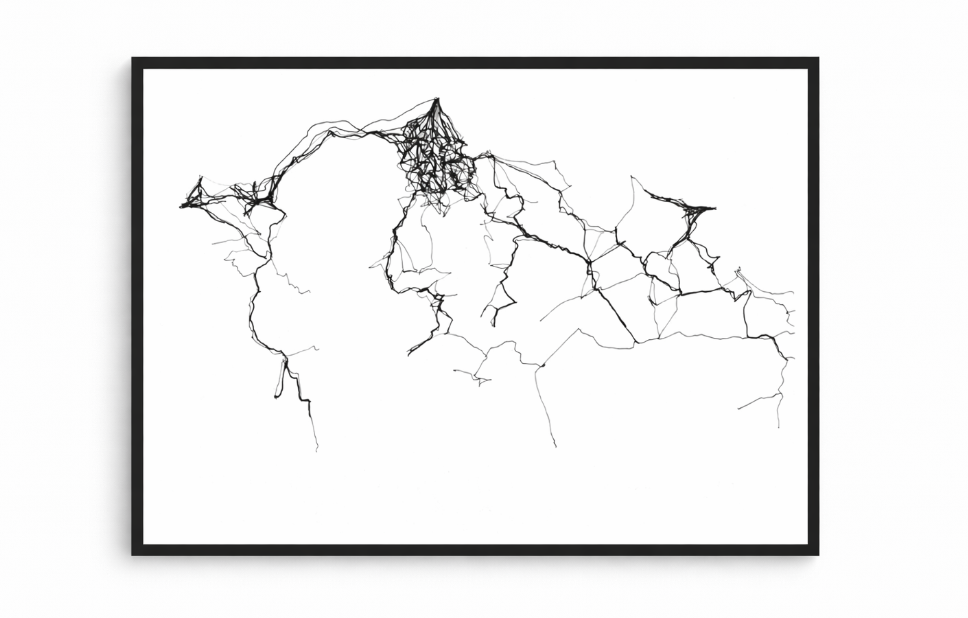
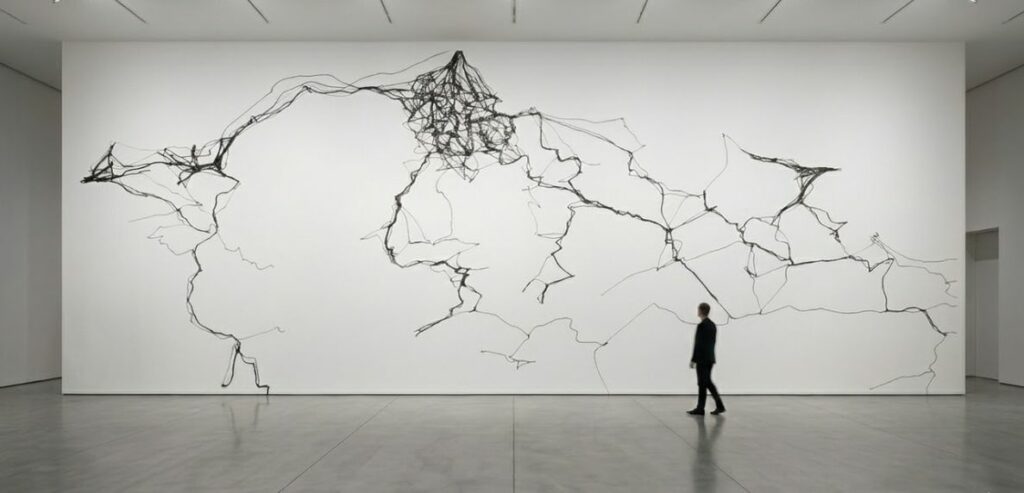
Data cloud mapping
Ink on paper – 30 x 40 cm
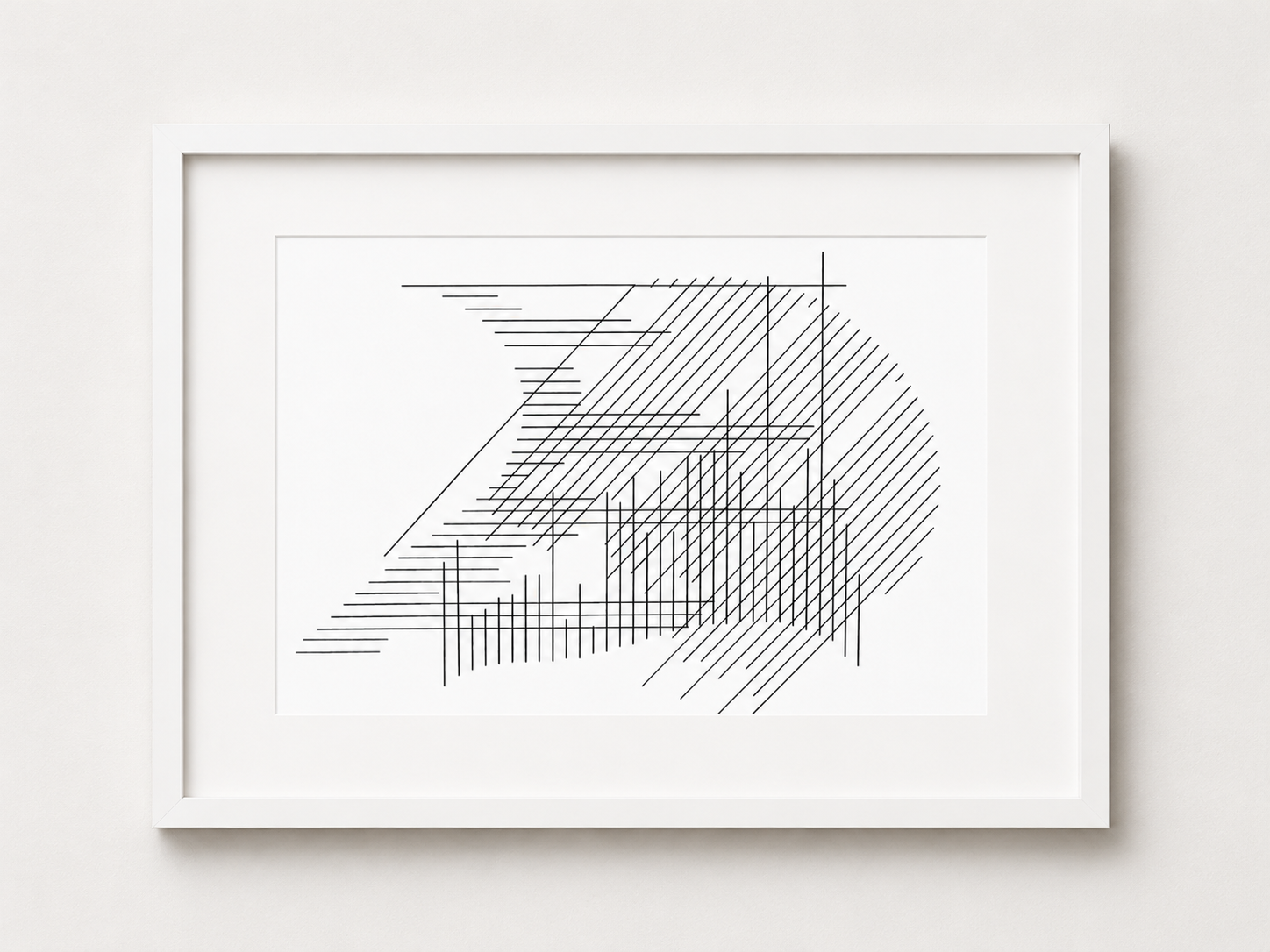
Comme un flash lumineux ou un volcan en éruption, ce dessin repose sur la cartographie réelle des centres de données mondiaux et des flux entre les principales infrastructures de stockage cloud.
Apparaissant comme un glacier fracturé, un éclair ou une cicatrice neuronale, Winter Is Coming trace la géographie concrète du cloud et des data centers à l’échelle planétaire. Chaque ligne représente un flux de données, chaque nœud un point d’hyper-concentration — presque toujours localisé dans le Nord global.
Le résultat est à la fois abstrait et glaçant : une cartographie de la fragilité numérique, qui révèle l’architecture invisible soutenant notre quotidien connecté. Sous la métaphore hivernale se dissimule un avertissement discret : à mesure que les tensions géopolitiques s’intensifient et que les monopoles d’infrastructure se renforcent, ce réseau devient un point de pression — non seulement pour le stockage, mais pour le contrôle, la vulnérabilité, l’opacité.
—
Winter Is Coming évoque à la fois l’effondrement et la consolidation. À l’heure de l’angoisse climatique et de l’accélération technologique, l’œuvre nous rappelle que même le cloud a une géographie — et qu’elle est tout sauf équitable.
—
Like a flash light or erupting volcano, this drawing is based on main cloud storage and data centers positionnings and data flows between them.
Appearing like a fractured glacier, a flash of lightning, or a neural scar, this drawing traces the real-world geography of cloud storage and global data centers. Every line represents a data flow, every knot a point of hyper-concentration—most often in the global North.
The result is both abstract and chilling: a cartography of digital fragility, revealing the invisible architecture that powers our daily lives. Beneath the metaphor of winter lies a quiet warning: as geopolitical tensions rise and infrastructural monopolies grow, this network becomes a pressure point—not only of storage, but of control, vulnerability, and opacity.
Winter Is Coming echoes both collapse and consolidation. In the age of climate anxiety and techno-acceleration, it reminds us that even the cloud has a geography—and it is not evenly distributed.
-
No body
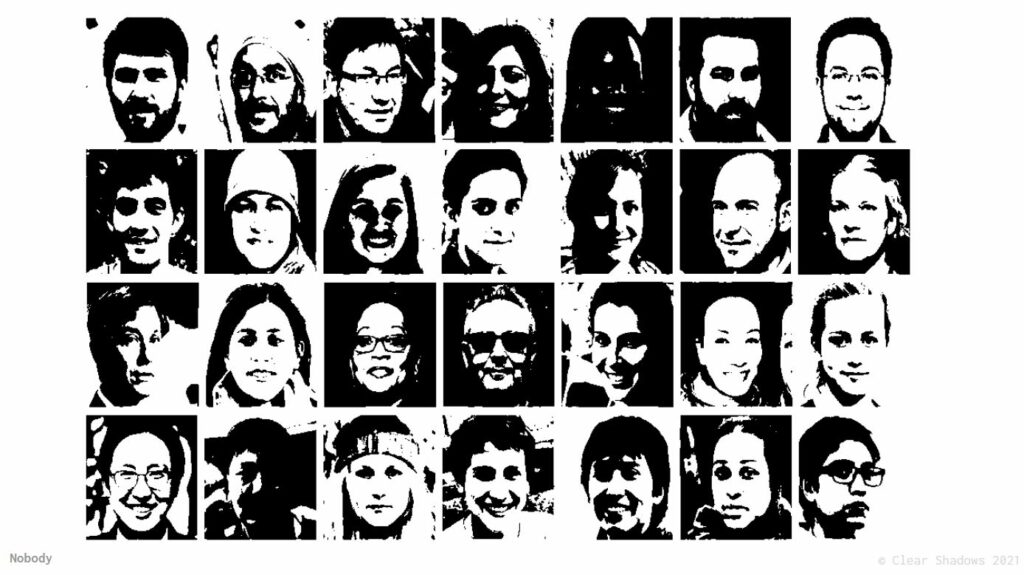
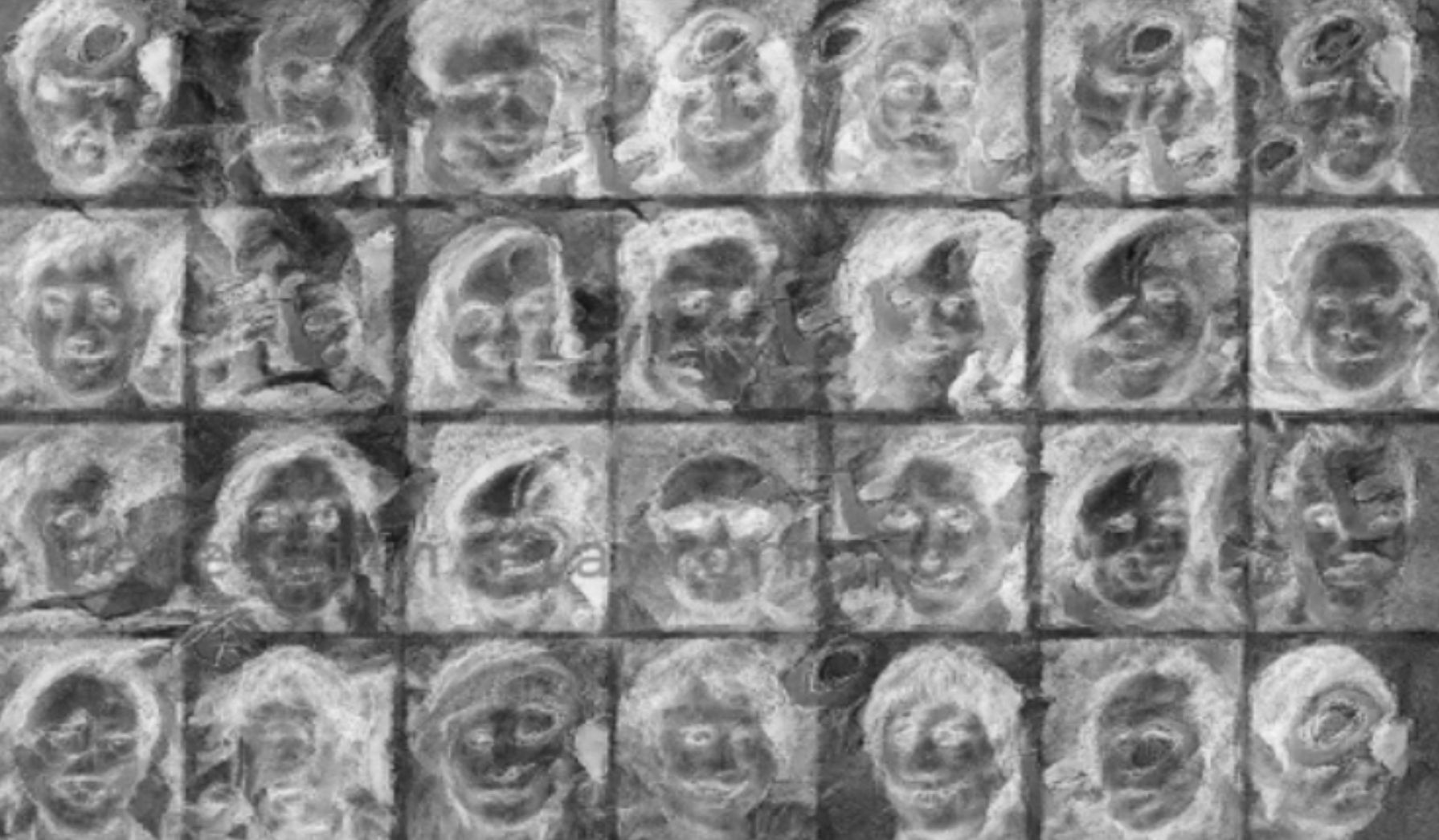
A grid of twenty-eight faces. Smiling, neutral, expectant. None of them exist. These portraits were generated by neural networks before large language models and generative AI tools became household names.
Each face suggests identity, culture, perhaps memory—but they are empty of history. The work anticipates the silent normalization of synthetic humans in media, politics, and communication. The absence of bodies reinforces their non-existence. No breath. No blood. No background.
By freezing them in a stark black-and-white aesthetic, the image emphasizes erasure rather than creation: no names, no context, only simulated presence.
It’s not just a warning—it’s documentation of a threshold. Before the tools exploded, before everyone could make anyone, these ghosts were already smiling.
-
I wish you a Merry Christmas
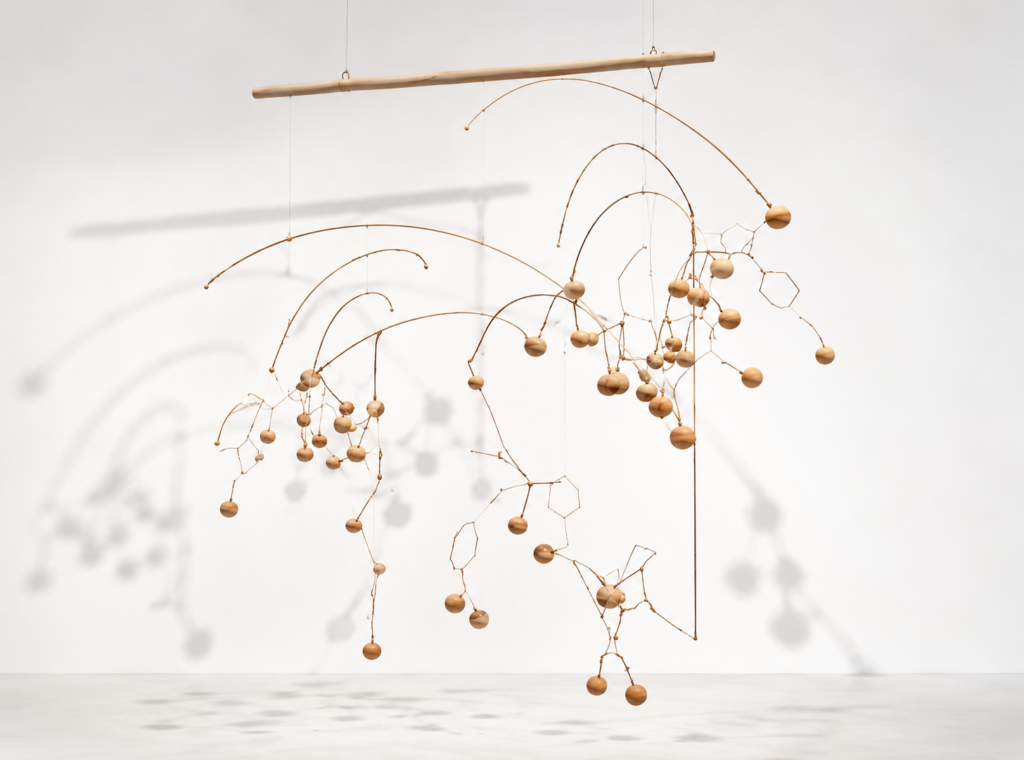
uspendue dans l’espace, une constellation de molécules dorées compose un mobile fragile, presque immatériel. Inspirées des structures chimiques de la dopamine et de différentes drogues, ces formes s’entrelacent dans une chorégraphie silencieuse. Le moindre souffle les anime, modifiant leurs équilibres et projetant sur les murs des ombres mouvantes, plus grandes que les objets eux-mêmes. À première vue, l’installation évoque une décoration de Noël, légère, joyeuse et délicate. Pourtant, derrière cette apparente innocence se dessine une interrogation sur la fabrication contemporaine du bonheur. La dopamine, molécule associée notamment au désir et à la motivation, devient ici le symbole d’une société qui cherche sans cesse à stimuler ses circuits de récompense. Consommer, posséder, se divertir, recommencer. Les plaisirs se succèdent, les désirs se renouvellent, sans jamais trouver de repos durable. Les molécules de drogues se mêlent aux formes du plaisir ordinaire, brouillant les frontières entre stimulation naturelle et artificielle. Le mobile oscille sans avancer, à l’image de nos comportements répétitifs. Ses ombres amplifient les formes, comme nos attentes amplifient les promesses du bonheur. Le titre emprunte à Noël son injonction collective à la joie, à l’abondance et à la satisfaction. Mais peut-on encore souhaiter le bonheur lorsqu’il devient une obligation, un produit ou une réaction chimique à provoquer ? Dans cette mécanique délicate, la fête devient laboratoire et le plaisir, une équation instable. L’œuvre laisse flotter une question : que reste-t-il de la joie lorsqu’on cherche à la produire à tout prix ?
-
Gluetton Hands
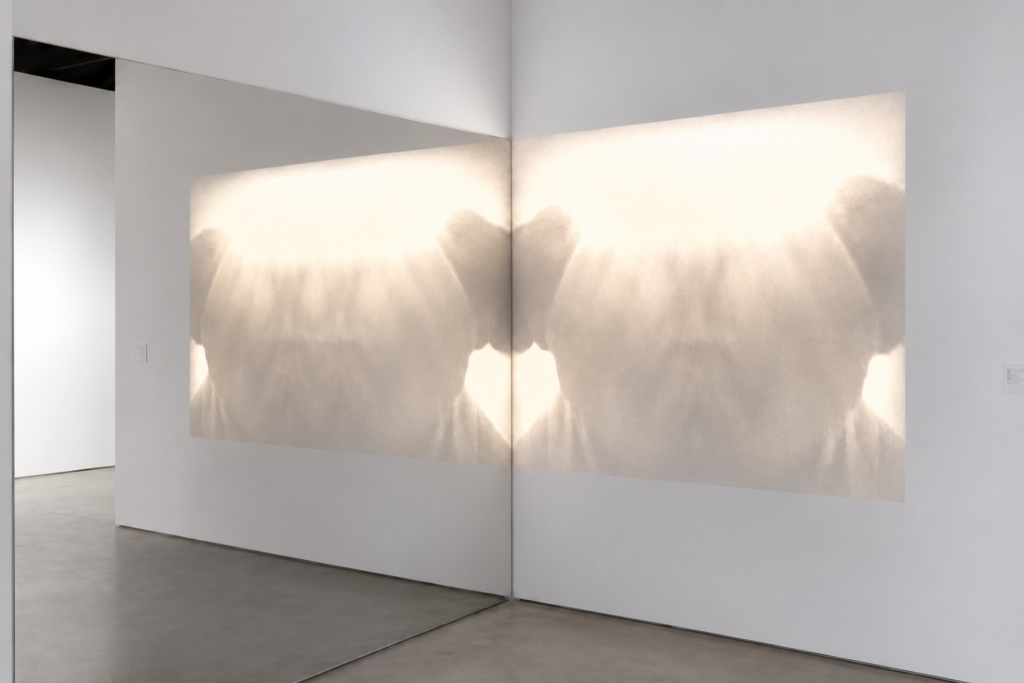
Mobile notification x Artist hands while scrolling x Flash Lights
Ce glouton est une vidéo miroir de mes propres mains en train de scroller indéfiniment les fils d’actualité des réseaux sociaux. Récompenses sociales, murs infinis, notifications : ces mécanismes, inventés par les concepteurs des plateformes, sont les outils les plus efficaces pour capter la bande passante mentale et maintenir les utilisateurs captifs — générant ainsi des profits colossaux.
Le monstre ne dort jamais très longtemps.
Il s’éveille dès que les notifications s’emballent.Comme une entité vorace, The Glutton se nourrit du geste répétitif, de la tension musculaire, de la dépendance gestuelle. Ce n’est pas l’écran qui est filmé, mais ce qu’il fait au corps — aux mains qui glissent, se crispent, cliquent sans fin.
La vidéo reflète moins une activité que sa ritualisation : un automatisme sans contenu, une chorégraphie imposée par l’économie de l’attention.Ce glouton, c’est le miroir de notre fatigue numérique.
Et il grossit à chaque scroll.—
This glutton is a mirroring video of my hands while scrolling indefinitely social networks walls. Social rewards, infinite walls and notifications, invented by social networks creators are the best ways to capture brain bandwith and keep people glued to their services and thus generate cash massively. Like a monster this glutton awakes once notifications accelerate.
-
Nomophobia
Tears / rain drops x Aspiration x Anxiety breath
Nomophobia désigne cette angoisse contemporaine : la peur d’être séparé de son téléphone mobile.
Cette installation vidéo simule un état de suffocation anxieuse. À première vue, la surface semble paisible — des gouttes de pluie glissent lentement sur une vitre. Mais à mesure que la boucle progresse, la respiration au centre devient irrégulière, presque convulsive. Ce qui était calme se transforme en une inspiration syncopée, accélérée. Un monstre silencieux — ni présent, ni visible — semble aspirer tout vers le vide. Les gouttes deviennent des larmes, le rythme devient détresse.
Le titre fait écho à une pathologie moderne : l’absence de téléphone devient un manque émotionnel, comme une extension du soi perdue. L’œuvre explore les signes précoces de cette dépendance, à travers ses manifestations physiques : souffle, humidité de la peau, pulsation. On anticipe la panique avant même qu’elle n’explose.
Le centre, qui respire comme un poumon mécanique, incarne l’illusion de sécurité que procurent ces objets qui gouvernent désormais notre calme.
Mais ce souffle, devenu court et rapide, rappelle une vérité :
Même dans la poche, le téléphone ne suffit pas.—
Nomophobia is a kind of fear of being separated from its mobile phone
This video installation simulates a state of anxious suffocation. At first glance, the surface appears peaceful—raindrops softly clinging to a windowpane. But as the loop progresses, the breathing at the center becomes erratic, almost convulsive. What was calm becomes an accelerated, syncopated inhale. A silent monster—neither present nor visible—seems to pull everything toward the void. The drops become tears, the rhythm becomes distress.
The title « Nomophobia » refers to the modern pathology of being without one’s phone—an emotional void, an extension of the self gone missing. This piece explores the early signs of that dependency, through physical manifestations: breath, skin moisture, pulse. We anticipate the panic before it unfolds.
The center, which breathes like a mechanical lung, embodies the illusion of safety granted by devices that now govern our calm. But the breath, sped up and shallow, makes it clear: even in our pocket, the device is never enough.