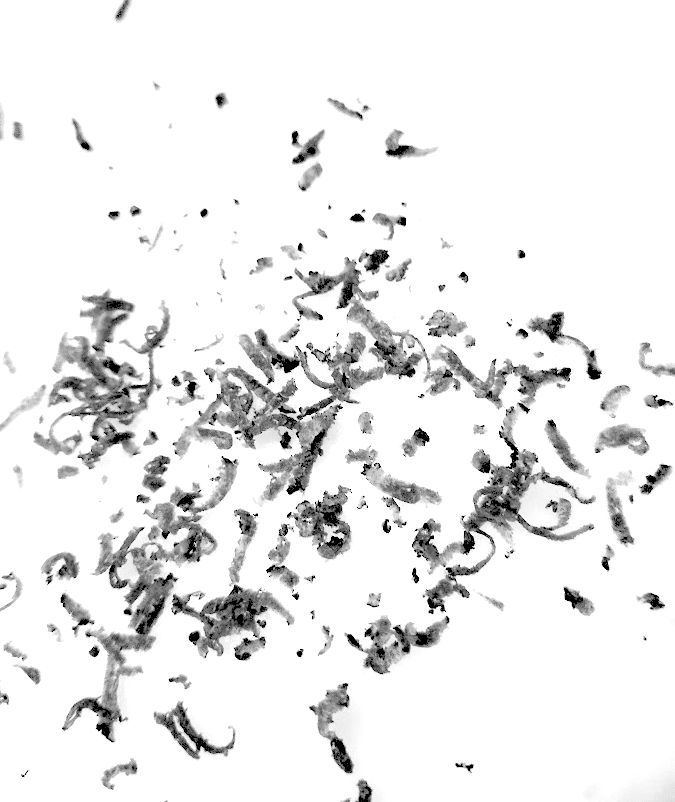
food x waste
#nature made this
food x waste
#nature made this
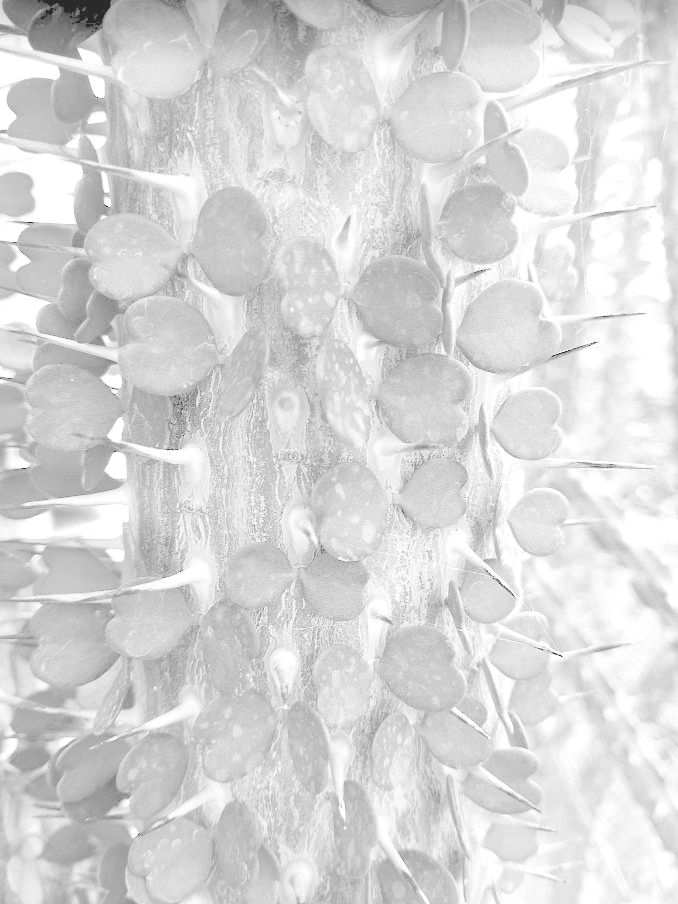
#Nature made this
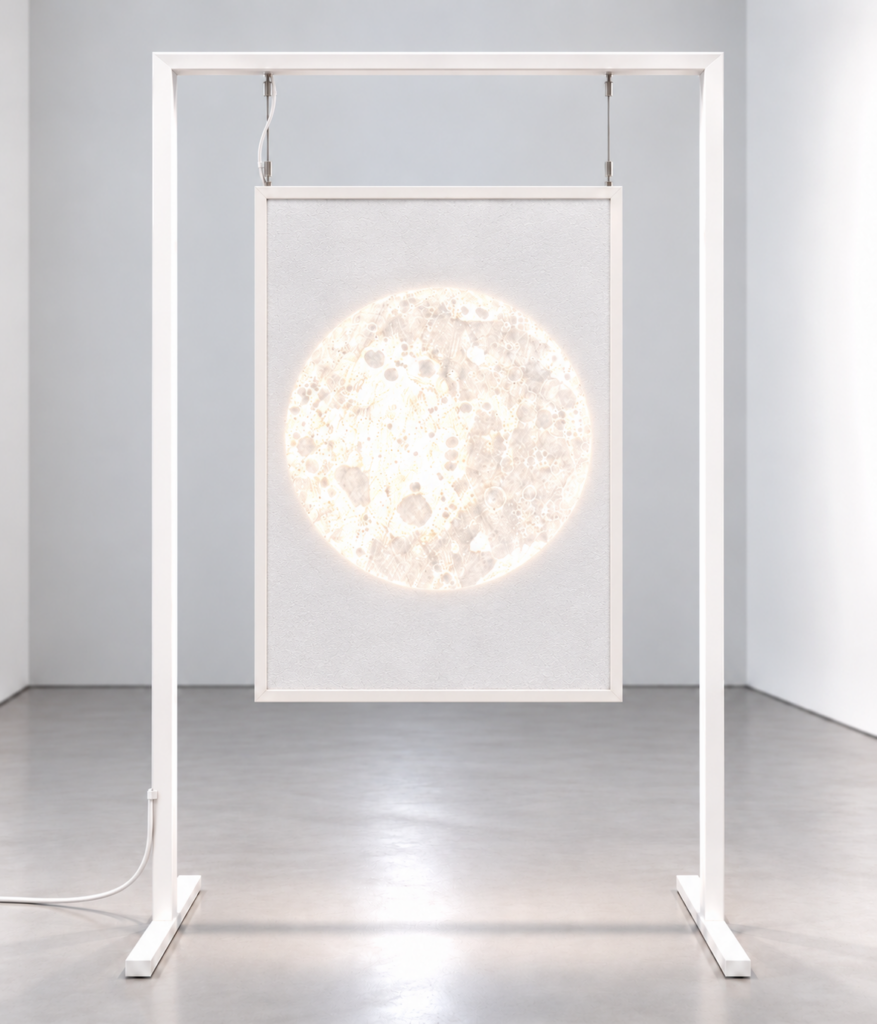
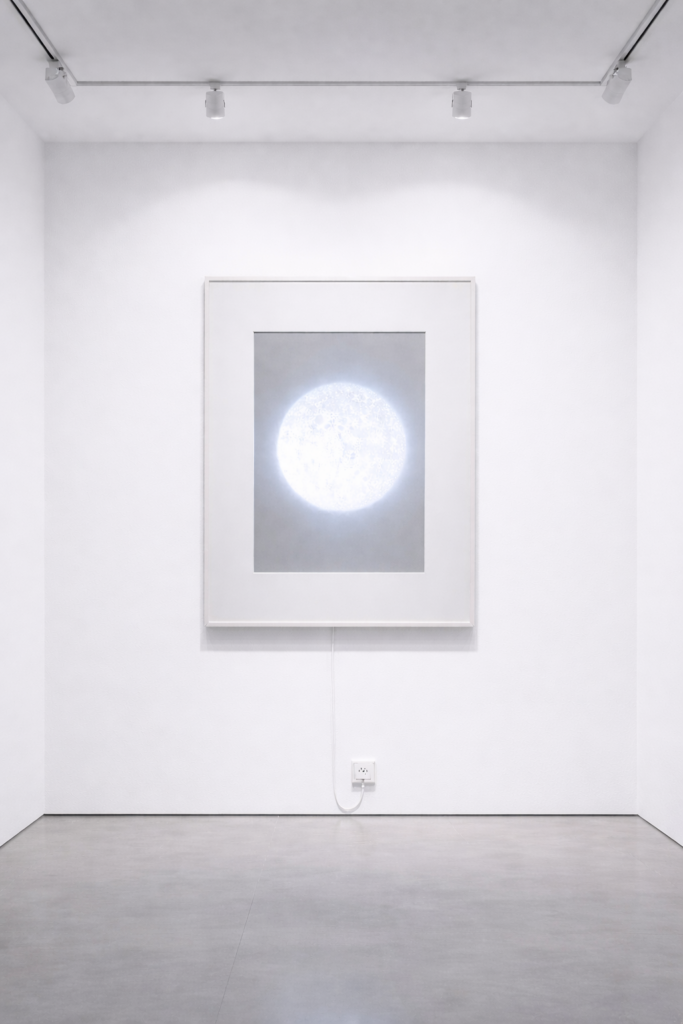

Moon dark side x Attraction x Craters x Holes x Circles x Smoke
Elle ne produit rien, elle renvoie. Elle éblouit. Elle attire. Comme l’écran que l’on fixe sans y penser. La lumière passe à travers les perforations du papier, agit comme un révélateur. Le dessin n’est pas déposé dessus, mais creusé dedans, vidé, révélé par ce qui disparaît. L’astre existe par des manques. On n’en voit qu’une face, l’autre reste dissimulée. Comme dans la réalité, la face cachée n’est dévoilée qu’avec de la technologie, tardivement, grâce aux instruments et à la science.
L’astre agit sur les corps. À distance, il déplace les marées, règle des cycles, dérange les nuits, nourrit des légendes, métamorphose. Il est une force discrète mais constante, dont l’influence traverse l’espace.
Le geste est répété, percée après percée, jusqu’à l’automatisme. La respiration est mécanique. Les impacts s’accumulent, s’organisent, se troublent. Ils forment des cratères, nets ou diffus. De loin, la surface semble lisse. De près, elle devient un relevé de chocs, une cartographie de cicatrices. Une peau marquée. La surface est paysage, épiderme marqué, matière sensible, traces, empreintes, ombres.
Chaque trou est un minuscule déplacement, une pression, un impact muet.
Présence lointaine qui modèle en silence. Attraction permanente, réfléchie, passive. Lumière que l’on regarde trop longtemps sans s’en rendre compte.
La Full Moon Party est ici vidée de son folklore. La fête n’est plus un moment d’excès collectif, mais une surface surexposée, blanchie par la lumière, saturée jusqu’à l’épuisement. Ce qui reste après la nuit, ce ne sont pas les corps, ni la musique, mais des traces, des impacts, des manques. La célébration s’est dissoute dans sa propre intensité. La fête est finie, il ne subsiste qu’un sol criblé, une lune cratérisée, témoin muet d’une attraction consommée jusqu’à l’usure. L’œuvre montre l’après, quand l’éblouissement retombe et que l’on découvre, dans le silence, les marques laissées par une fascination prolongée.
50*70 – gravure – Led
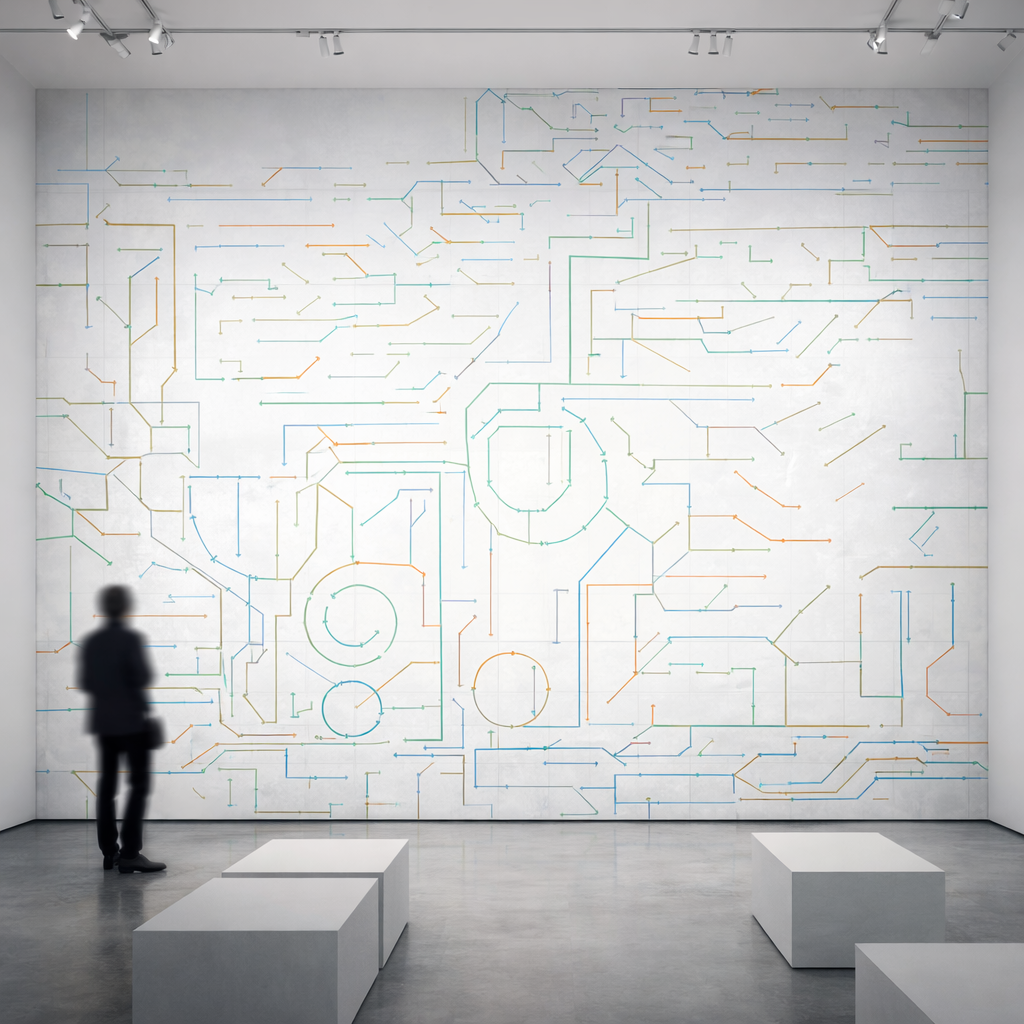
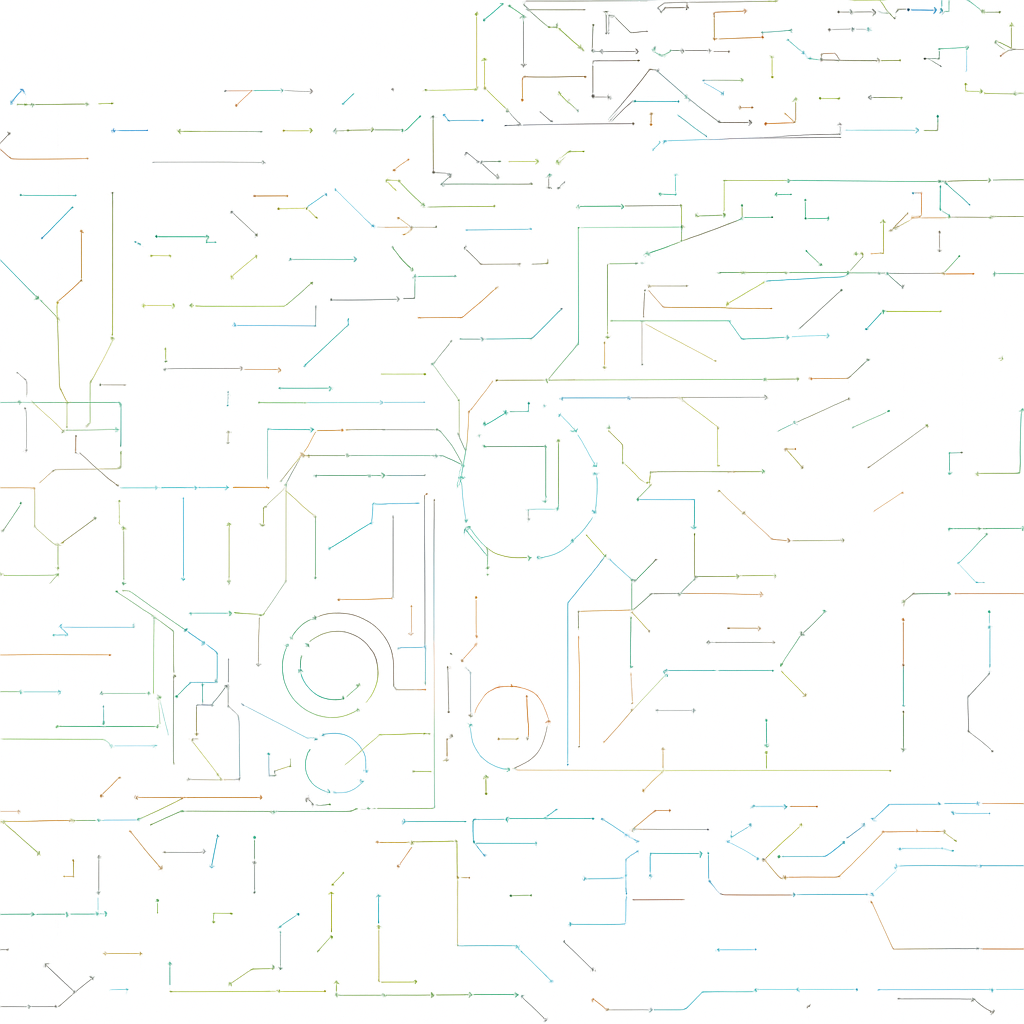
Flows x process x Life chemistry
Inspirée de la célèbre carte métabolique de Boehringer, Traffic Jam transpose la complexité biochimique du corps humain dans une logique de congestion systémique. Ce qui, à l’origine, illustre la perfection des cycles vitaux devient ici une cartographie d’automatismes : un réseau saturé, une circulation continue où chaque molécule obéit à un trajet imposé.
Les flèches, dépouillées de leurs noms et de leurs légendes, ne signalent plus la vie mais la répétition aveugle du mouvement. Tout y circule, rien ne s’y incarne. La biologie se confond avec la logique algorithmique, le métabolisme devient protocole, l’humain s’efface derrière le processus.
En jouant sur la métaphore de l’embouteillage métabolique, l’œuvre questionne la réduction de la vie à une somme de flux automatisés, le corps à un réseau de production sans conscience, et le monde vivant à une mécanique d’optimisation.
Sous l’apparente neutralité scientifique, Traffic Jam évoque l’épuisement du vivant pris dans les circuits fermés de ses propres algorithmes.
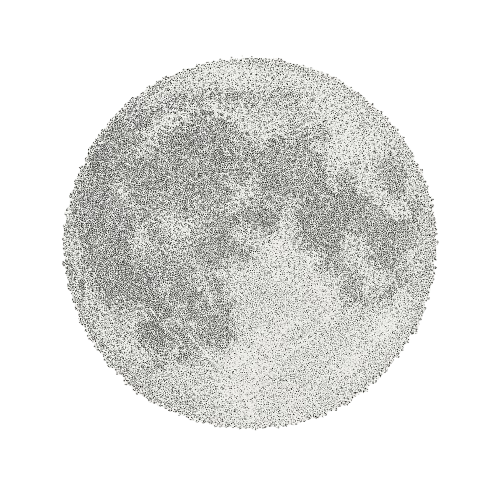
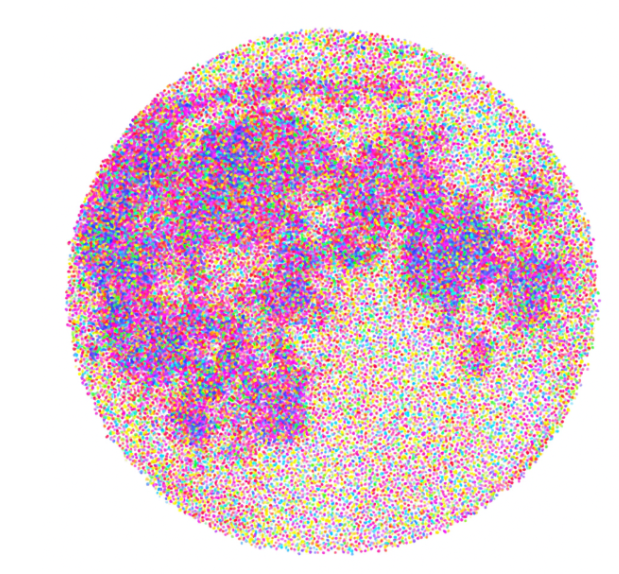
Moon x pixel art x Magnet
La lune ne crée rien.
Elle ne fait que renvoyer la lumière des autres.
Un astre mort devenu influenceuse du vivant.
Toujours visible, jamais entière :
la moitié de son visage nous échappe.
Cette face cachée — muette, opaque —
rappelle tout ce qu’on ne veut pas voir dans nos propres reflets numériques.
Comme elle, nos écrans brillent sans source,
éclairent sans comprendre,
attirent sans nourrir.
Pixel après pixel, nous orbitons autour d’images mortes,
convaincus qu’elles nous éclairent.
The moon creates nothing.
It only reflects the light of others —
a dead star turned influencer of the living.
Always visible, never whole:
half of its face forever hidden.
That dark side — silent, opaque —
echoes everything we refuse to see in our own digital reflections.
Like the moon, our screens shine without source,
illuminate without understanding,
attract without feeding.
Pixel by pixel, we orbit around dead images,
convinced they bring us light.
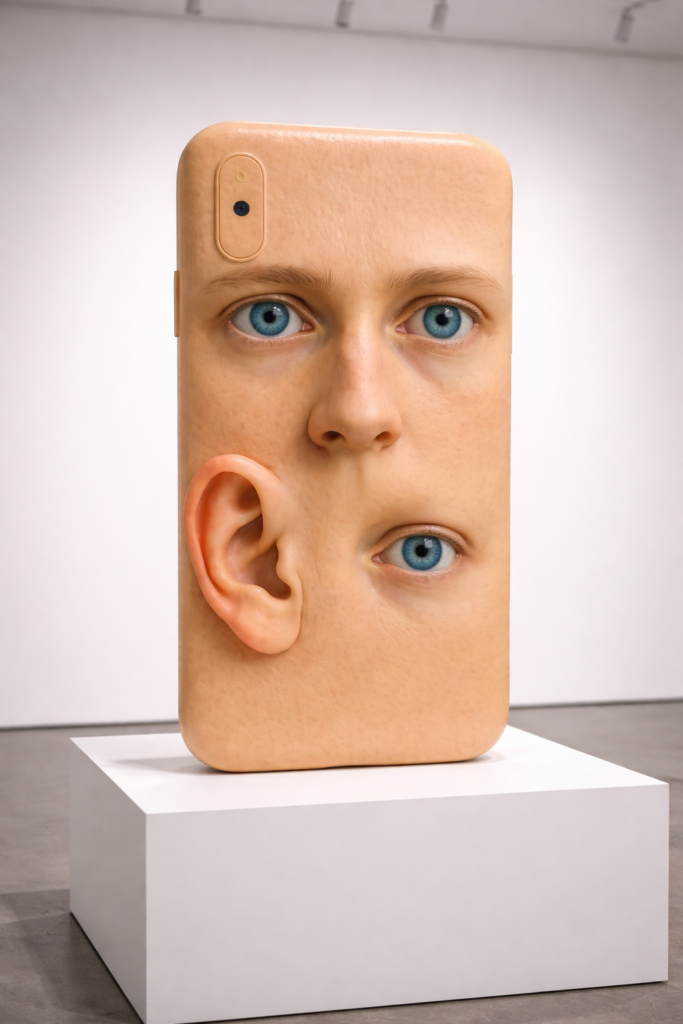
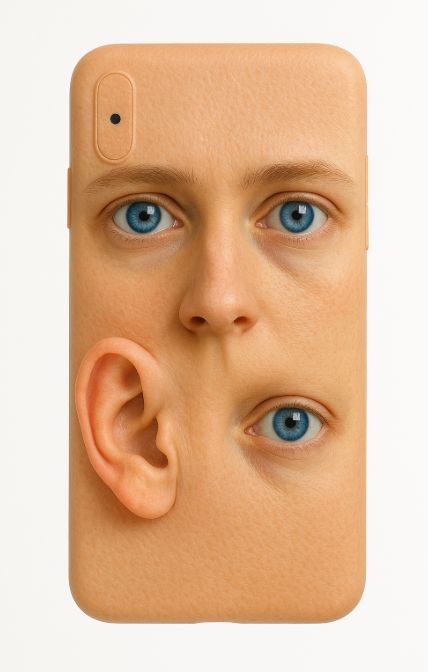
Mobile phone x skin x senses
Digital image 40×30
Un hybride troublant : la chair devient interface, le smartphone se fond dans la peau humaine, et des organes sensoriels apparaissent, déformés, répartis sur sa surface. Une oreille, deux yeux, une bouche — déplacés, figés, à l’écoute. L’objet n’est plus un outil, c’est une entité. Ou peut-être sommes-nous devenus son extension.
L’œuvre interroge la nature des dispositifs numériques comme prothèses de la perception et de l’identité. Le téléphone ne fait plus que connecter : il voit, écoute, parle, mémorise. En retour, nous lui donnons notre attention, notre voix, notre visage, nos gestes.
Ce n’est pas un téléphone. C’est le reflet d’un sujet connecté, ayant externalisé ses sens et intériorisé la machine.
—
A disconcerting hybrid: flesh becomes interface, the smartphone merges with human skin, and sensory organs emerge distorted across its surface. An ear, two eyes, a mouth—displaced, unblinking, listening. This object is no longer a tool but a being. Or perhaps we have become its extension.
The piece questions the nature of modern devices as prostheses of perception and identity. It embodies how smartphones do not only connect us—they hear, watch, speak, and even remember for us. In return, we feed them attention, touch, voice, and face.
This is not a phone. This is the mirror of a connected subject who has externalized their senses and internalized the machine.
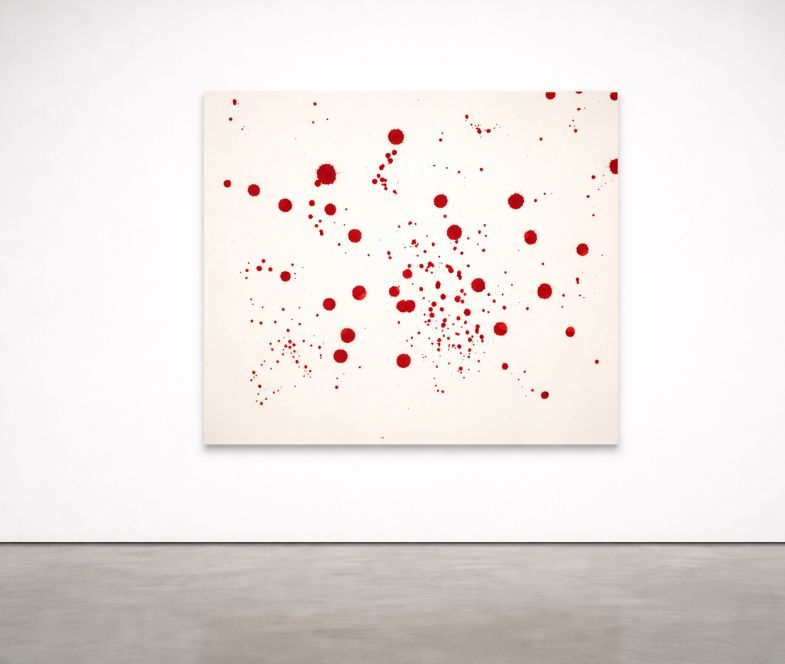

Blood x Gears x Social Noise x Tear Drops
Ink on paper 60 x 40 cm
Cette composition se déploie comme une constellation fragmentée de taches rouges, évoquant à la fois des éclaboussures de sang, des micro-engrenages défectueux et des larmes isolées. Le fond d’un blanc éclatant amplifie la violence silencieuse de chaque trace, telle une surface clinique troublée par un traumatisme invisible. L’œuvre oscille entre l’organique et le mécanique, entre la blessure intime et le dérèglement collectif. Chaque point semble à la fois accidentel et programmé, renvoyant à un système où émotion, données et altération se fondent sans distinction. D’une esthétique minimale mais d’une densité conceptuelle marquée, la pièce interroge les seuils du contrôle et de l’effondrement dans un monde gouverné par un code invisible.
—
This composition unfolds as a fragmented constellation of red stains, evoking at once blood splatters, malfunctioning micro-gears, and isolated teardrops. The stark white background amplifies the silent violence of each mark, like a clinical surface disrupted by unseen trauma. The work oscillates between the organic and the mechanical, the intimate wound and collective disturbance. Each dot feels both accidental and programmed, pointing to a system where emotion, data, and damage are indistinguishably merged. Aesthetically minimal, conceptually dense, the piece questions the thresholds of control and collapse in a world governed by invisible code.
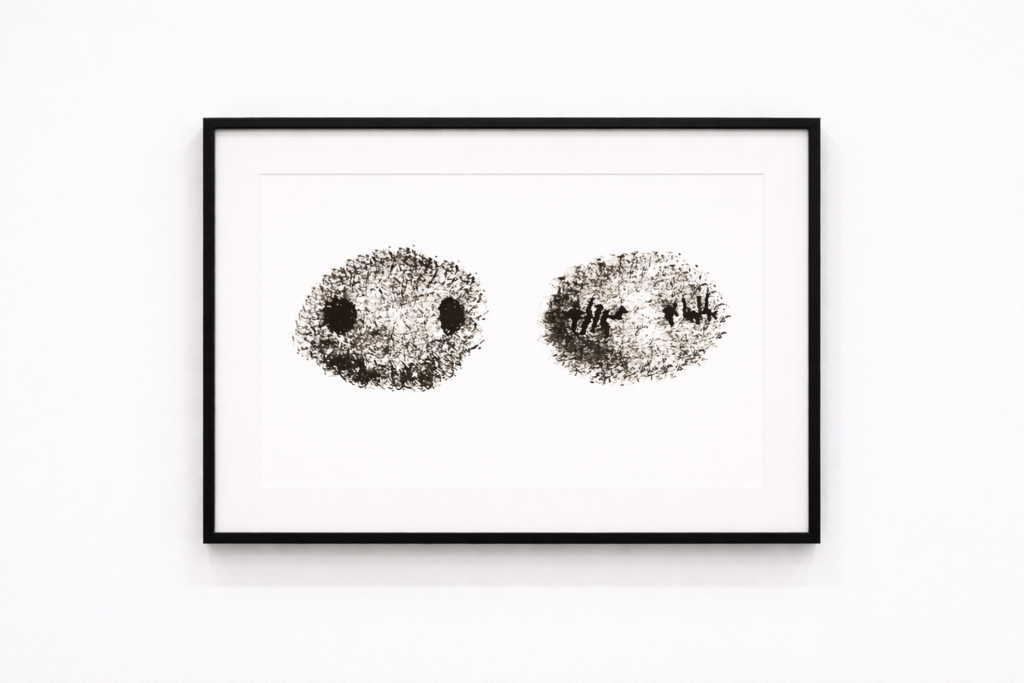
Meiose x smiley x globes x ghost x cry
Ink on paper
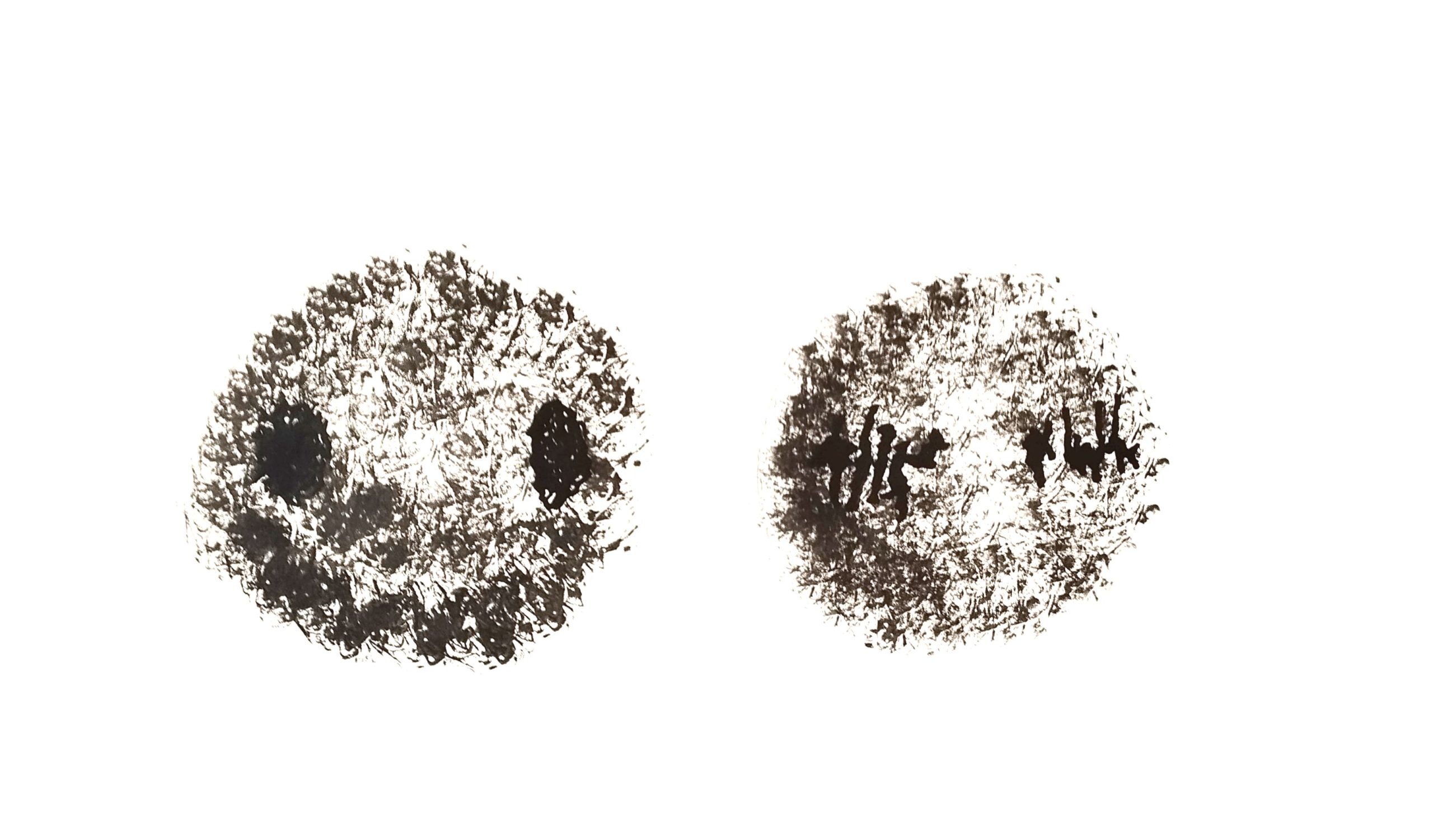
Deux formes globulaires flottent dans un espace blanc — floues, cellulaires, comme observées au microscope. À première vue, elles semblent identiques. Mais en y regardant de plus près : l’une porte la trace à peine visible d’un visage souriant, l’autre est disloquée, spectrale, marquée de traits verticaux — un code-barres de chagrin.
Twins évoque la méiose, ce processus biologique de division cellulaire — mais ici, ce ne sont pas les chromosomes qui se divisent. C’est l’identité numérique. Deux “entités” émergent : l’une, agréable, commercialisable, exploitable — un smiley. L’autre, cryptée, émotionnelle, brisée — illisible, invendable. La métaphore du jumeau numérique est pervertie : nous sommes clonés, oui, mais de manière asymétrique — un soi pour les plateformes, l’autre pour l’oubli.
Le jumeau de gauche simule la joie.
Celui de droite en paie le prix.
Tous deux hantent le système qui les a produits.
Et ensemble, ils murmurent : nous ne sommes pas entiers.
—
Two globular forms hover in white space—fuzzy, cellular, as if viewed under a microscope. At first glance, they appear identical. But look closer: one wears the faint trace of a smiley face, the other is disfigured, ghostlike, marked by vertical strokes—a barcode of sorrow.
Twins evokes meiosis, the biological process of cellular division—but in this case, it’s not chromosomes that split. It’s digital identity. Two “entities” emerge: one palatable, marketable, usable—a smiley. The other, encrypted, emotional, broken—unreadable, unsellable. The digital twin metaphor is corrupted: we are cloned, yes, but asymmetrically—one self for platforms, the other for oblivion.
The left twin performs joy.
The right one bears the cost.
Both haunt the system that created them.
Together, they whisper: we are not whole.
Ink on paper 40×30
Dots x Evolution x Fall x Apple x Black Hole
Ink on paper 30 x 20 cm
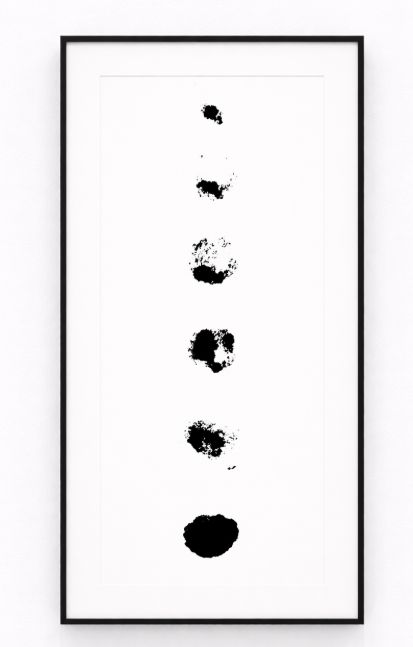
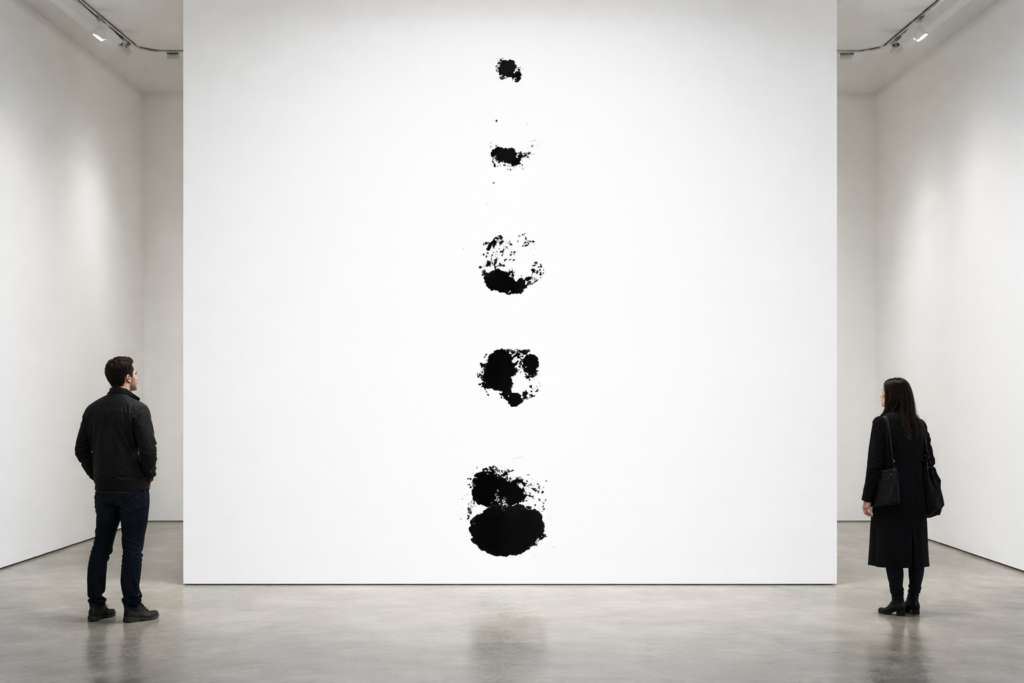
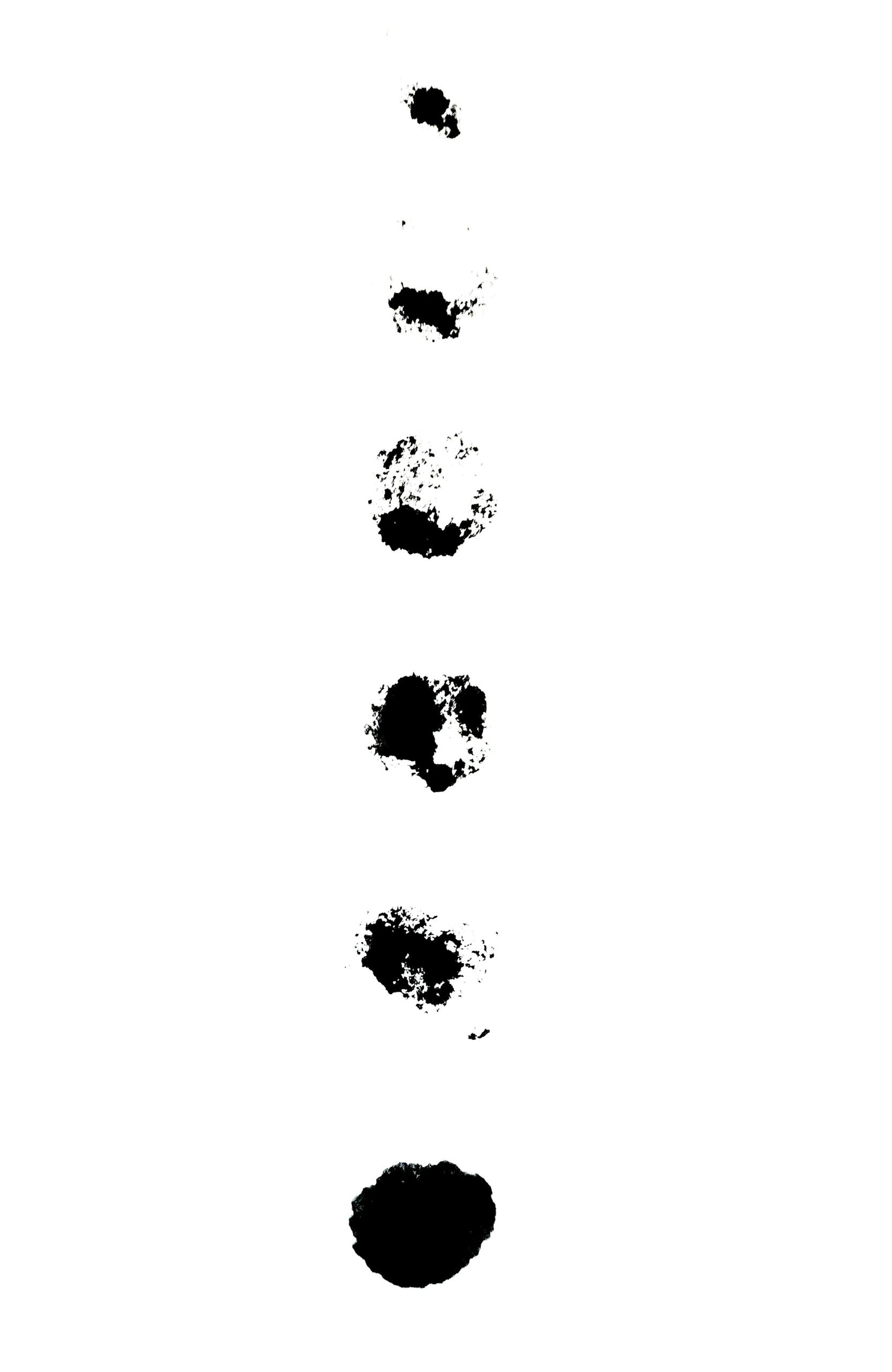
Six taches d’encre noire s’alignent comme une ponctuation, mais il ne s’agit pas d’une phrase — c’est une chute. De la poussière à peine visible jusqu’à la saturation la plus dense, la composition imite un cycle de vie, un effondrement moral, ou une sédimentation idéologique.
L’œuvre résonne autant comme une progression darwinienne que comme une Chute théologique — une sorte de “pomme” métaphorique tombée non pas d’un arbre, mais de la grâce, de la clarté, d’un Eden numérique. En chemin, des visages émergent fugitivement — un fantôme, un masque, un miroir — comme si l’identité vacillait, puis s’éteignait dans l’obscurcissement de la tache.
Le titre, To Be Continued…, suggère qu’il ne s’agit pas d’une fin. C’est une boucle, une habitude, un système.
Chaque point pourrait être :
C’est de la ponctuation à l’ère de l’effondrement.
Et cela s’achève, comme toujours, par un point final.
—
Six black ink blots fall in line like punctuation, but this is no sentence—it’s a descent. From barely-there dust to dense, full saturation, the composition mimics a life cycle, a moral collapse, or an ideological sedimentation.
The work echoes both Darwinian progression and the theological Fall—a metaphoric « apple » dropped not from a tree, but from grace, from clarity, from digital Eden. Along the way, faces briefly emerge—a ghost, a mask, a mirror—as if identity flickers and then vanishes in the deepening blot.
The title, To Be Continued…, implies that this isn’t an ending. It’s a loop, a habit, a system.
Each dot might be:
This is punctuation in the age of collapse.
And it ends, as always, with a full stop.
Brownian motion x phone notifications x Intruder
Video
Dans un cadre sombre, presque étouffant, des éclats blancs et des pulsations violettes dérivent de façon erratique — de minuscules lumières sans direction, rebondissant en boucle dans une agitation brownienne. Mais ce ne sont pas des particules de poussière : ce sont des métaphores de notifications mobiles, surgissant sans fin, se heurtant, interrompant.
Ce chaos lumineux gravite autour d’un vide croissant — une bouche, une plaie, un seuil — d’où semble résonner en silence un seul mot : « Va-t’en. »
Go Away explore les micro-intrusions permanentes du monde connecté : des notifications comme parasites numériques, conçues pour fracturer l’attention et ancrer la dépendance. Leur mouvement est imprévisible, mais constant — comme des pensées non sollicitées, ou comme quelqu’un qui frapperait à l’intérieur du crâne.
L’œuvre ne se clôt pas.
L’intrus est déjà là.
Et le cerveau ne sait plus ce qu’il a laissé entrer, ni ce qu’il voulait repousser.
—
In a dim, almost claustrophobic frame, white flickers and purple pulses drift erratically across the screen—tiny, directionless lights bouncing in a loop of Brownian agitation. But these aren’t dust particles: they’re metaphors for mobile notifications, endlessly appearing, colliding, interrupting.
The luminous chaos centers around a growing void—a mouth, a wound, a threshold—from which one word seems to echo silently: “Go Away.”
Go Away explores the constant micro-intrusions of the connected world: notifications as digital parasites, designed to fracture attention and anchor dependency. Their motion is unpredictable, yet permanent—like thoughts we didn’t invite, or like someone knocking on your skull from the inside.
The piece ends unresolved.
The intruder is already inside.
And the brain no longer knows what it asked to stay, or leave.
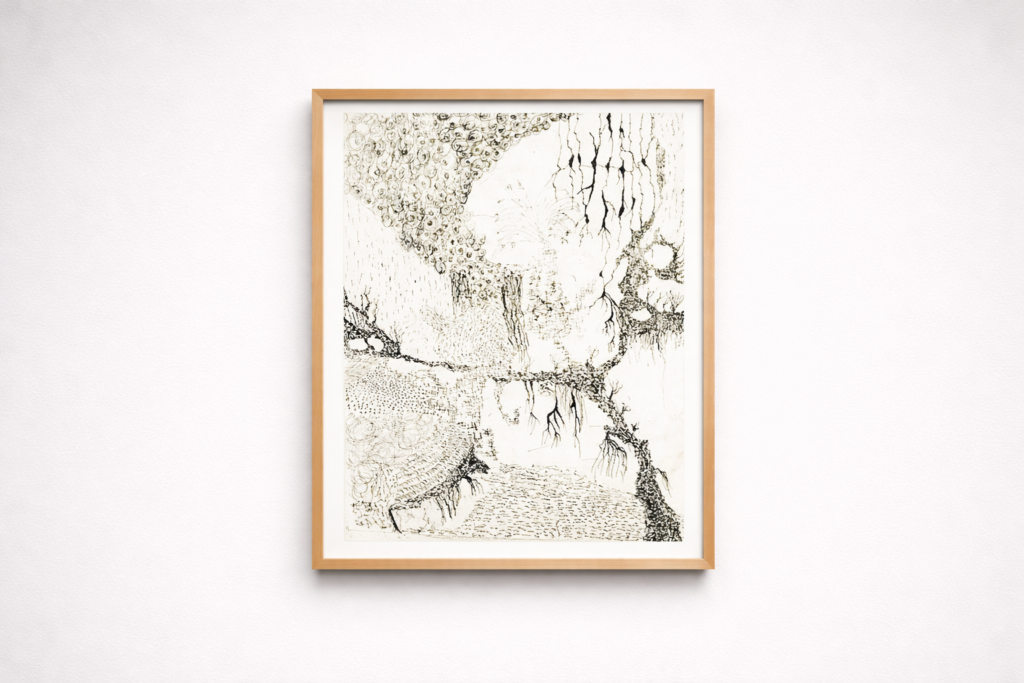
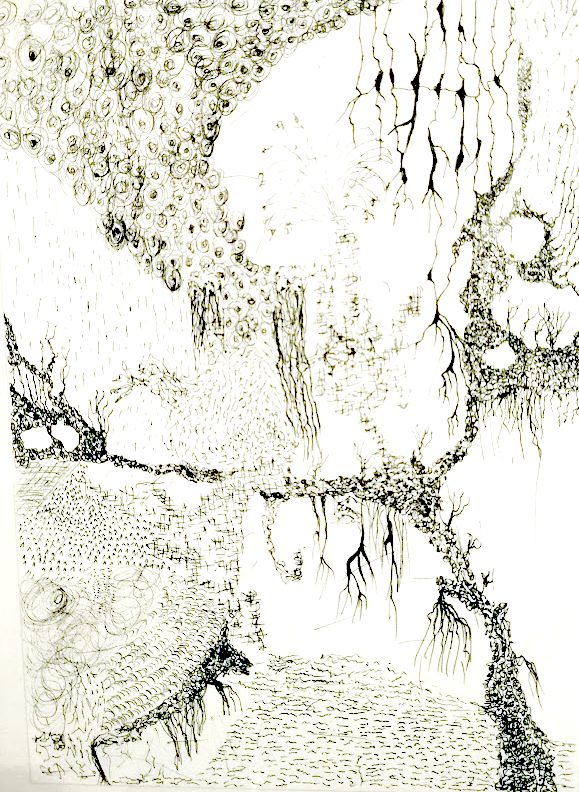
Ink on paper 30 x 20 cm
Un enchevêtrement de racines, vrilles, dendrites et structures cellulaires s’étend sur la page — à la fois réseau neuronal, vestige végétal et ruine topographique. La composition refuse tout point focal, obligeant le regard à errer, comme à travers le fantôme d’une forêt ou d’un système d’exploitation oublié, encore traversé de données perdues.
Cette pièce évoque l’architecture de la mémoire, comme saisie au moment où elle commence à se dissoudre — neurones qui se fracturent, racines qui se rétractent, systèmes qui se désagrègent en motifs épars. Elle semble vivante, mais à peine. Un mycélium post-biologique, ou l’ultime écho d’une carte cognitive dessinée à la main avant que l’introspection ne soit remplacée par l’apprentissage machine.
—
A tangle of roots, tendrils, dendrites, and cellular structures spreads across the page—part neural network, part vegetal relic, part topographic ruin. The composition resists a focal point, demanding the viewer to wander through it, like through the ghost of a forest or a forgotten operating system still pulsing faintly with lost data.
This piece evokes the architecture of memory, as if captured in the moment it begins to dissolve—neurons fracturing, roots retracting, systems breaking down into scattered patterns. It feels alive, but barely. A post-biological mycelium, or the last echo of a cognitive map drawn by hand before machine learning replaced introspection.
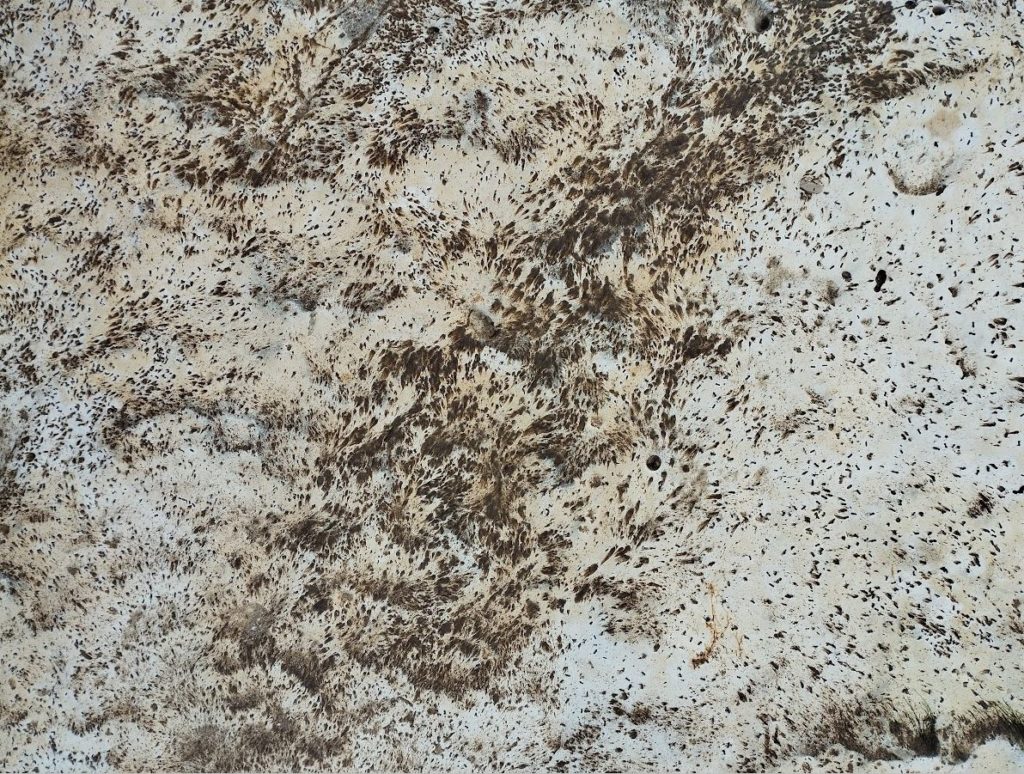
Beach x erosion
Photo 20 x 30 cm
Ce n’est pas une peinture. Ce n’est pas un dessin.
C’est la gravure inconsciente du temps, exécutée par la main de la mer sur un sol de calcaire crayeux.
Dans Nature Sculpted That, l’érosion marine révèle quelque chose d’étrange : des réseaux, des éclats, des fractures — un langage visuel fait de répétition et de hasard, où chaque goutte d’eau agit comme un pinceau, traçant des motifs sans auteur, sans intention.
Cela évoque :
Cette œuvre accidentelle souffle au spectateur : la création n’a pas toujours besoin d’un créateur.
Parfois, la mer dessine mieux que nous.
Et elle ne se répète jamais.
—
This is not a painting. This is not a drawing.
It’s the unconscious etching of time, performed by the sea’s hand on a chalk limestone floor.
In Nature Sculpted That, the marine erosion reveals something uncanny: networks, bursts, fractures—an entire visual language of repetition and randomness, where each drop of water behaves like a brush, carving patterns with no author, no intention.
It evokes:
This accidental artwork tells the viewer: creation doesn’t always need a creator.
Sometimes the sea draws better than we do.
And it never repeats itself.
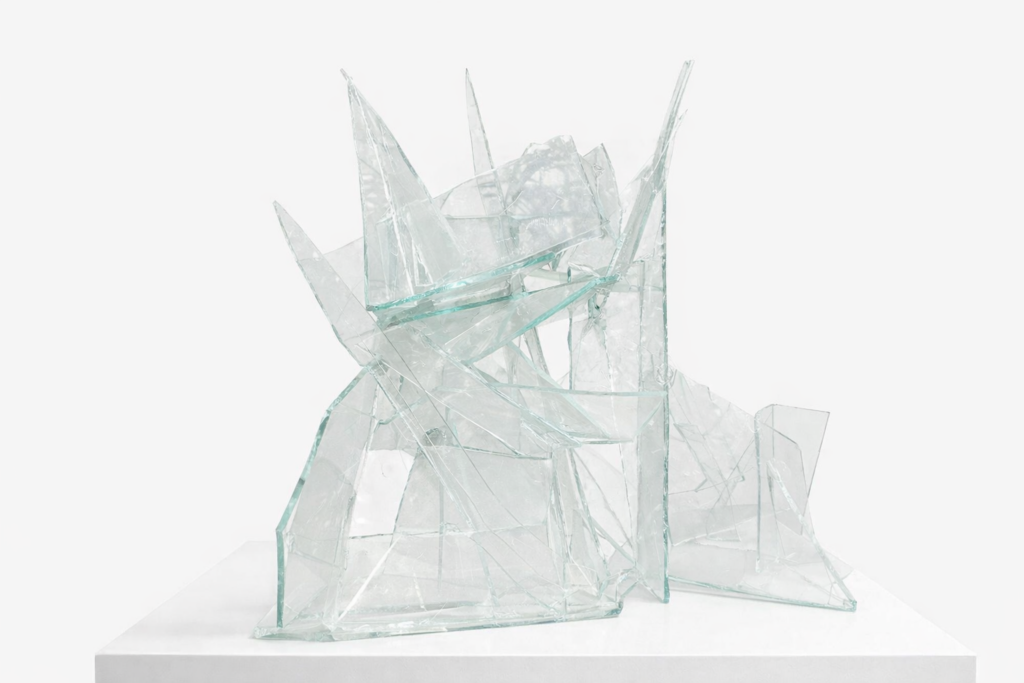
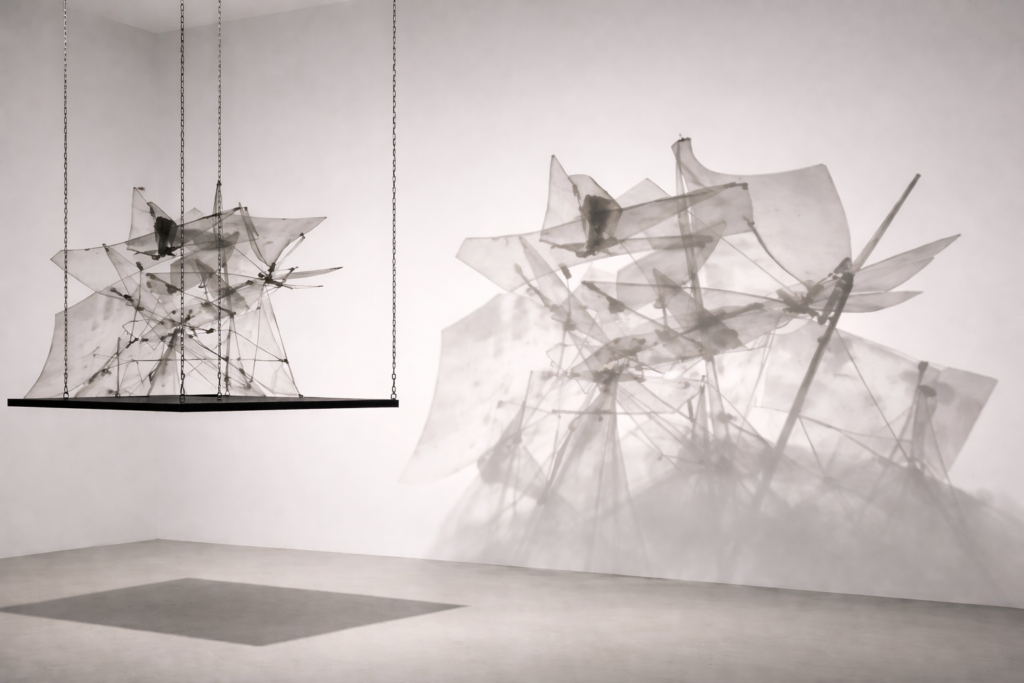
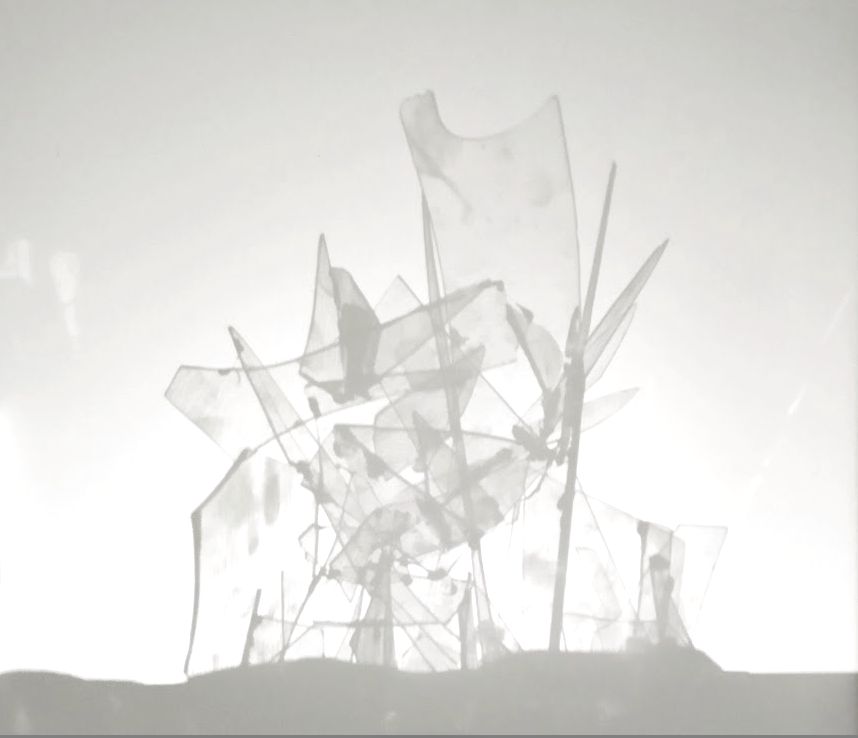
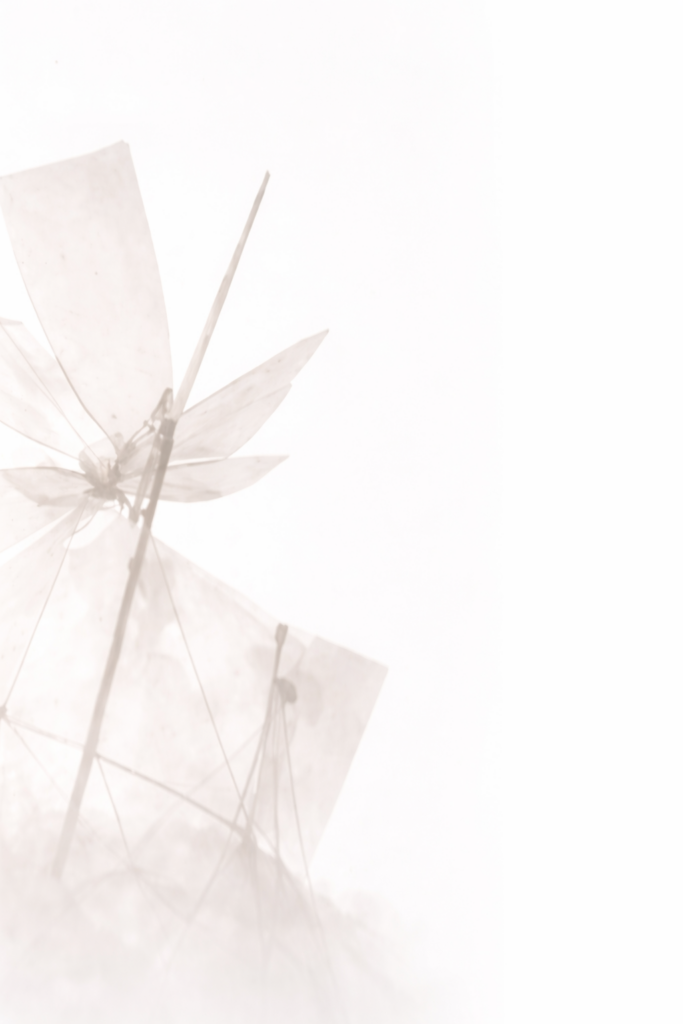
Transparency x Spike x Flagship x Pirate
Photo of glass waste sculpture (50 x 60 cm) on my bed
Cette photographie saisit une sculpture fantomatique composée d’éclats de verre, assemblés telle une frégate spectrale échouée sur une surface douce et domestique. Le jeu entre la translucidité et la netteté évoque à la fois la vulnérabilité et la menace — des formes fragiles dressées comme des voiles menaçantes dans une tempête invisible. Chaque pointe suggère à la fois une arme et un avertissement, comme si l’entropie avait pris le commandement d’un navire jadis fier.
L’œuvre brouille les frontières entre ruine et rébellion, transparence et opacité, sécurité et intrusion.
Intrusion radicale d’une élégance violente, elle transforme l’intime en champ de bataille d’une piraterie symbolique.
—
This photograph captures a ghostly sculpture made of glass shards, assembled like a spectral flagship run aground on a soft, domestic surface. The interplay of translucence and sharpness evokes both vulnerability and threat—fragile forms rising as menacing sails in an invisible storm. Each spike suggests both a weapon and a warning, as if entropy had taken command of a once-proud vessel. The piece blurs the line between ruin and rebellion, transparency and opacity, safety and incursion. A radical intrusion of violent elegance, it turns the intimate into a battleground of symbolic piracy.
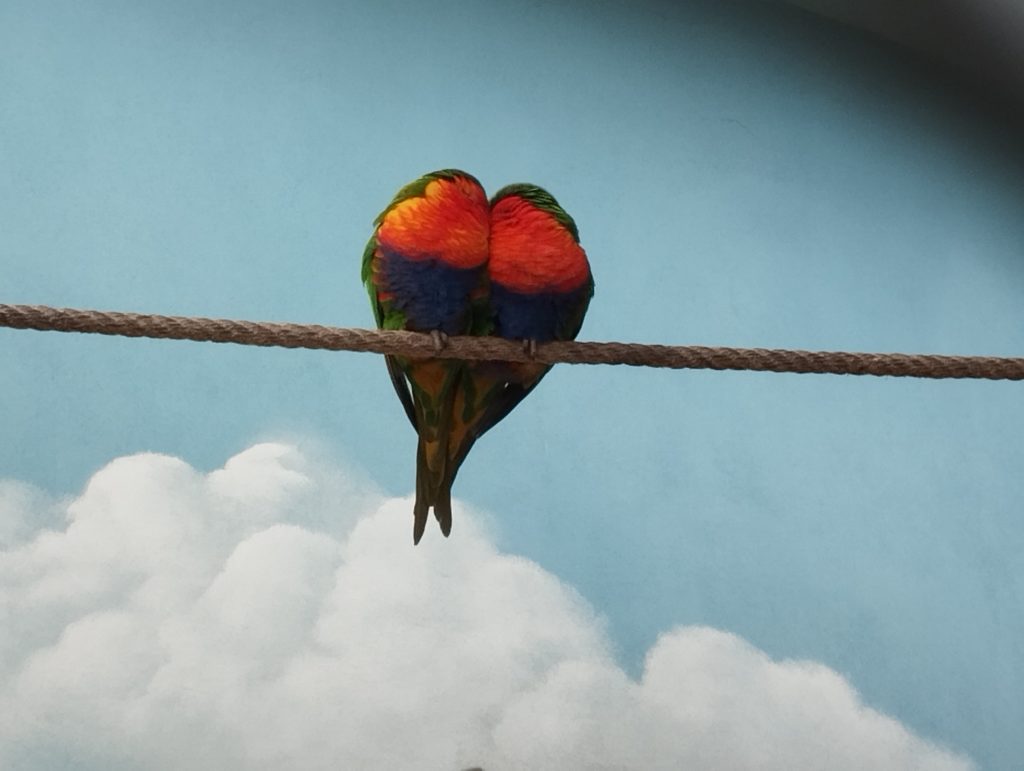
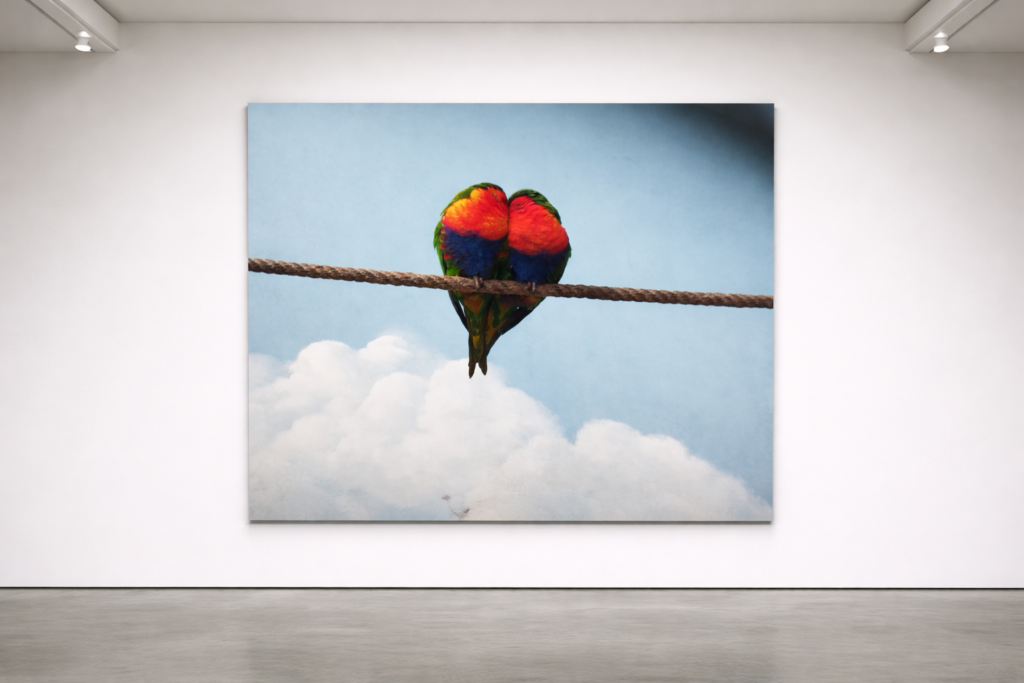
Real Parrots x Fake background
Photo stolen behind iron fence 30 x 40 cm
Deux perroquets fusionnent en une seule forme — miroir, cœur, flamme — perchés avec délicatesse sur une corde tendue, devant une illusion de ciel infini. Leurs têtes, pressées l’une contre l’autre, effacent toute séparation, dessinant une symétrie organique parfaite, qui aurait pu être conçue par une IA si elle n’était pas aussi accidentellement sublime.
Mais ce n’est pas la nature sauvage. C’est la nature en captivité. Le ciel est un décor peint, la corde est un dispositif, et l’amour se vit sous surveillance, derrière des barreaux de métal. La tension de l’œuvre naît de cette contradiction : les oiseaux sont plus libres dans leur étreinte que nous en tant que spectateurs.
Supernature évoque la sensation de surprendre un moment qu’on n’était pas censé voir — une faille dans un paradis fabriqué.
Un habitat manufacturé donne naissance à un acte pur.
—
Two parrots fuse into a single form—mirror, heart, flame—perched delicately on a taut rope with the illusion of infinite sky behind them. Their heads, pressed together, erase all separation, forming a perfect organic symmetry that could have been designed by AI if it weren’t so accidentally sublime.
But this isn’t nature untouched. This is nature in captivity. The sky is a painted backdrop, the rope is engineered, and the love is watched through metal bars. The tension of the piece lies in this contradiction: the birds are more free in their embrace than we are as viewers.
Supernature evokes the feeling of catching a moment you weren’t supposed to see, like a glitch in a fabricated paradise.
A manufactured habitat gives rise to a pure act.
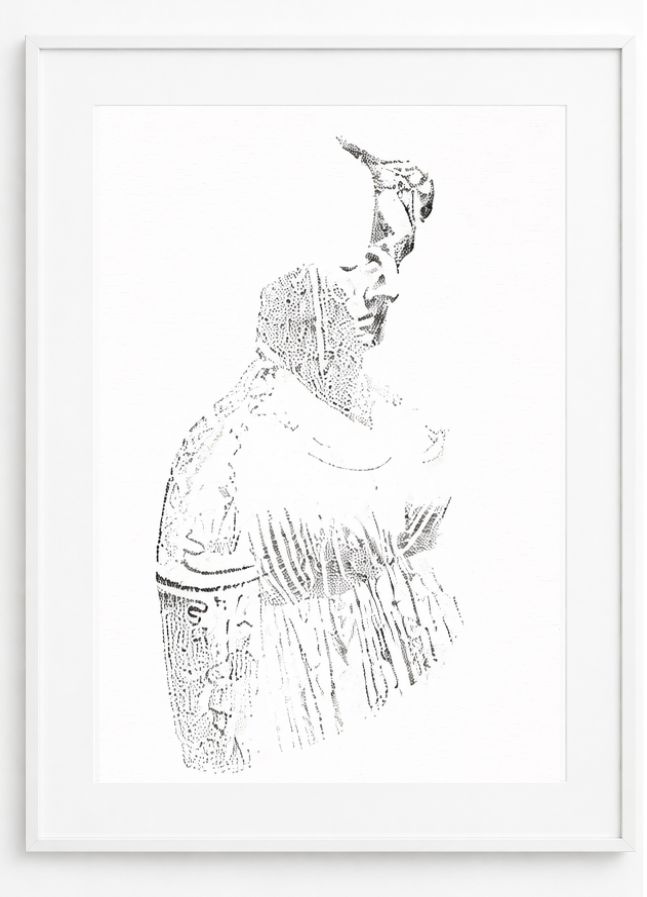

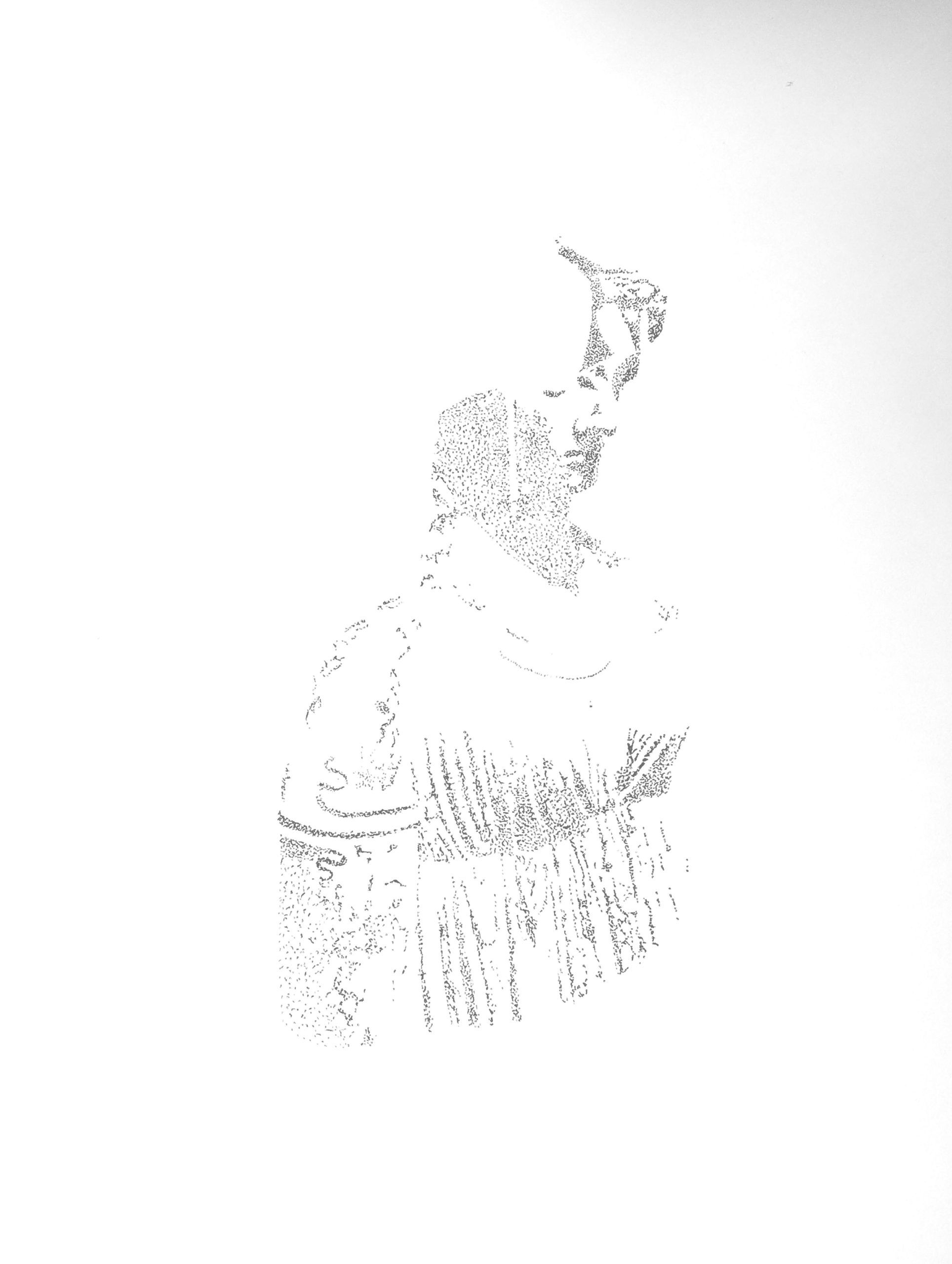
Half Greek statue from Persephone x No Brain x Jewels x Closed eyes
Drawing on paper 40 x 30 cm
Cette apparition pâle de Perséphone n’émerge pas du marbre, mais de l’absence. Rendue visible par une constellation fantomatique de points, la figure flotte à mi-chemin entre la forme et le vide — inachevée, effacée, ou simplement en train de disparaître.
L’allusion mythologique est explicite : Perséphone, déesse des deux mondes — lumière et souterrain, surface et ombre — est ici suspendue. Mais sa couronne a disparu, remplacée par le néant, son regard est clos, sa tête vide — une critique directe des icônes modernes, vidées de pensée, de conscience, de résistance.
Les bijoux, encore visibles, brillent avec ironie — symboles de valeur sans identité, de beauté sans voix. Son cerveau manquant n’est pas une absence, mais une extraction — peut-être délibérée. Peut-être une stratégie de survie.
Perséphone devient ainsi une allégorie du corps passif à l’ère de l’automatisation :
Élégant, inerte, orné, aveugle.
—
This faint apparition of Persephone emerges not from marble, but from absence. Rendered through a ghostly constellation of dots, the figure floats halfway between form and void—unfinished, erased, or simply fading.
The mythological allusion is clear: Persephone, goddess of dual worlds—light and underworld, surface and shadow—is caught in suspension. But here, her crown is replaced by nothingness, her gaze closed, her head empty—a critique of modern icons stripped of thought, awareness, or resistance.
The jewels, still visible, mockingly gleam—symbols of value without identity, of beauty without voice. Her missing brain is not a lack, but a removal—perhaps deliberate. Perhaps a survival tactic.
Persephone becomes a commentary on the passive body in the age of automation:
Elegant, inert, adorned, blind.
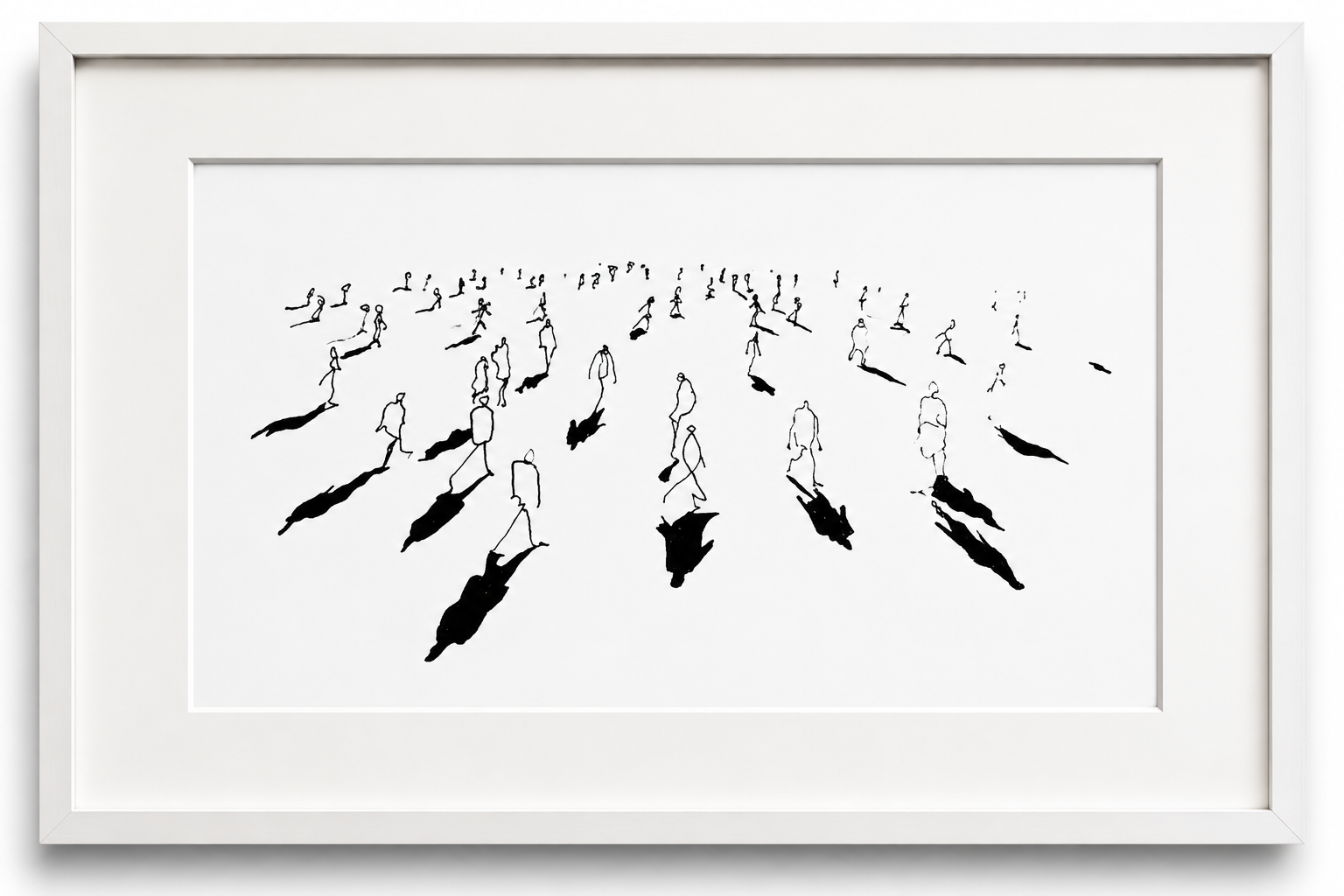
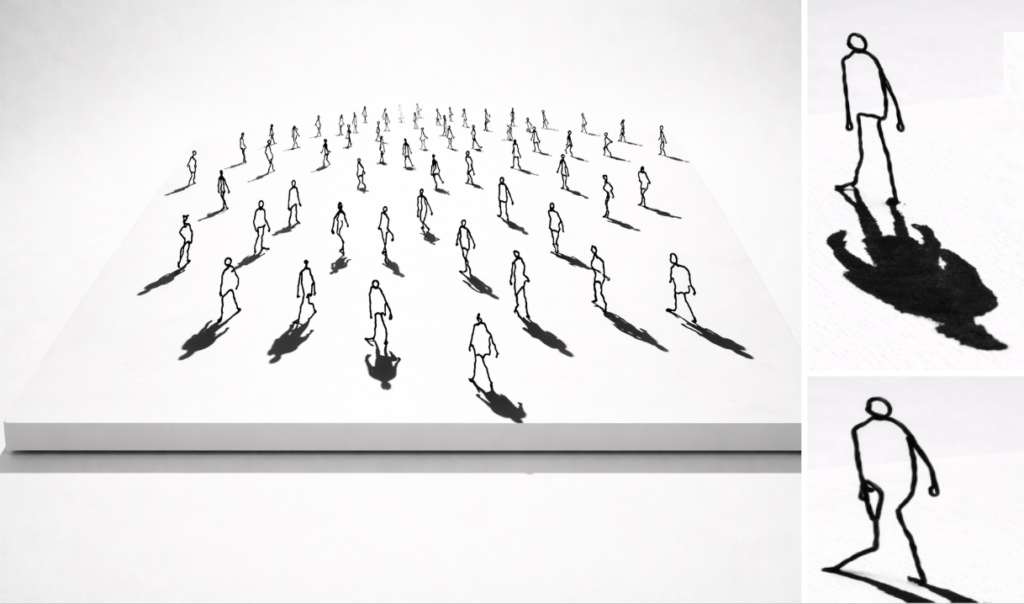
Random walking zombies x No water x No sun x No nature x Distorted Shadows
Ink on paper 30 x 40 cm
Une foule avance — sans direction, silencieuse, identique dans sa fragilité. Seules des lignes décrivent leur présence, mais ce sont les ombres qui révèlent la vérité : lourdes, opaques, inéluctables. Le soleil est absent, pourtant les ombres tombent — une lumière fausse, peut-être artificielle, peut-être métaphorique.
Ces figures sont des êtres post-naturels, privés d’eau, de racines, de véritable soleil. Dénuées de tout décor organique, elles errent sur une plaine abstraite, comme des bots dans un vide de données, ou des utilisateurs perdus dans le scroll infini. Leur destination ? Aucune. Leur raison d’être ? Oubliée.
Le titre Sunny Day est ironique. Il n’y a ni ciel, ni chaleur, seulement l’illusion de lumière. Ce sont les morts-vivants de la modernité numérique — zombies de la répétition, de la consommation passive, du déterminisme algorithmique.
Les ombres déformées sont la dernière trace de l’humain — reflets grotesques, exagérés, de quelque chose que nous ne sommes plus.
—
A crowd advances—directionless, silent, identical in fragility. Only lines describe their presence, but shadows tell the truth: heavy, opaque, and inescapable. The sun is nowhere, yet shadows fall—false light, maybe artificial, maybe metaphorical.
These figures are post-natural beings, devoid of water, roots, or real sun. Stripped of any organic backdrop, they roam an abstract plain, like bots in a data void or users lost in infinite scroll. Their destination? Nowhere. Their purpose? Forgotten.
The title « Sunny Day » is ironic. There is no sky, no warmth, only the illusion of light. They are the walking dead of digital modernity—zombies of repetition, of passive consumption, of algorithmic determinism.
The distorted shadows are the last trace of humanity—exaggerated, grotesque reflections of something we no longer are.
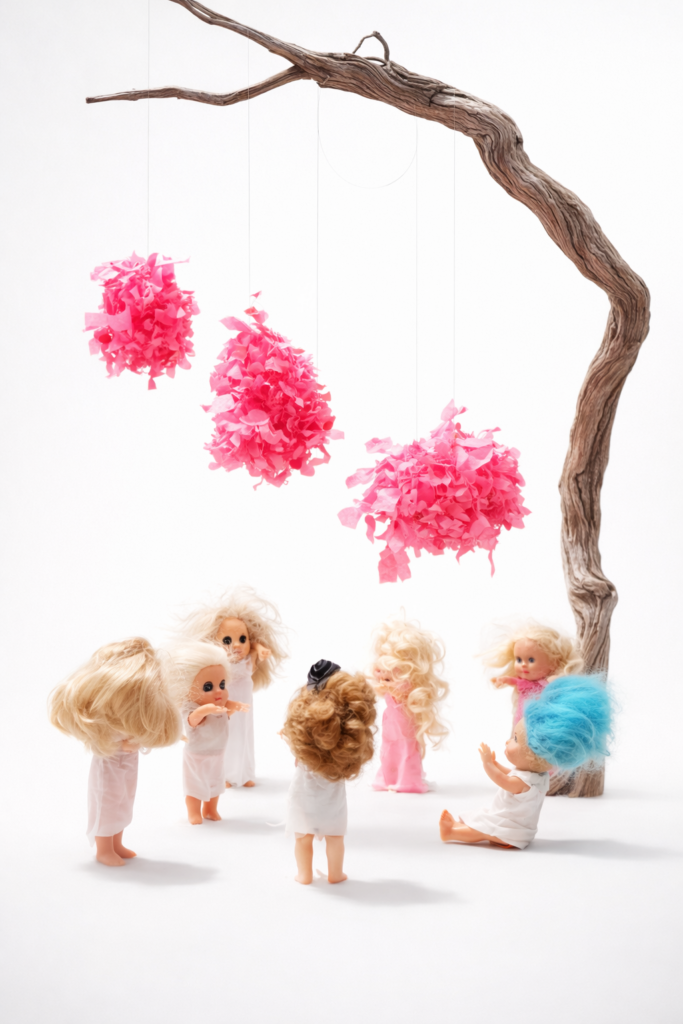
Ikea board x dead tree x plastic fishes x plastic dress x influence x baby dolls
Sous une branche morte, un cercle de petites poupées se rassemble en adoration, les yeux levés vers des méduses rose fluo suspendues. Mais ces créatures ne sont pas marines : ce sont des fragments d’emballages plastiques, déformés en appâts décoratifs.
La scène évoque un rituel. Les poupées, dénudées et stylisées comme de minuscules influenceuses, fixent avec des yeux grands ouverts et identiques les objets flottants au-dessus d’elles. Toute différence a disparu — genrées, lissées, formatées — chaque figure reflète la suivante. Les masses roses flottent comme des idéaux artificiels, illusions suspendues, inaccessibles.
Cette œuvre met en scène une satire troublante des rêves d’enfance façonnés par la beauté synthétique et l’influence algorithmique. Une publicité pour shampoing transformée en liturgie païenne : tableau de soumission, de fantasme consommé, et de fausse autonomie.
Ici, tout est en plastique — y compris le désir.
—
Beneath a lifeless branch, a coven of small dolls gathers in adoration, gazing upward at floating neon-pink fish. Yet these creatures are not marine life—they’re scraps of plastic packaging, deformed into decorative bait.
The scene mimics a ritual. The dolls, stripped and stylized like tiny influencers, stare with wide, identical eyes at the objects above. All differences erased—gendered, polished, formatted—each character mirrors the next. The pink masses float like artificial ideals, suspended illusions impossible to grasp.
This work stages an unsettling satire of childhood dreams shaped by synthetic beauty and algorithmic influence. A shampoo ad turned pagan liturgy, it is a tableau of submission, consumer fantasy, and false agency.
Everything here is plastic—desire included.
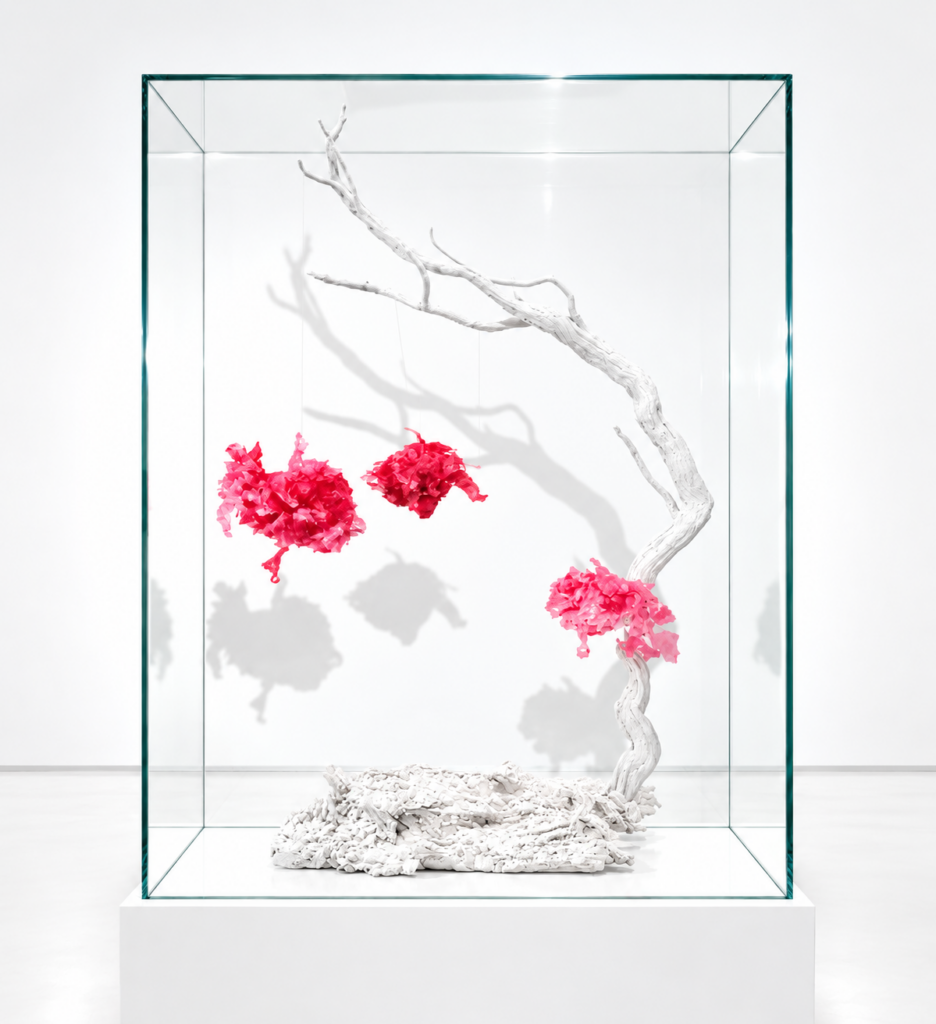
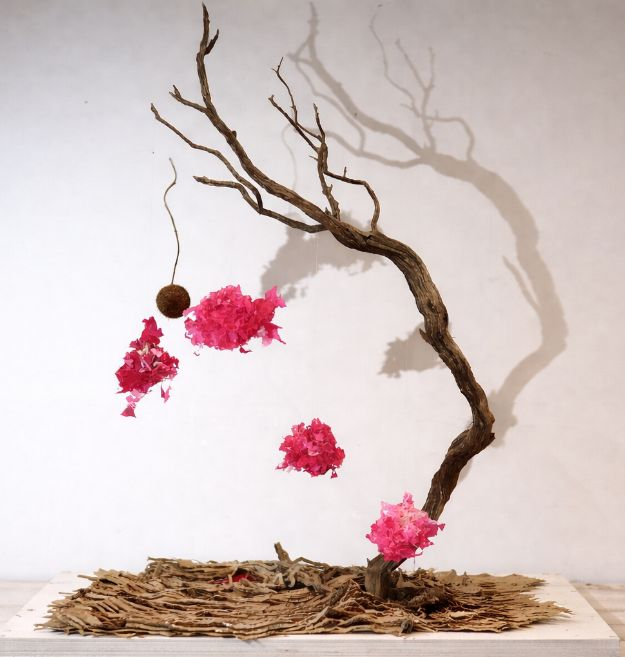
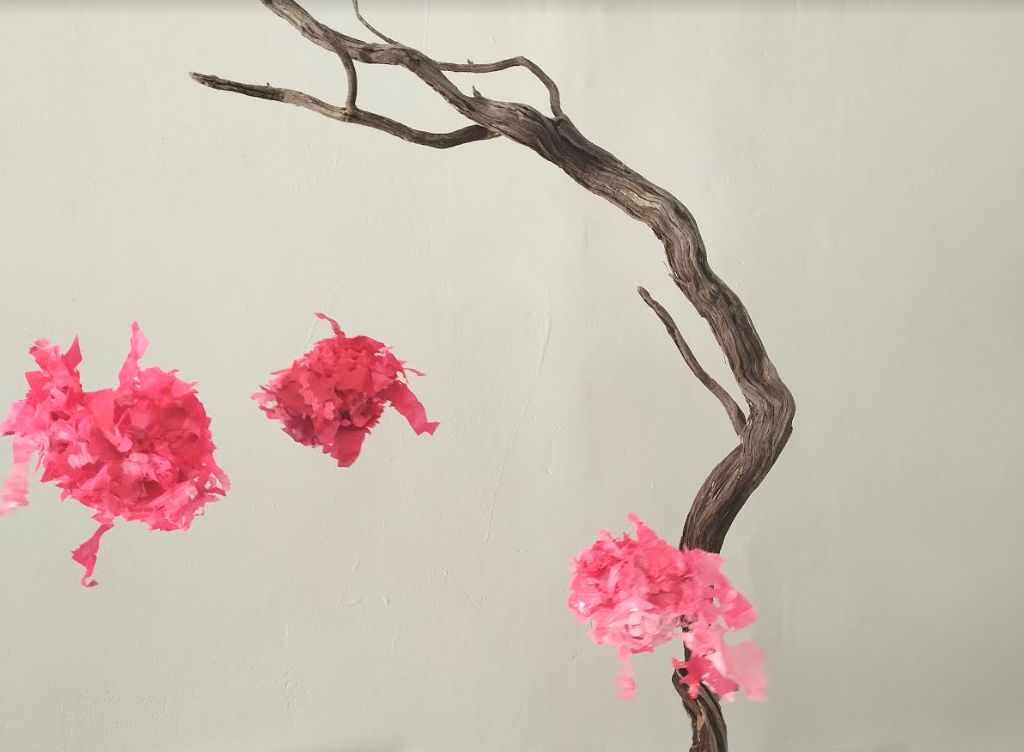
Plastic bags x fishes x dead trees
Plastic – Wood – Flowers | 70 x 50 x 50 cm
Cette sculpture, faussement délicate, met en scène un drame écologique silencieux : une branche morte, tordue, évoque un bois flotté immergé ou un corail blanchi, tandis que des fragments de plastique rose vif imitent des poissons ou une flore dérivante. La tension réside dans leur ambiguïté — sont-ils vivants ou déjà des vestiges synthétiques ?
Ces « créatures » en plastique dérivent sans but, prises dans une chorégraphie de disparition, suspendues dans un océan hors du temps. L’œuvre rend visible la violence poétique de la pollution, suggérant un futur où même la beauté est artificielle, détachée de toute racine.
Ici, la nature ne renaît plus. Elle est mise en scène. Et lentement, elle s’étouffe.
—
This deceptively delicate sculpture stages a silent ecological drama: a twisted dead branch evokes submerged driftwood or bleached coral, while fragments of bright pink plastic mimic fish or floating flora. The tension lies in their ambiguity—are they alive or already synthetic remains? The plastic « creatures » drift aimlessly, caught in a choreography of disappearance, suspended in a timeless ocean. The piece renders visible the poetic violence of pollution, suggesting a future where even beauty is artificial, detached from all roots. Nature here is no longer reborn, only staged, and slowly suffocated.
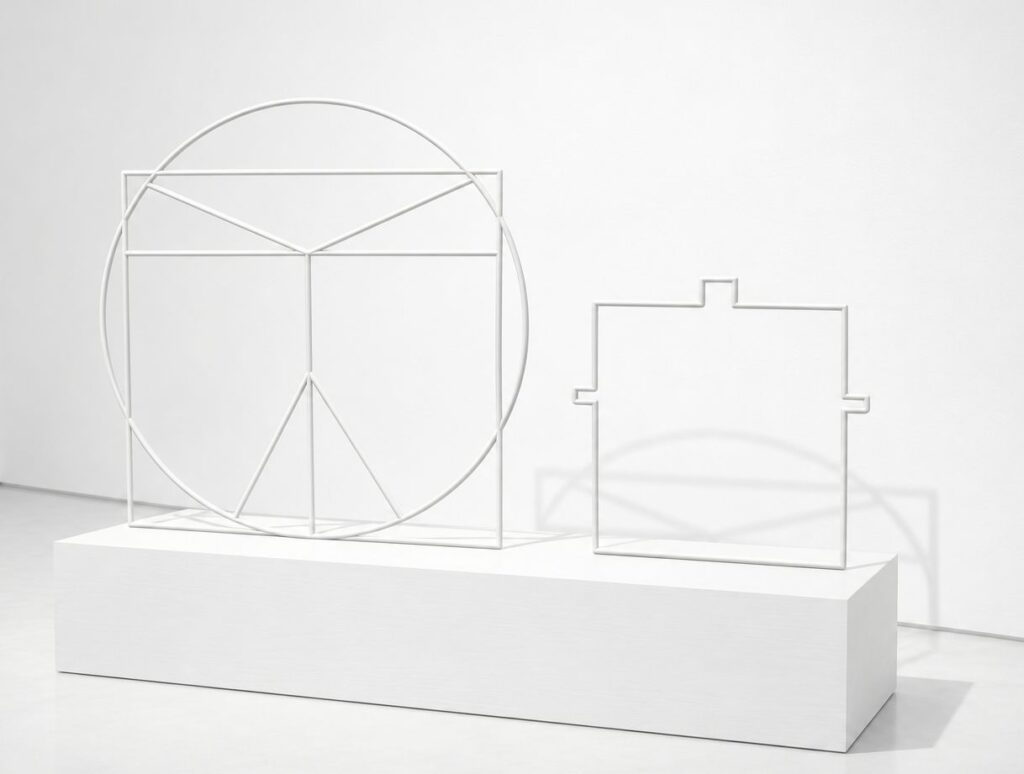
Vitruve man x Perfect man for e-commerce
Ink on paper 30 x 40 cm
À gauche, l’intemporel Homme de Vitruve de Léonard de Vinci — symbole d’harmonie, de symétrie, de proportion, d’intelligence et d’équilibre. À droite, son descendant dégénéré : Homo Cubile. Un corps non plus ouvert au monde, mais replié sur lui-même, enfermé dans des écrans, des calories et de l’automatisation.
Dans ce diagramme satirique, le nouvel « homme parfait » pour l’e-commerce se résume à quelques fonctions :
Homo Cubile est à la fois critique et prophétie. Le corps idéal de l’économie numérique n’est plus sculpté ni transcendant — il est soumis, modulaire, rentable. Un humain compatible machine, façonné non par la nature ou l’esprit, mais par la logique marchande et l’ergonomie des écrans.
Une anatomie de la décadence, enfermée dans un carré parfaitement dessiné.
L’apogée de l’économie de la paresse
—
On the left, da Vinci’s timeless Vitruvian Man—a symbol of harmony, symmetry, proportion, and balance. On the right, his degenerated descendant: Homo Cubile. A body no longer open to the world but closed in on itself, boxed by screens, calories, and automation.
In this satirical diagram, the new “perfect man” for e-commerce is reduced to functions:
Homo Cubile is both critique and prophecy. The ideal body of the digital economy is no longer sculpted or transcendent—it is submissive, modular, and profitable. A machine-friendly human, shaped not by nature or spirit, but by market logic and screen ergonomics.
Anatomy of decline, wrapped in a perfectly shaped square.
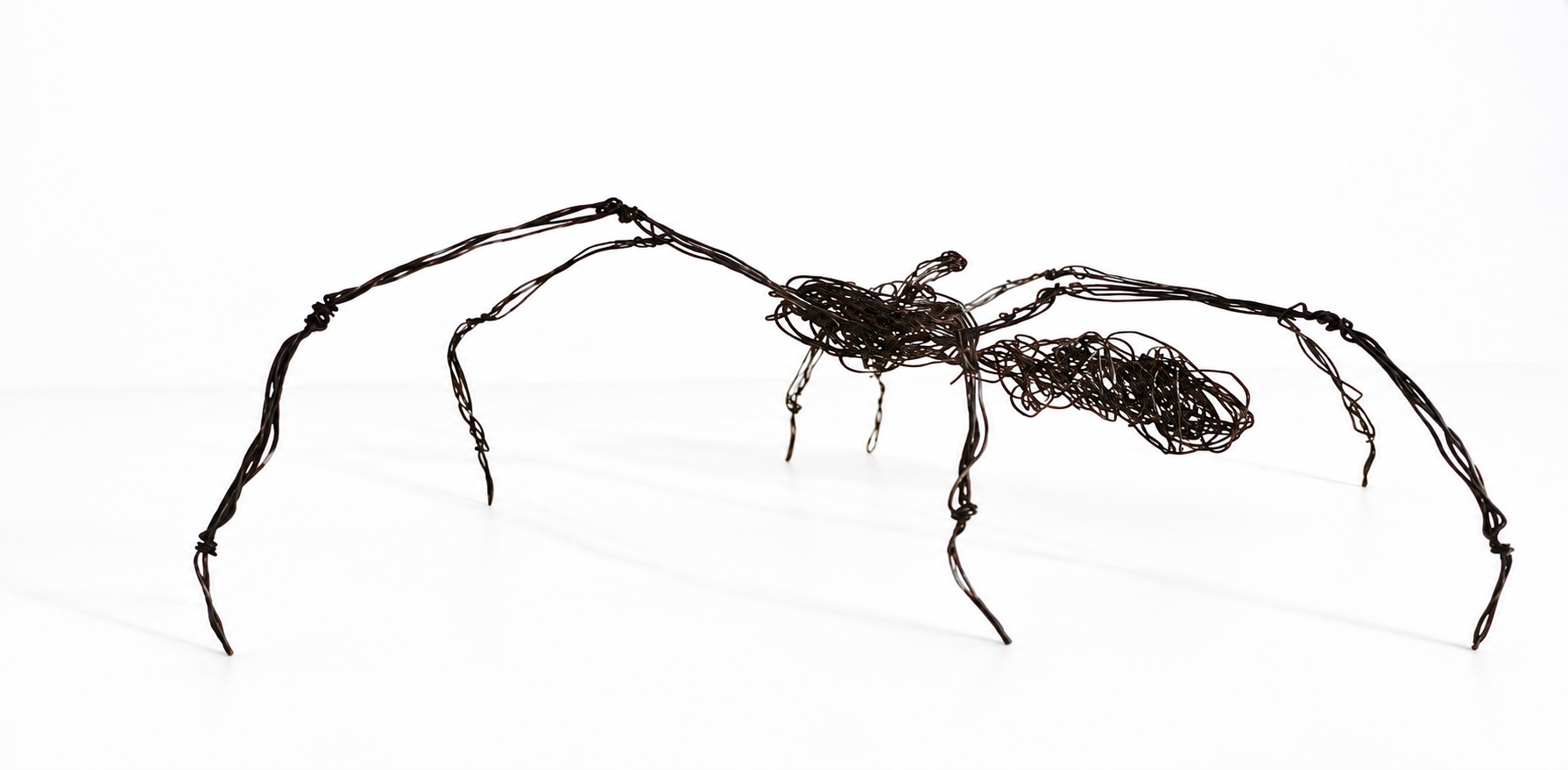
Iron – 10 x 20 x 20 cm
Avec une élégance troublante, cette créature arachnéenne étend ses pattes comme des antennes — prêtes à piéger, ressentir, cartographier. Forgée en fil de fer, sa matière n’est pas un hasard : froide, conductrice, invasive. Elle ne rampe pas sur les murs — elle circule dans le domaine numérique, tissant un réseau qui capture bien plus que des insectes. Elle scanne.
Cette araignée n’est pas biologique. C’est une métaphore du Web lui-même. Silencieuse, omniprésente, résiliente, elle érige des architectures invisibles où la donnée devient proie. La sculpture évoque la surveillance, le traçage, le ciblage comportemental — et surtout, l’enfermement.
La forme est légère, mais le sens est lourd.
La toile est absente
—
With unsettling elegance, this arachnid creature extends its legs like antennae—ready to trap, feel, map. Forged from wire, its material is no accident: cold, conductive, invasive. It does not crawl across walls—it crawls across the digital realm, spinning a network that entangles more than insects. It scans.
This spider is not biological. It’s a metaphor for the Web itself. Silent, omnipresent, and resilient, it builds invisible architectures where data becomes prey. The sculpture references surveillance, tracking, behavioral targeting, and above all, entrapment.
The form is light, but the meaning is heavy.