Categories
Automation Tech for good

Hutches

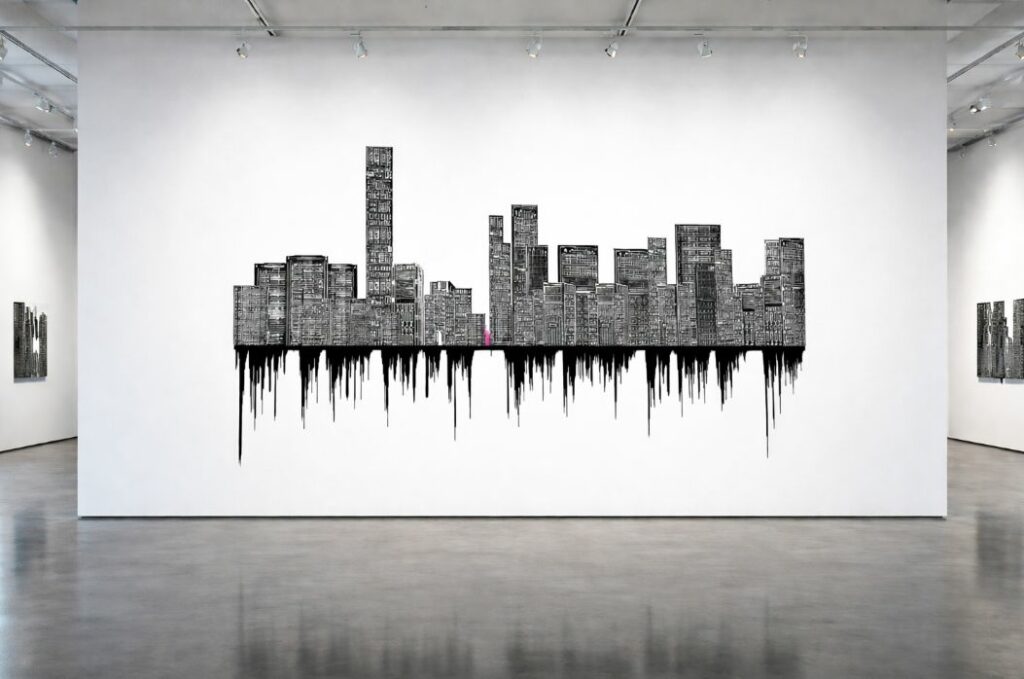
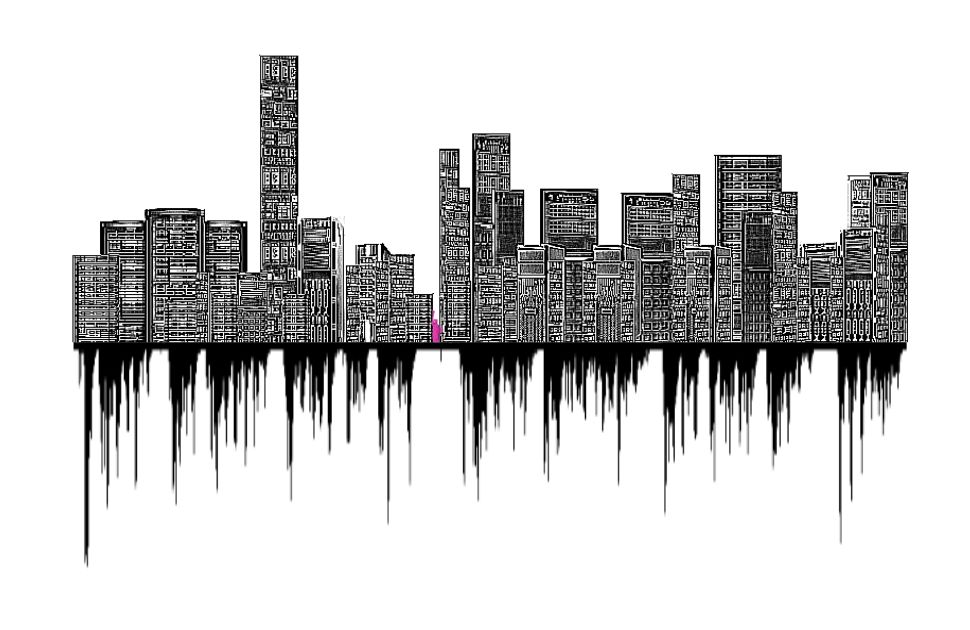
Servers x NYC x liberty x Z. x Sorrow x Tears

Digital drawing on paper 20 x 30cm

La skyline de Manhattan — tranchante, dense, iconique — se révèle être tout autre chose : une forteresse de serveurs de données, verticalement froide, uniformément chiffrée. Sous chaque tour, des larmes numériques tombent, calquées sur l’onde sonore d’un enregistrement réel : la voix de Z affirmant, comme un mantra, que tout ce qu’il fait est « pour le bien du monde ».

Au centre, à peine visible mais reconnaissable entre toutes, la Statue de la Liberté est teintée de rose vif — non plus symbole d’émancipation, mais leurre au cœur du contrôle. L’œuvre détourne la grandeur architecturale de New York en un diagramme carcéral, où chaque gratte-ciel devient cellule, cage de données, entrepôt monétisé de fragments de vie.

Hutches n’est pas une vue urbaine, c’est une machine à confessions, une cartographie de l’effondrement de la liberté en idéologie.
Les larmes ne tombent pas seulement des bâtiments.
Elles tombent de la croyance elle-même.

NYC x Z. auto persuasion audio recording x Data servers x Statue of liberty

The skyline of Manhattan—sharp, dense, iconic—reveals itself as something else: a fortress of data servers, coldly vertical, uniformly encrypted. Beneath each tower, digital tears fall, echoing the waveform of a real audio clip: Z’s recorded justification that everything he does is “for the good of the world.”

At the center, barely visible yet unmistakable, stands the Statue of Liberty, colored in bright pink—no longer a symbol of freedom, but a decoy amid control. The piece transforms New York’s architectural grandeur into a carceral diagram, where each skyscraper becomes a hutche, a cage of data, a monetized storage of lives.

Hutches is not just a cityscape—it is a confession machine, mapping the collapse of liberty into ideology. The tears don’t just fall from the buildings.
They fall from belief itself.

Categories
Automation Bodies Green & Nature

Uberlazied

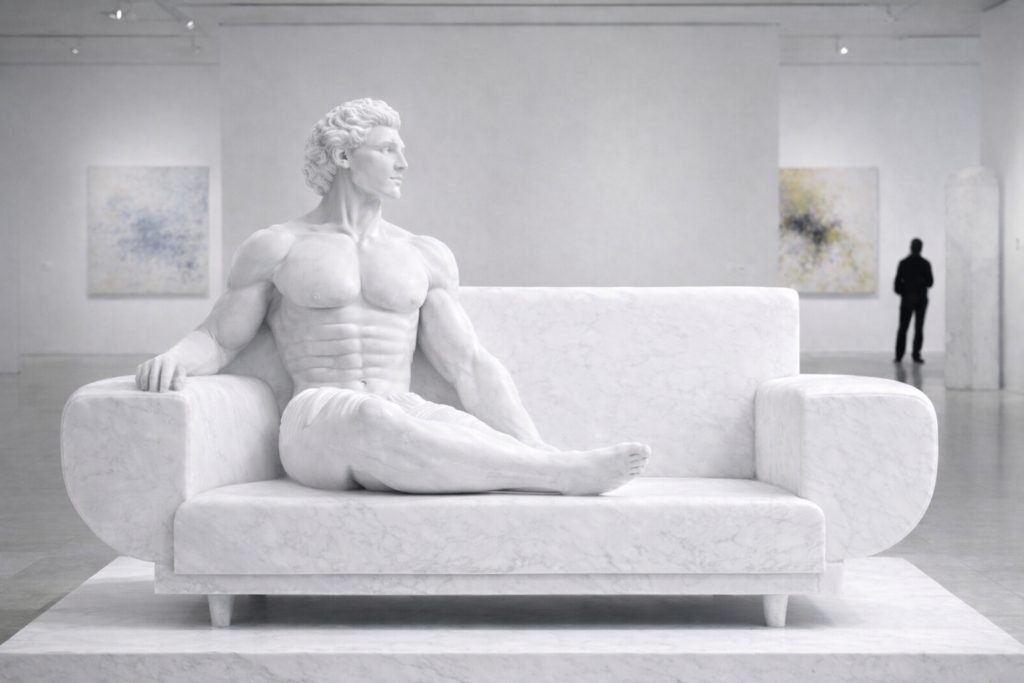
Old greek x Couch x Laziness economy
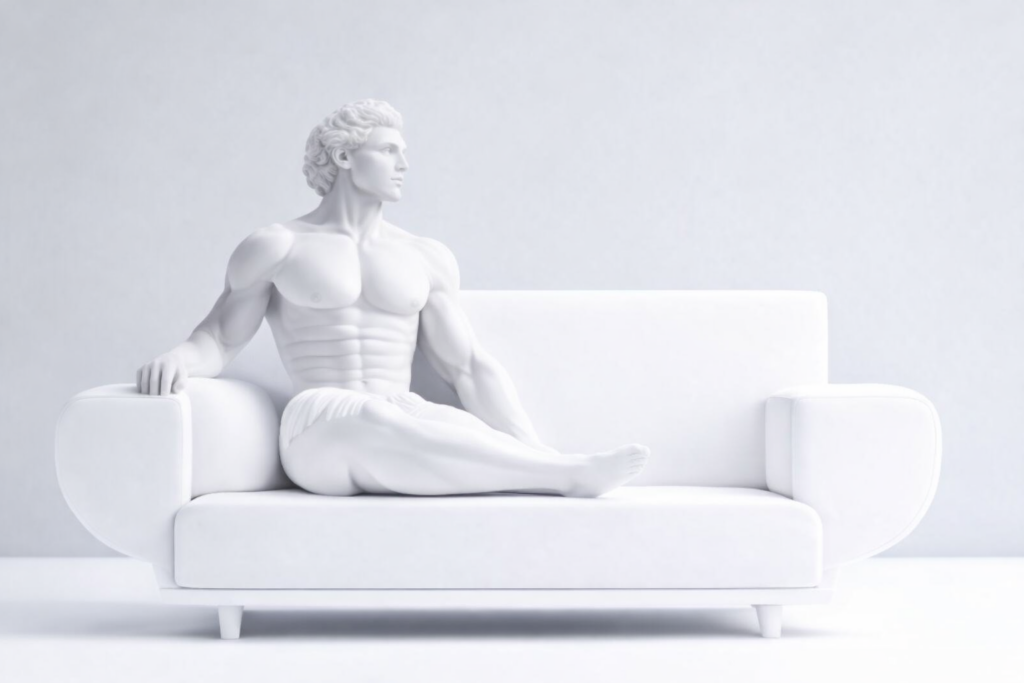
A neoclassical body, idealised and smooth, reclines on a synthetic throne: the couch.
The virility of ancient Greece meets the comfort of the gig economy. This is not a hero resting—it’s a monument to passivity, shaped by hyper-efficiency and over-servicing.
Everything is white. Everything is silent. The statue doesn’t speak, doesn’t move, doesn’t need to.
The ‘Uberlazied’ man is no longer a thinker or a warrior, just a user—optimised, idle, aesthetically sterile.
The tension lies in this contradiction: divine muscles, sculpted for action, petrified by convenience.

This is the perfect client of the laziness economy.
The one who scrolls instead of searching, who orders instead of moving, who clicks instead of acting.
The digital giants have no interest in awakening him. His inertia is their business model.
As long as he stays seated, he produces: data, engagement, money.
A body immobilised, a mind subdued—yet hyperprofitable.

Categories
Automation Bodies Tech for good

Data Beats Emotion

Audio recording Z. at American Congress x Start-up Mantra
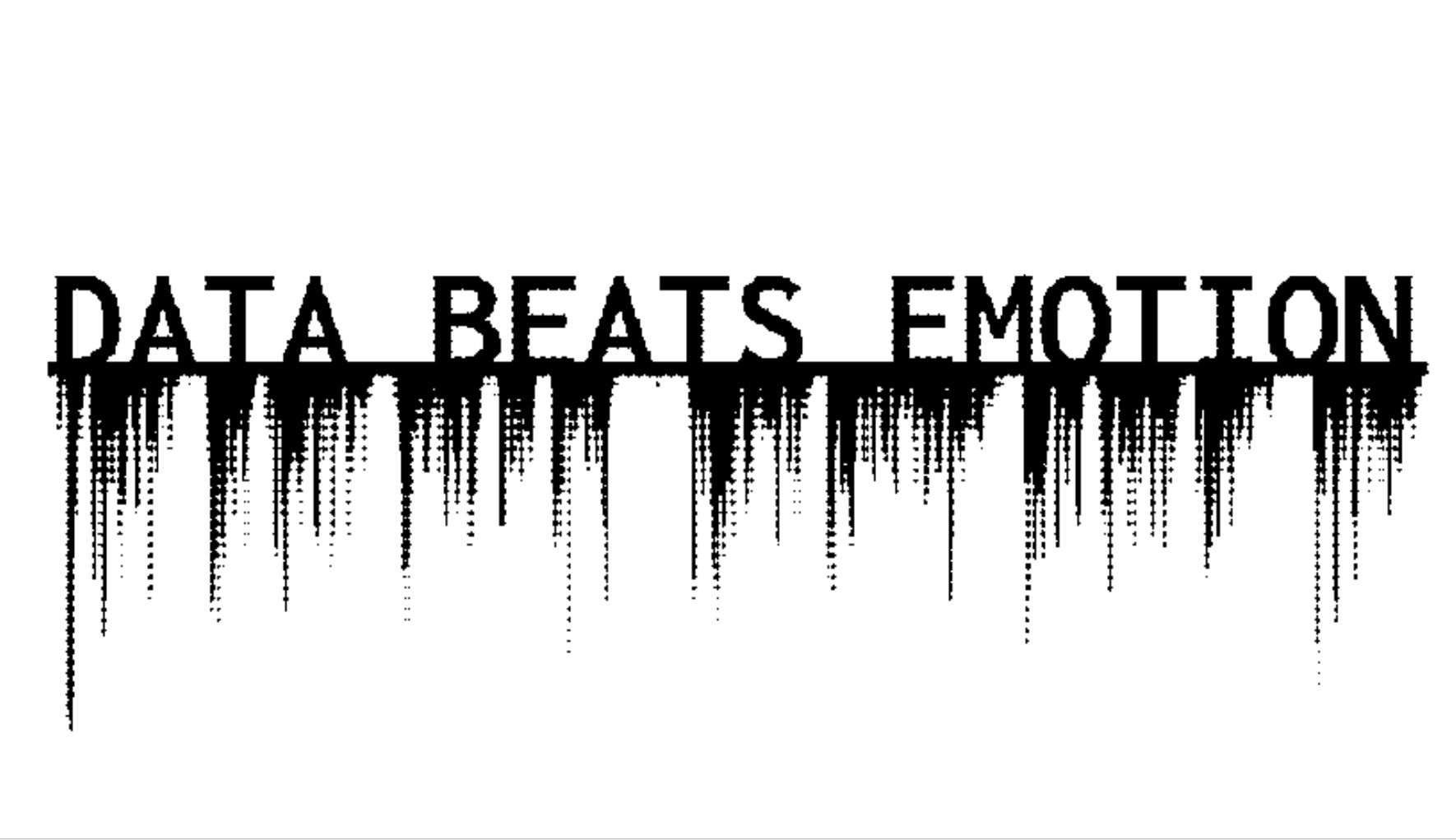
This work unfolds in two registers. First, as a visual transcription: the tear-shaped forms are not human sorrow, but the soundwave of Z. public apology before the U.S. Congress. No visible emotion. No rupture. Just the smooth, calculated rhythm of a voice designed not to tremble.

Second, as a title—Data Beats Emotion—the phrase echoes a dominant mantra in the startup world. In tech culture, feelings are noise. Growth requires data: measurable, scalable, testable. Emotion is seen as inefficiency—something to simulate perhaps, but never to follow.

By overlapping these layers, the piece reveals a tension: between affect and performance, between sincerity and computation. The tear is not real—it is rendered.
And the apology, like the system it represents, is more a metric than a moment.

Categories
Automation Bodies Featured Sciences Sculpture

Addictions

Mobile x Addiction molecules

Iron – Wood – Pine balls | 70 x 40 x 40 cm

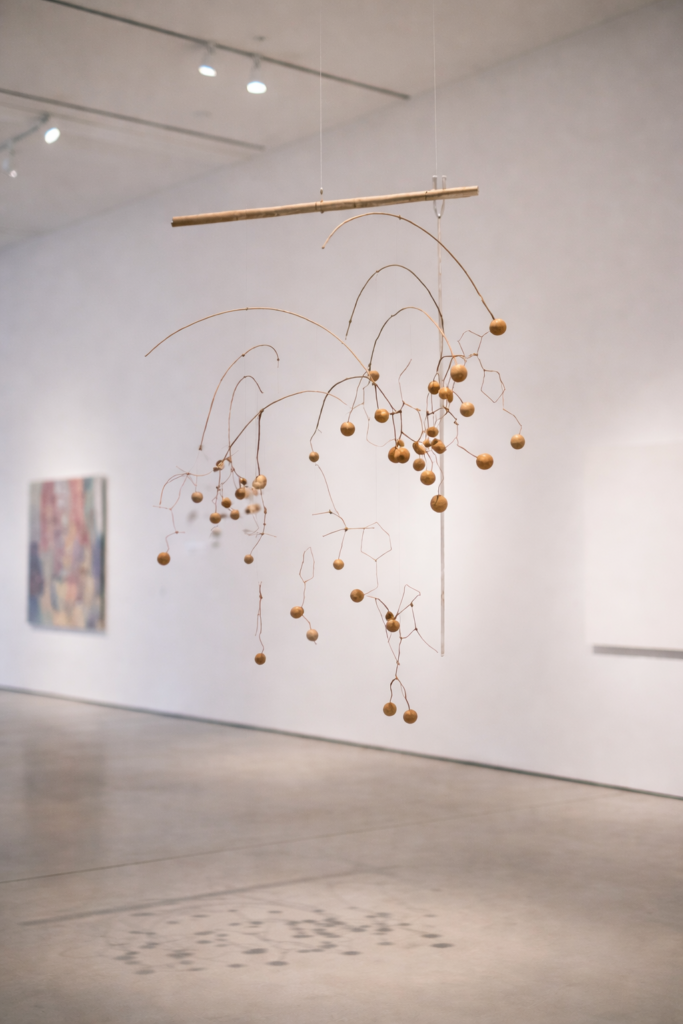
Cette sculpture cinétique flotte avec délicatesse dans l’espace, mais son élégance dissimule une vérité brutale : chaque forme géométrique reproduit la structure moléculaire exacte de substances addictives — alcool, cocaïne, nicotine, opioïdes. Suspendue comme un mobile d’enfant, l’œuvre détourne son innocence en incarnant les mécanismes biochimiques de la dépendance.

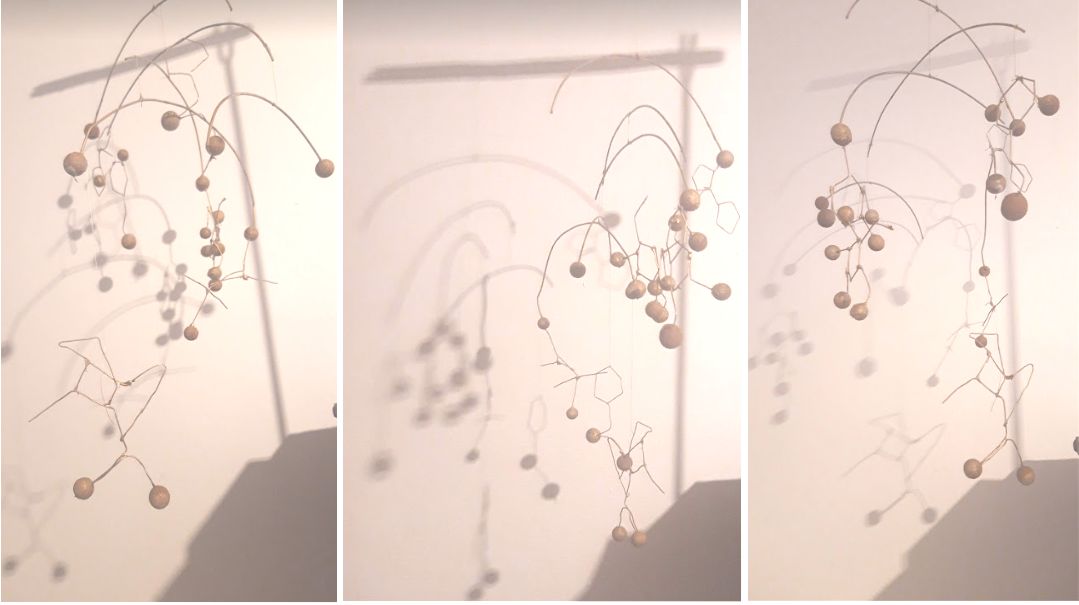
L’équilibre est trompeur : un simple mouvement dérègle l’ensemble, rappelant la fragilité du contrôle neurochimique. La lumière projette des ombres emmêlées, prolongeant l’emprise chimique au-delà de l’objet lui-même.

L’œuvre met en scène l’addiction comme un système, une chorégraphie — silencieuse, belle, et profondément destructrice.

Une innocence perdue

This kinetic sculpture floats delicately in space, yet its elegance masks a brutal truth: each geometric shape reproduces the exact molecular structure of addictive substances—alcohol, cocaine, nicotine, opioids. Suspended like a child’s mobile, the piece subverts its innocence by embodying the biochemical mechanisms of dependency. The balance is deceptive: a single movement disrupts the whole, echoing the fragile equilibrium of neurochemical control. Light casts tangled shadows, extending the chemical grip beyond the object itself. The work stages addiction as both system and choreography—silent, beautiful, and deeply destructive.

Categories
Automation Bodies Installation Tech for good

Handroid

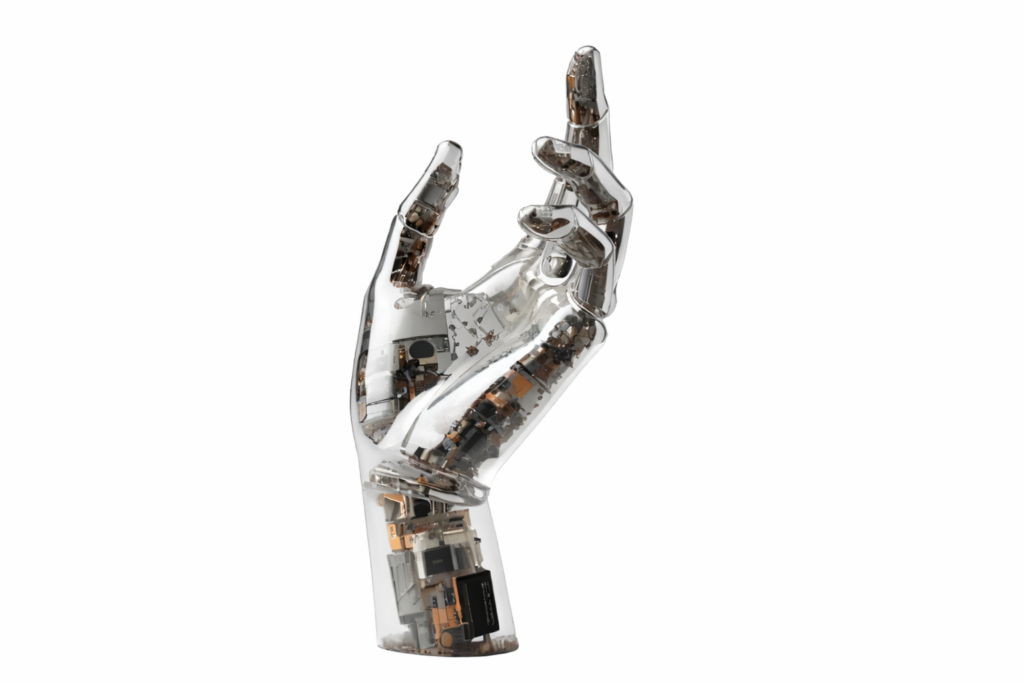
Glass hand x Printed circuit x Empty smartphone

A transparent hand, filled with printed circuitry, holds an immaculate smartphone—yet the screen is blank. No app. No notification. No signal.

This synthetic body-part, part-prosthesis, part-avatar, is not simply a hand: it’s an interface. Designed for the gesture of grasping the device, its entire architecture serves the object it holds. But what happens when the object is hollowed out?

By exposing the internal wiring and rendering the phone as a void, Handroid questions who holds what—or whom. Is the hand using the phone, or is the phone defining the hand? The piece echoes our current state of symbiosis: where the body becomes optimized for digital consumption, and the tool becomes the master.

The future is already here, and it’s holding on tight.

Categories
Automation Green & Nature Installation

Shouting tomatoes

Food Waste x Tomatoe shout sound x Water Waste x WC

The bathroom, a symbol of excess and hygiene, becomes the unlikely greenhouse for a grotesque harvest. Overflowing with lush tomato plants rooted in the bowl of a toilet, this sterile space is transformed into a site of vegetal protest.

Science tells us tomatoes emit ultrasonic cries when stressed by thirst. Here, that finding is turned into a visual scream. Red fruit—ripe, luminous—spills from a place of waste, while water, the most vital resource, leaks and pools in silence.

The installation plays with paradox: food growing from filth, beauty in a site of disposal, plants pleading in frequencies humans cannot hear. The absurdity becomes confrontation.

This is not about growth, but neglect. Not about ecology, but the irony of abundance. A piece where the tomatoes, quite literally, have something to say.

Categories
Automation Bodies Tech for good

Me and My Couch

Brain x Basic need x Couch x Laziness economy

Ink on paper 30 x 40 cm

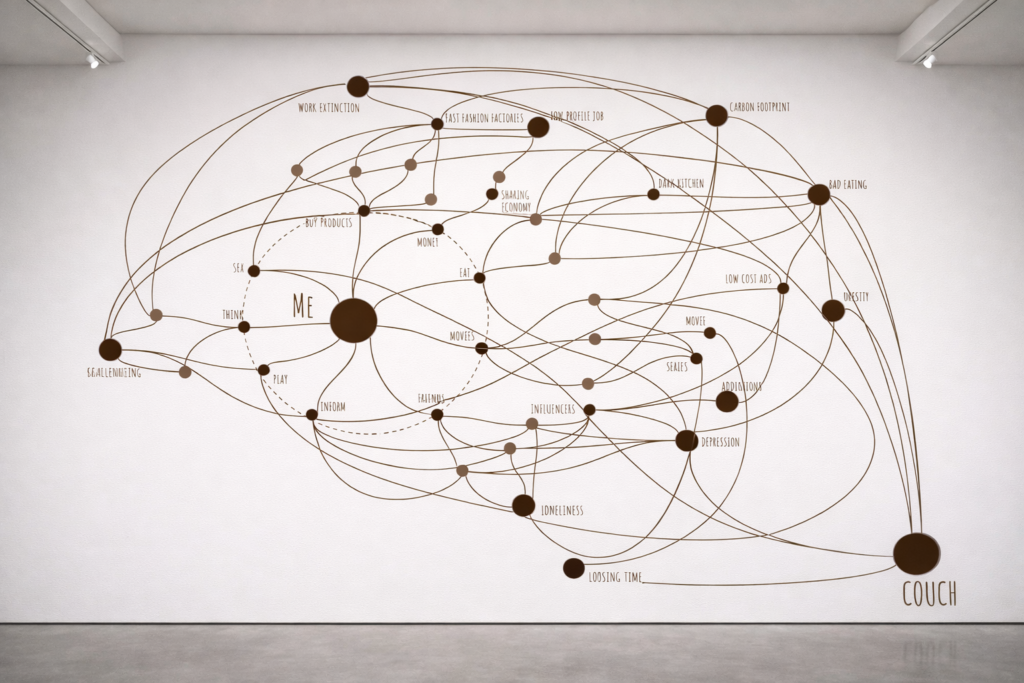
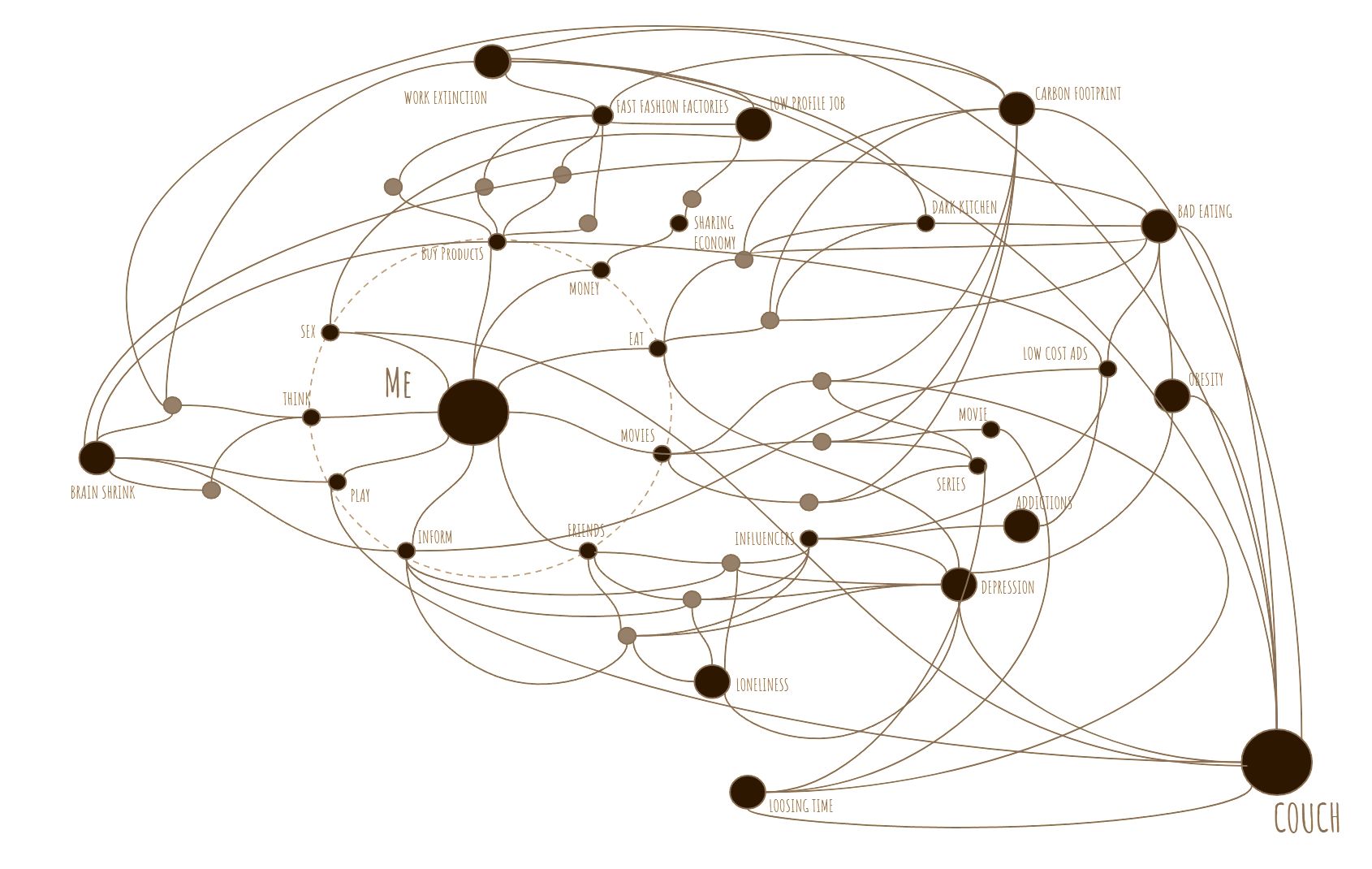
Essaie de deviner qui sont les points sans étiquette, tu les connais tous !

Cette œuvre se présente comme une carte cérébrale — mais elle fonctionne plutôt comme un miroir. Une neuroéconomie spéculative où le Moi n’est plus un sujet, mais un nœud. Un corps réduit à des besoins primaires : manger, penser, ressentir, jouer, aimer, se reposer. Tous ces élans — légitimes, profondément humains — sont désormais interceptés, détournés, optimisés.

Le canapé n’est pas un confort : c’est un piège. Autour, des nœuds anonymes pulsent en silence des besoins primaires. Mais on peut deviner :

– ce point rose près de Manger pourrait bien être les plateformes de livraison
– celui proche de Penser ressemble fort aux moteurs de suggestion IA
– celui qui gravite autour de Émotion évoque les algorithmes de recommandation de contenu
– le point à peine visible entre Jouer et S’informer pourrait être les plateformes de streaming
– et celui niché entre Sexe et Amis chuchote le nom des applis de rencontre ou des réseaux sociaux

Cette cartographie ne montre pas un cerveau, mais un écosystème économique parasitant son hôte. Un monde où chaque besoin fondamental est intermédié, capté, converti en chiffre d’affaires.
L’économie de la paresse n’est pas un accident : c’est l’aboutissement du capitalisme numérique — mouvement minimal, conversion maximale.

L’intention ultime serait-elle de nous laisser sur notre canapé à scroller, en remplissant nos besoins primaires virtuellement

Au centre : un individu.
À la périphérie : une industrie à plusieurs milliards.
Entre les deux : l’érosion lente de l’autonomie… et peut-être de la condition humaine elle-même.

Try to guess who are unlabelized points!

This work presents itself as a cerebral map—but it operates more like a mirror. A speculative neuroeconomy where Me is no longer a subject, but a node. A body reduced to primal needs: eat, think, feel, play, love, rest. All these impulses—legitimate, human—are now intercepted, diverted, optimised.

The couch is not a comfort; it’s a trap. Around it, unnamed nodes pulse silently. But one can guess:
– that pink dot near “Eat” might be food delivery platforms
– that one by “Think” could well be AI suggestion engines
– the one orbiting “Emotion” seems like content recommendation algorithms
– the barely visible node linking “Play” and “Inform” could be streaming platforms
– and the one tucked between “Sex” and “Friends” whispers dating apps

This mapping doesn’t just show a brain. It reveals an economic ecosystem parasitising its host. One where every basic human need has been intermediated, captured, converted into revenue. The laziness economy is not accidental—it is the endgame of digital capitalism: minimal movement, maximal conversion.

At the core: an individual.
At the periphery: a billion-dollar industry.
In between: the slow erosion of autonomy, and perhaps, of the human condition itself.

Categories
Automation Sciences

Chemical Happiness

Dopamine synthesis x Printed Circuit

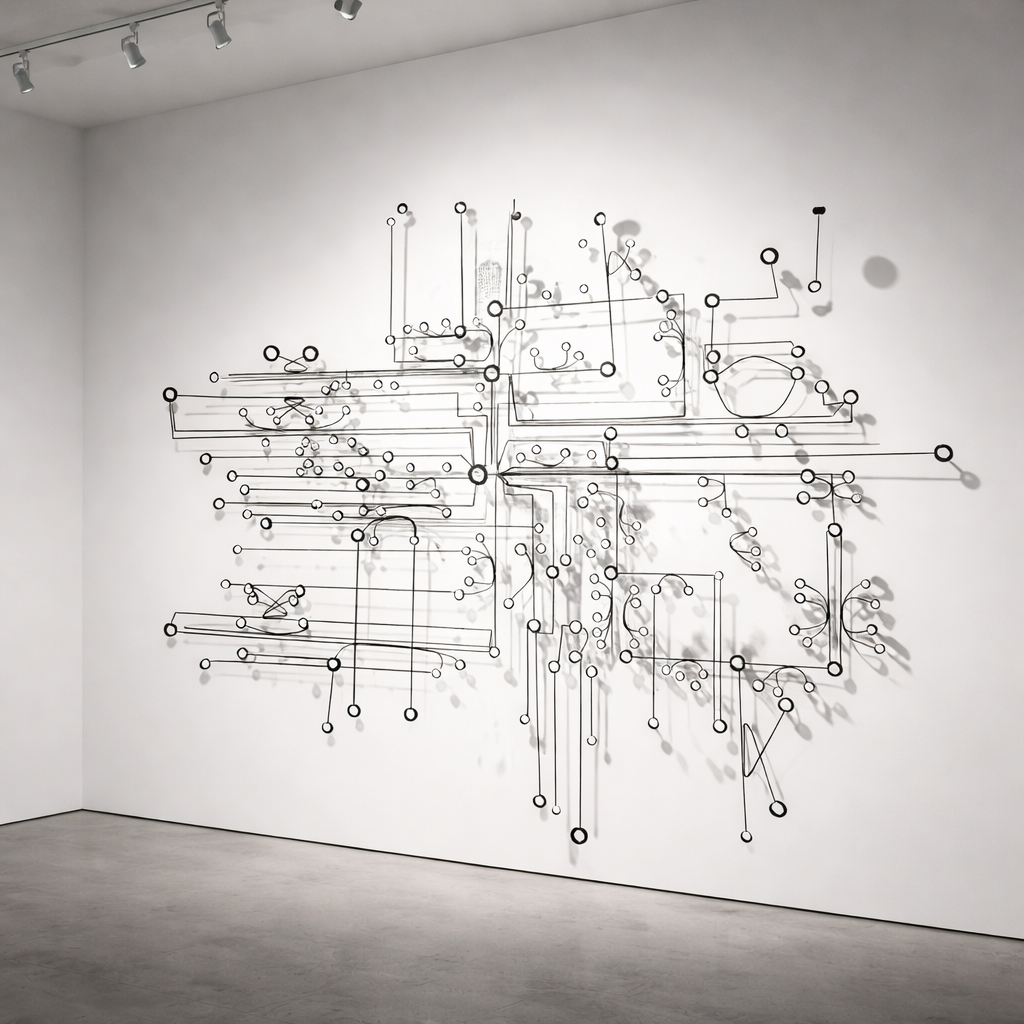
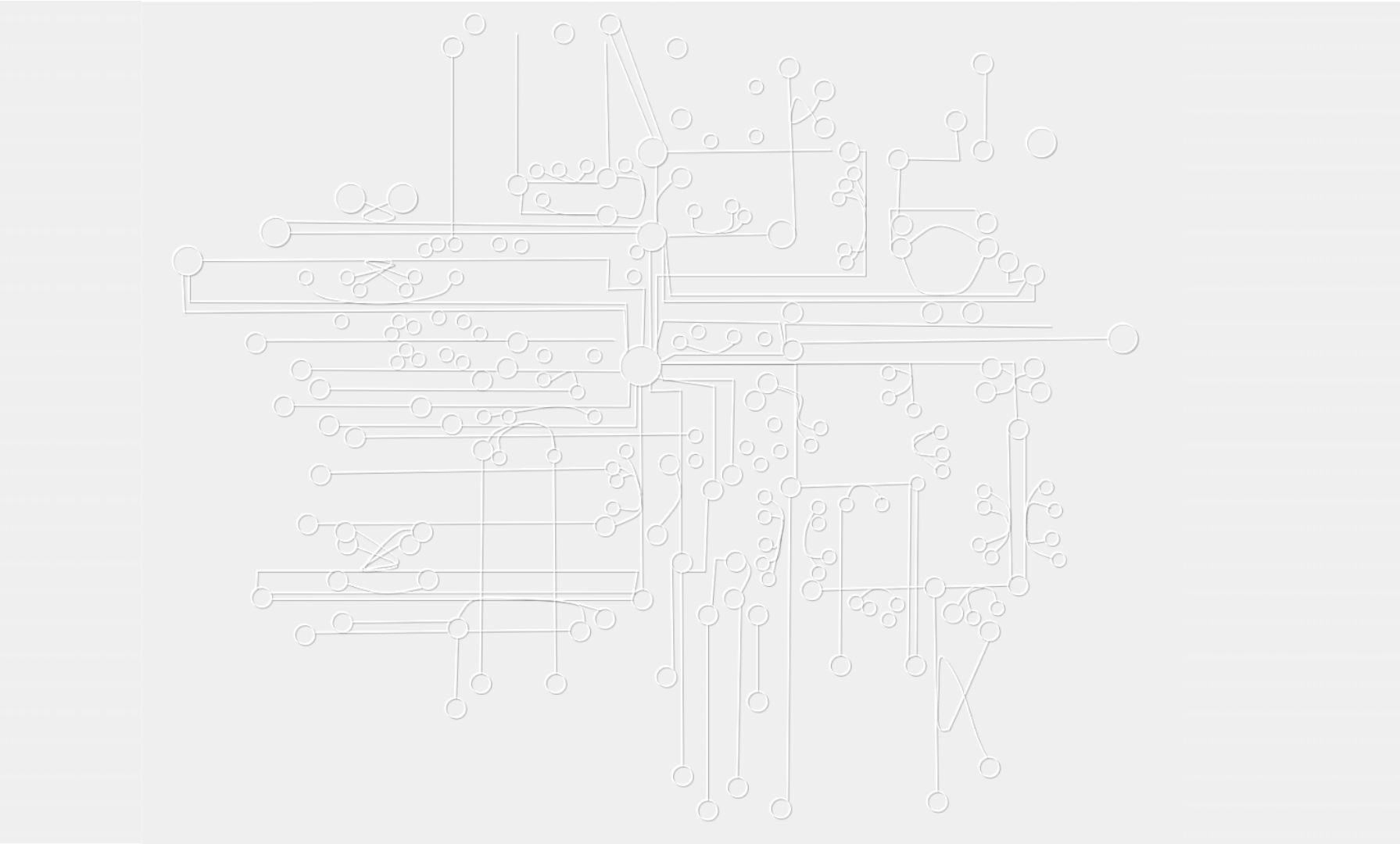
This seemingly technical layout, reminiscent of a computer motherboard, is in fact the stylised transcription of a portion of the chemical pathway for dopamine synthesis—the neurochemical responsible for reward, motivation and compulsion. The lines and nodes retrace not an electronic signal, but the molecular construction of desire itself.

Beyond biology, this representation highlights how platforms and tech companies have appropriated these neurological circuits. Notification systems in mobile apps have been deliberately engineered to trigger short-term dopamine bursts—designed for immediate satisfaction rather than sustained happiness. The goal is not long-term fulfilment, but repeated engagement, dependence, loops.

Here, chemical formula, interface mechanics and business objectives intersect. If equations could be drawn between dopamine synthesis, tech giants’ retention models, and UX designs exploiting human vulnerability, this piece would be their visual map. What remains of autonomy when emotions are systematically stimulated for profit?

Categories
Automation Bodies Photo

Puppet dance

Museum Puppets x Digital transformation x Manipulation

Categories
Automation Featured Green & Nature Installation Sculpture Tech for good Video

The pendulum tree

Dancing Metal Puppets x Magnetic motion x Dead tree x Daily flowers

Sculpture iron – wood – flowers – magnets | 80 x 50 x 50 cm

Dans cette séquence vidéo, des figures humanoïdes en fil de fer oscillent sous un arbre noueux et sans vie, animées non par des ficelles, mais par des forces magnétiques invisibles. Elles se balancent avec une grâce mécanique au-dessus d’un sol parsemé de pétales d’hypomées — ces fleurs qui ne durent qu’un jour avant de disparaître. Le pendule devient l’axe du contrôle, mesurant le temps non en heures, mais en gestes compulsifs et cycles fragiles.

The Pendulum Tree met en scène un rituel de répétition : des êtres artificiels dansent sans fin pendant que la beauté organique se fane en silence. L’arbre, à la fois bourreau et vestige, encadre la scène comme une métaphore de l’existence moderne — où la vie quotidienne devient un mouvement performatif dicté par des systèmes invisibles, et où la nature n’est plus qu’un décor périmé.

Une boucle discrète, fatale, où même la grâce est sous contrôle.

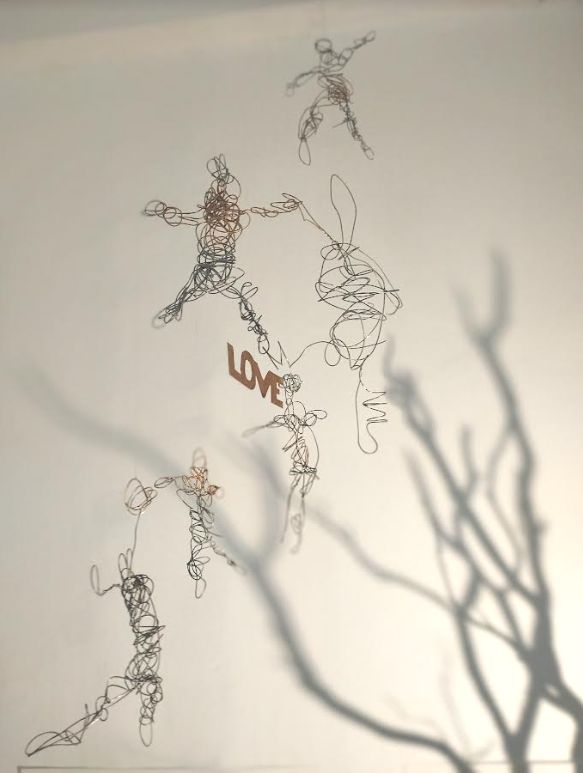
In this video snapshot, wiry human-like figures oscillate beneath a gnarled, lifeless tree, animated not by strings but by invisible magnetic forces. They sway with mechanical grace above a ground scattered with ephemeral morning glory petals—hypomées, flowers that bloom for a single day before vanishing. The pendulum becomes the axis of control, marking time not in hours but in compulsive gestures and fragile cycles.

The Pendulum Tree stages a ritual of repetition: artificial beings dance endlessly while organic beauty withers in silence. The tree, both executioner and relic, frames the scene as a metaphor of modern existence—where daily life becomes performative movement dictated by unseen systems, and nature serves only as expired décor. A quiet, fatal loop where even grace is governed.

Categories
Automation Bodies Tech for good Video

Evolution

Ancient greeks x Screen addiction human diseases x Sea waves

This sequence of silhouetted figures stages a paradoxical choreography. Initially reminiscent of classical Greek athletes in motion, their postures gradually deform, revealing the imprint of modern digital disorders. Curved spines, strained necks, and frozen limbs betray the bodily consequences of screen overexposure and sedentary lifestyles. The athletic ideal crumbles under the weight of addiction to devices. Unlike the heroic friezes of antiquity, here the movement is circular, leading nowhere. In this cycle of apparent evolution, the characters are trapped in an immobile loop — glorifying performance while remaining rooted in technological inertia.

Categories
Automation Bodies Featured Video

The Clock

Screen user daily life x Heart beat & Clock Sounds x 99 frames x Monsters x Digital Twins x vague Dreams

Vidéo

Une vie en 99 images. The Clock saisit le schéma existentiel d’un humain dépendant des écrans : se réveiller, scroller, se déplacer, s’asseoir, produire. L’animation se déploie comme un métronome numérique — chaque image, un fragment de soumission ritualisée au temps. Les lignes, à la fois symétriques et fracturées, dessinent des figures humaines, puis se déforment en monstres algorithmiques.

Le tic-tac de l’horloge et les pulsations cardiaques fusionnent en un rythme mécanique unique. Ce qui ressemble à du progrès n’est en réalité qu’une dérive — vers l’épuisement, la désincarnation, la mort. Le monstre final n’est pas une créature : c’est le reflet déformé de l’utilisateur lui-même, multiplié, répliqué, érodé par la répétition.

A life in 99 frames. The Clock captures the existential pattern of a screen-dependent human: waking, scrolling, commuting, sitting, producing. The animation unfolds like a digital metronome—each frame a fragment of ritualized submission to time. The lines, symmetrical and fractured, form human-like figures, then distort into algorithmic monsters.

Clock ticks and heartbeat pulses merge into a single mechanical rhythm. What appears as progress is merely drift—toward exhaustion, disembodiment, death. The monster at the end isn’t a creature—it’s the distorted mirror of the user himself, multiplied, replicated, eroded by repetition.

This is not a story. It’s a closed circuit. A day. A feed. A life.
Drawn in silence, killed by rhythm.

Categories
Automation Bodies Featured Installation Sciences Tech for good Video

The anxiety machine

Social rewards x Dopamine shot x Hatred x Notification x Nomophobia

This is a 2 min. compilation of 5 other videos.

The Anxiety Machine condense en deux minutes toute l’architecture émotionnelle de la vie numérique contemporaine. Composée de cinq séquences vidéo étroitement chorégraphiées, l’œuvre suit un crescendo affectif — de la validation à l’effondrement — cartographié à travers les boucles de rétroaction sociale.

« You did a great job » : des larmes tombent doucement tandis que s’affichent des félicitations — simulant l’éclat creux de l’approbation sociale.
« Dopamine Shot » : particules tourbillonnantes et mouvements browniens suggèrent l’excitation chimique, les cycles de récompense manipulés.
« I hate you » : orages, éclairs, déclarations de haine violentes marquent le basculement du plaisir vers l’agression numérique.
« Notification/Gunshot » : des bulles éclatent avec la violence de notifications devenues armes — likes et commentaires se transforment en attaques.
« Anxious Breathing » : l’écran se couvre de buée, la respiration se condense, une silhouette monstrueuse consume silencieusement la présence — à la fois dans et hors de l’écran.

Cette œuvre n’est pas une simple séquence : c’est un système. Une machine de rétroaction alimentée par la peur de l’absence, le besoin d’approbation, le rejet, et la surcharge. The Anxiety Machine révèle comment les plateformes transforment l’attention en névrose, et comment le moi se fragmente sous le poids de l’attente, de l’immédiateté et de la violence invisible.

Ce n’est pas seulement une critique des réseaux sociaux.
C’est une mise en lumière de ce qu’ils font à notre chimie intérieure.

This overall processing and vicious circle may lead to mass anxiety

The Anxiety Machine condenses in two minutes the complete emotional architecture of modern digital life. Constructed from five tightly choreographed video segments, the piece follows a crescendo of affect—from validation to collapse—mapped through social feedback loops.

  1. “You did a great job”: tears fall gently as congratulatory words flash—simulating the hollow glow of social affirmation.
  2. “Dopamine Shot”: swirling particles and Brownian motion suggest chemical excitation, manipulated reward cycles.
  3. “I hate you”: storms, flashes, and violent declarations of hate punctuate a shift from pleasure to digital aggression.
  4. “Notification/Gunshot”: bubbles explode with the sharpness of alerts turning into weapons—likes and comments become assaults.
  5. “Anxious Breathing”: the screen fogs, breath condenses, and a monstrous figure silently consumes presence—simultaneously inside and outside the screen.

This work is not merely a sequence; it is a system. A feedback machine fueled by fear of absence, approval, rejection, and overload. The Anxiety Machine exposes how platforms convert attention into neurosis, and how the self fragments under the weight of expectation, immediacy, and invisible violence.

It is not just about social networks. It is about what they are doing to our chemistry.

Categories
Automation Bodies Engraving Installation Tech for good

Puppets

Engraving on Plexiglas + Blue Led light

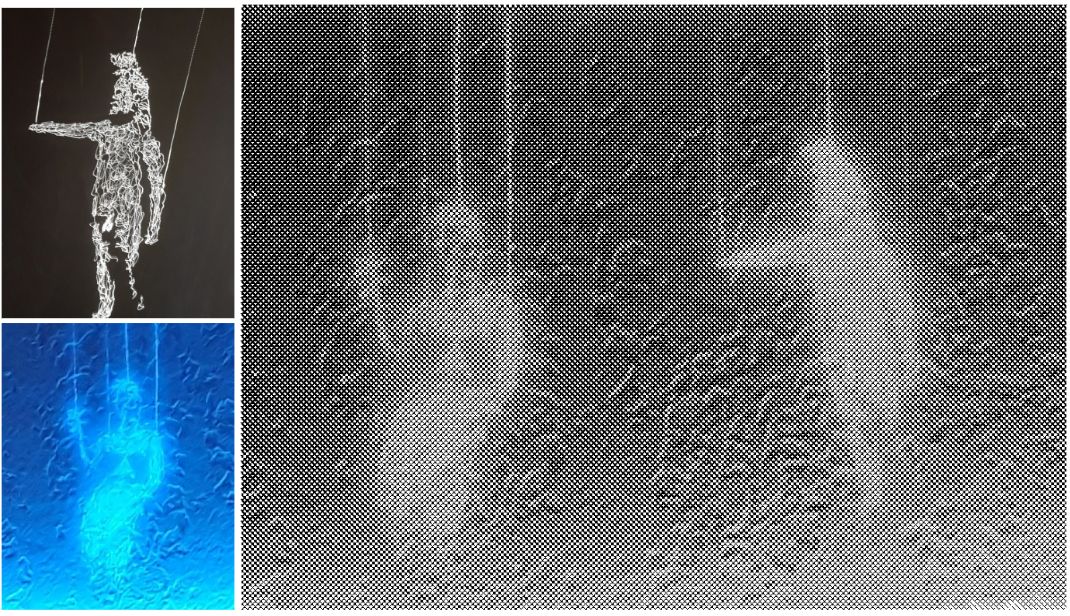
Two figures suspended, motionless yet exposed—one with a glass in hand, the other reaching out, crowned. Both are bound by strings, manipulated from above, their autonomy only an illusion. The scene evokes antiquity through their posture and attire, yet it is contemporary in essence. These are not classical archetypes, but social roles—power, seduction, dominance, influence—stripped of context and agency.

The threads that bind are neither visible mechanisms nor metaphorical abstractions—they are the digital, cultural, and algorithmic forces pulling at modern identity. Under the sterile glow of LED, these glowing silhouettes reveal how roles are performed more than inhabited. Whether on a screen or a stage, both are played.

This exact precise scene can be found in a museum, with the two characters in this exact position

Categories
Automation Bodies Engraving Featured Installation Photo Tech for good

Monsters

IA fake faces x no sense

Engraving on Plexi + Blue light Led – 30 x 20 cm

Douze visages spectraux s’alignent tels des apôtres numériques — figures d’une nouvelle religion, codée en pixels et en probabilité. Aucun de ces individus n’existe. Leur dieu ne se voit pas. Générés par une IA d’avant l’ère ChatGPT&co lancée par un lanceur d’alerte issu de la Big Tech, ces portraits visaient à dénoncer la montée en puissance de l’illusion générative. Ici, ils reviennent privés de tous leurs sens : pas d’yeux, pas d’oreilles, pas de bouche — aucune entrée, aucune sortie.

Monsters transfigure ces ensembles de données anonymes en icônes sacrées et vides. Illuminées par une lumière LED bleue, les gravures suggèrent une transcendance — mais n’offrent que l’absence. Il ne s’agit pas de présence divine, mais de vacuité synthétique. Ces « apôtres » ne prêchent pas — ils ne voient rien, n’entendent rien, ne disent rien.

Ce sont les figures de remplacement d’un futur où l’humain est simulé, indexé, effacé — et vénéré comme artefact.

Twelve (like apostle) spectral faces line up like digital apostles—figures of a new religion, one coded in pixels and probability. None of these individuals exist. Generated by a pre-ChatGPT-era AI launched by a Big Tech whistleblower, these portraits were meant to denounce the rising power of generative illusion. Here, they return stripped of all senses: no eyes, no ears, no mouths—no way in, no way out.

Monsters transfigures these anonymous datasets into sacred, vacant icons. Illuminated by blue LED light, the engravings suggest transcendence—but offer only absence. This is not divine presence, but synthetic vacancy. The “apostles” here don’t preach—they observe nothing, hear nothing, say nothing.

They are placeholders for a future where the human is simulated, indexed, erased—and worshipped as artifact.

Categories
Automation Bodies Featured Installation Sciences Tech for good

Addictions

Categories
Automation Featured Tech for good Video

I am your product

Pigeons x Internet users categorization

Quand vous ne payez pas pour un produit, c’est que vous êtes le produit.
Les utilisateurs d’Internet sont devenus dépendants de leur fil personnalisé.

Un essaim de pigeons pixellisés bat des ailes avec régularité, reflété et démultiplié en taches numériques abstraites. Au premier regard, ce sont des oiseaux. Au second, ce sont des usagers — conditionnés, catégorisés, convoqués par une main invisible. Le grain jeté n’est pas de la nourriture, mais du contenu. Ce qui suit est mécanique : attraction, alignement, addiction.

Le chœur commence : « Nous sommes votre produit » — une ritournelle aussi absurde que précise. Les pigeons incarnent chacun de nous, attirés dans le flux, personnalisé, optimisé, monétisé. La voix de l’algorithme devient la faim du troupeau.

Puis vient la supplique finale : « Please feed us. »
Ce qui commence comme une récompense se termine en dépendance. L’humain devient pigeon. Le pigeon devient prototype. Et la boucle ne s’arrête jamais.

Une allégorie condensée du design prédictif et de la faim comportementale.

When you do not pay for a product, you may be the product. Internet users became addicted to their personnalized feed

A swarm of pixelated pigeons flutters rhythmically, mirrored and multiplied into digital inkblots. At first glance, they are birds. At second, they are users—conditioned, categorized, and summoned by a hand they cannot see. The grain thrown is not food, but content. What follows is mechanical: attraction, alignment, addiction.

The chorus begins: “We are your product”—a chant as absurd as it is accurate. The pigeons stand in for all of us, lured into the feed, personalized, optimized, monetized. The voice of the algorithm is now the hunger of the flock.

Then the final plea: “Please feed us.”
What begins as reward ends in dependency. The human becomes pigeon. The pigeon becomes prototype. And the loop never ends.

A compressed allegory of predictive design and behavioral hunger.

Categories
Automation Bodies Featured Installation Tech for good

The walking sleeper

My heart rate x night duration x number of kms for one month

Drawing – 30×20 cm

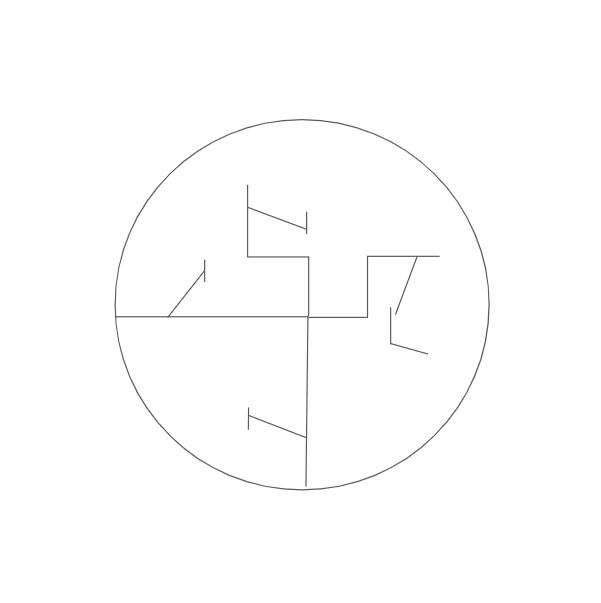
J’ai utilisé un bracelet connecté pour suivre pendant 30 jours les principales données biométriques que mon corps pouvait produire. De nombreuses améliorations de santé pourraient théoriquement découler de cette collecte — ou pas — surtout avec l’ajout d’une couche d’intelligence artificielle.

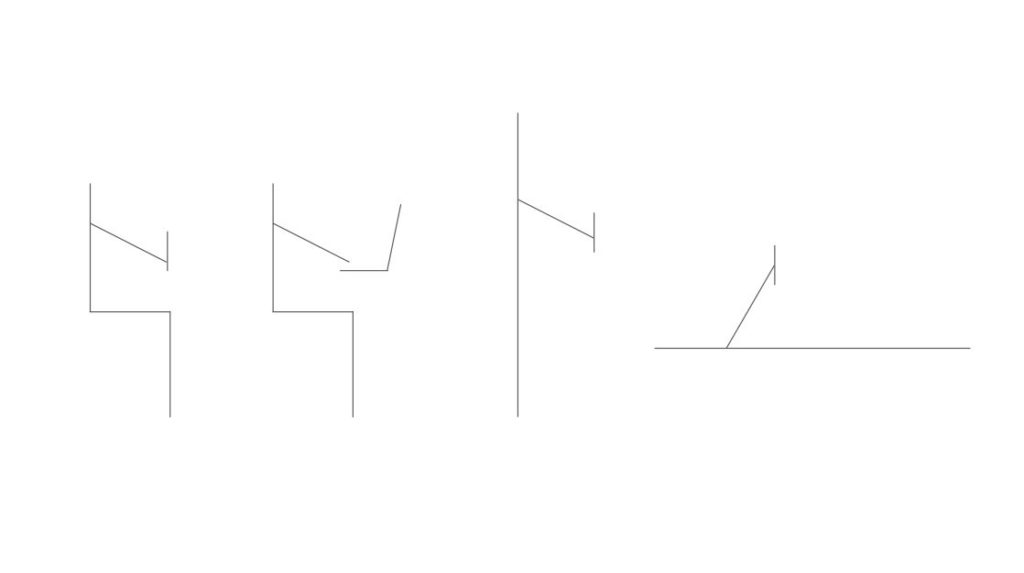
Ce dessin minimaliste a été généré à partir de ce suivi : fréquence cardiaque, durée du sommeil, distance quotidienne parcourue. Chaque trio de lignes représente une journée : une lune pour le sommeil, un cœur pour le rythme cardiaque, une empreinte pour le mouvement. Trente jours, trente récits muets — cartographiés sans mots.

La géométrie semble propre, rationnelle. Mais la grille révèle autre chose : des rythmes de fatigue, un repos inégal, une anxiété discrète en mouvement. Malgré les promesses de santé optimisée, les données racontent une autre histoire — celle d’une surveillance déguisée en soin de soi, d’algorithmes qui promettent des éclairages mais récoltent des routines.

The Walking Sleeper trace une frontière entre le soi quantifié et le soi marchandisé.
Un journal sans narration.
Une vie réduite à des signaux.
De la beauté dans la retenue — mais une inquiétude profonde dans le silence.

I used my wrist bracelet to monitor during 30 days precisely my main body metrics that it could capture. Lots of health improvements could be performed thanks to the collection of all these personal data & A.I on top of this….or not!

This minimalist drawing was generated from one month of biometric tracking—captured through a wrist device that monitored heart rate, sleep duration, and daily distance walked. Each trio of lines encodes a day: a moon for sleep, a heart for pulse, a footstep for movement. Thirty days, thirty silent stories—mapped without words.

The geometry seems clean, rational. But the grid reveals more: fatigue rhythms, uneven rest, quiet anxiety in motion. Despite the promise of optimized health, the data tells another story—one of surveillance disguised as self-care, and algorithms promising insight but harvesting routine.

The Walking Sleeper draws a boundary between the quantified self and the commodified self. A diary without narrative. A life reduced to signals. Beauty in restraint—but disquiet in the silence.

Categories
Automation Bodies Installation Tech for good Video

Playmo

Playmobil x magnets

Saturday with kids. Playmobil are moving thanks to invisible forces in a chaotic motion. Only one survives. Police failed. One unique video captured once, pure random synopsis.

Categories
Automation Bodies Engraving Installation Tech for good

Puppet dance

Puppets dance engraving illuminated by blue Led

Engraving on Plexiglas – 20×30 cm

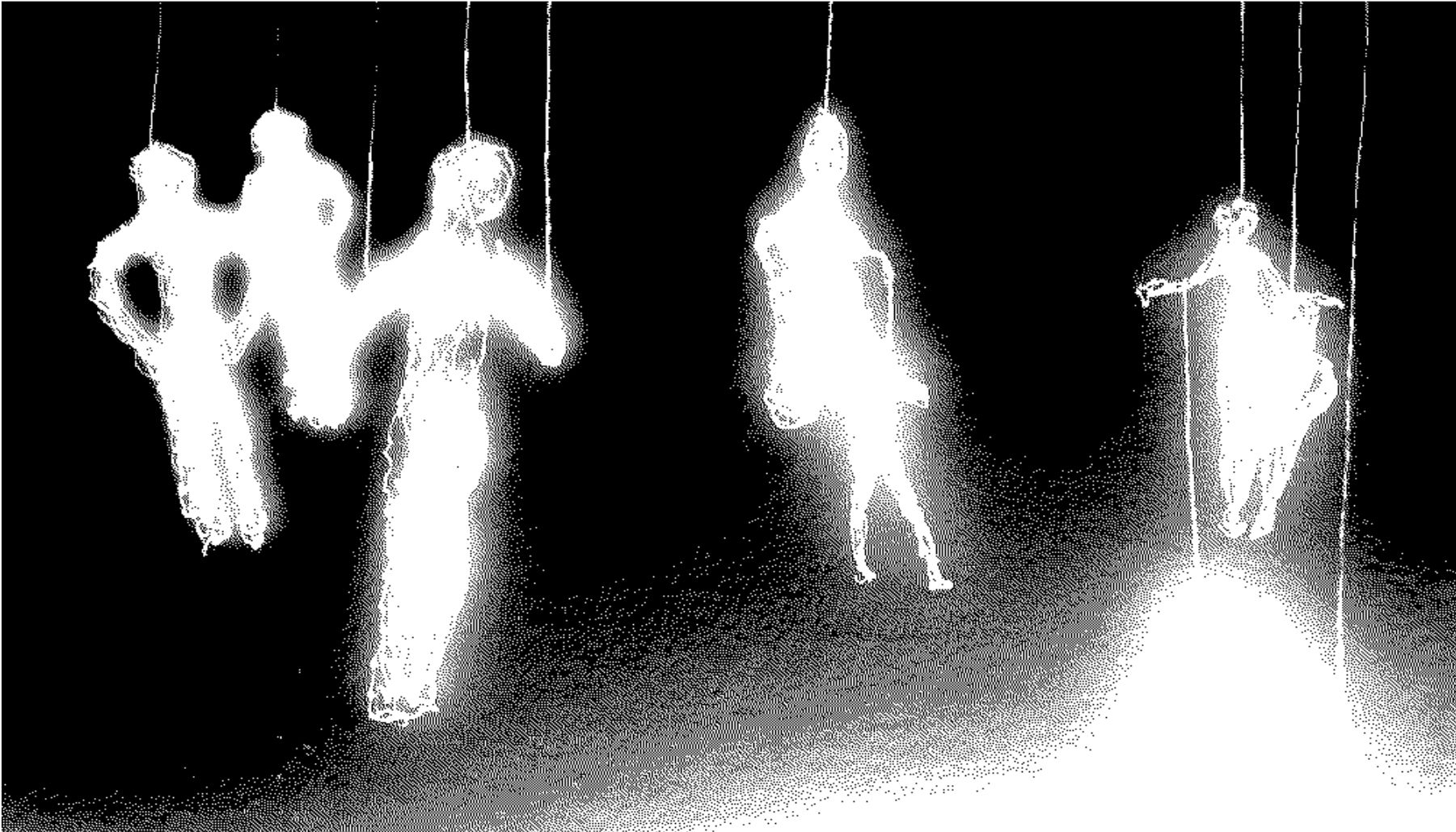
Frozen mid-motion, these wire-like silhouettes hang like delicate ghosts. Their limbs stretch, reach, float—yet they never touch the floor. Suspended by fine strings, they mimic freedom, movement, even joy. But it is a choreography of illusion.

Lit in synthetic blue, the figures evoke a social performance in perpetual display. They entertain, interact, collapse, restart. Nothing is stable. One has fallen, another poses like an avatar. Their interdependence is clear, yet each remains isolated—trapped in their own curated moment.

This composition precisely replicates the spatial arrangement of a collection of antique sculptures in a European museum. A once-celebrated pantheon of stone now reinterpreted as fragile, manipulated outlines—shifted from eternal grandeur to digital-era submission. A ballet of influence, exhaustion and entanglement.